Koniugacja ahorcar Czas przeszły prosty
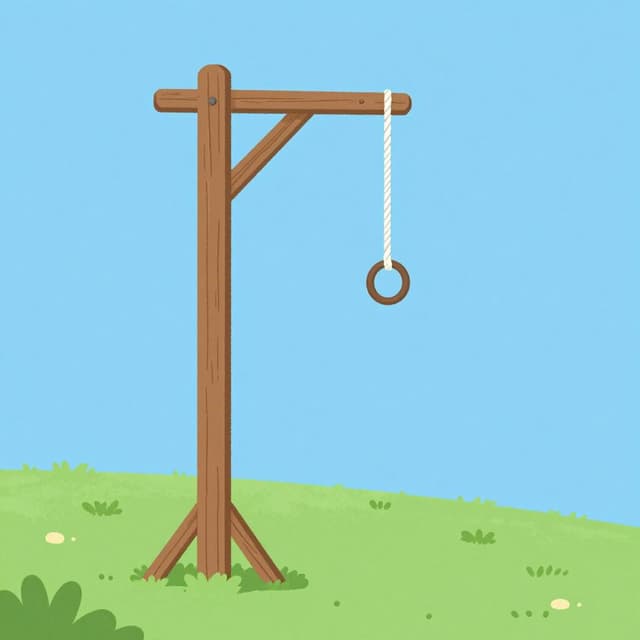
ahorcar — to hang
The preterite of ahorcar has a spelling change only in the 'yo' form: ahorqué, ahorcaste, ahorcó, ahorcamos, ahorcasteis, ahorcaron.
Formy ahorcar Czas przeszły prosty
Kiedy używać Czas przeszły prosty
Use the preterite for a completed act of hanging or strangling at a specific point in time in the past.
Uwagi dotyczące ahorcar w czasie Czas przeszły prosty
Only the 'yo' form is irregular (ahorqué) to preserve the 'k' sound. All other forms are regular.
Przykładowe zdania
Ahorqué el saco de boxeo en el garaje.
I hung the punching bag in the garage.
yo
El verdugo ahorcó al prisionero.
The executioner hanged the prisoner.
él/ella/usted
¿Por qué me ahorcaste tan fuerte?
Why did you strangle me so hard?
tú
Częste błędy
Błąd: ahorcé
Poprawnie: ahorqué
Dlaczego: Without the 'u', the 'c' before 'e' sounds like an 's', changing the pronunciation entirely.
Opanuj hiszpańskie czasowniki w kontekście
Zapamiętywanie tabel to dopiero początek. Przeczytaj ponad 200 ilustrowanych i udźwiękowionych hiszpańskich historii, aby zobaczyć czasowniki takie jak 'ahorcar' używane naturalnie — w czasach, których się uczysz.
Powiązane czasy
Czas teraźniejszy
yo: ahorco
The present tense of ahorcar is completely regular: ahorco, ahorcas, ahorca, ahorcamos, ahorcáis, ahorcan.
Czas przeszły niedokonany
yo: ahorcaba
The imperfect of ahorcar is regular: ahorcaba, ahorcabas, ahorcaba, ahorcábamos, ahorcabais, ahorcaban.
Czas przyszły
yo: ahorcaré
The future tense of ahorcar is regular: ahorcaré, ahorcarás, ahorcará, ahorcaremos, ahorcaréis, ahorcarán.
Tryb warunkowy
yo: ahorcaría
The conditional of ahorcar is regular: ahorcaría, ahorcarías, ahorcaría, ahorcaríamos, ahorcaríais, ahorcarían.
Tryb Subj. teraźniejszy
yo: ahorque
The present subjunctive of ahorcar features a spelling change (c to qu) in all persons: ahorque, ahorques, ahorque, ahorquemos, ahorquéis, ahorquen.
Tryb Subj. przeszły niedokonany
yo: ahorcara
The imperfect subjunctive of ahorcar is regular based on the third-person plural preterite: ahorcara, ahorcaras, ahorcara, ahorcáramos, ahorcarais, ahorcaran.
Tryb rozkazujący (twierdzący)
yo: ahorca
The imperative of ahorcar uses the regular 'tú' form (ahorca) but switches to 'qu' for others: ahorque, ahorquemos, ahorcad, ahorquen.
Tryb rozkazujący (przeczący)
yo: no ahorques
The negative imperative of ahorcar always uses the 'qu' spelling change: no ahorques, no ahorque, no ahorquemos, no ahorquéis, no ahorquen.