Koniugacja bañar Czas teraźniejszy
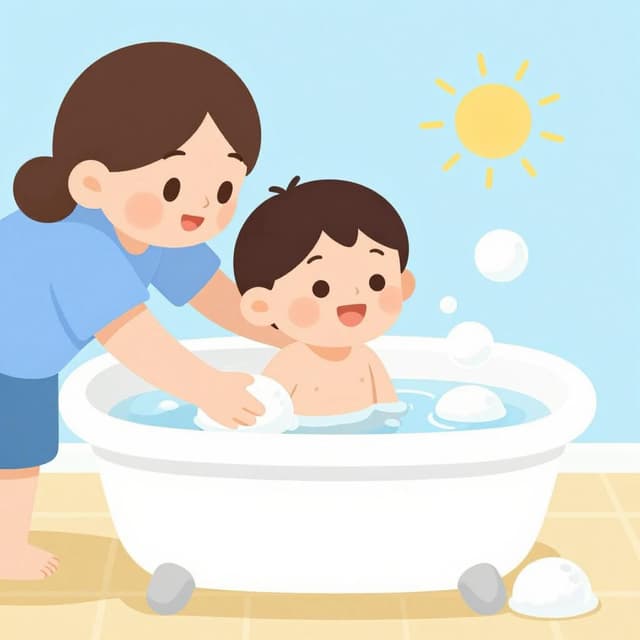
bañar — to bathe
Use 'baño', 'bañas', 'baña', 'bañamos', 'bañáis', 'bañan' for current or habitual actions like bathing daily.
Formy bañar Czas teraźniejszy
Kiedy używać Czas teraźniejszy
This is your go-to tense for actions happening right now ('Me baño ahora mismo') or things you do regularly ('Me baño todos los días'). It covers present habits, general truths, and actions in progress.
Uwagi dotyczące bañar w czasie Czas teraźniejszy
Bañar is regular in the present indicative tense. The conjugation follows the standard pattern for -ar verbs.
Przykładowe zdania
Yo me baño en la ducha por la mañana.
I bathe in the shower in the morning.
yo
¿Tú te bañas con agua fría o caliente?
Do you bathe with cold or hot water?
tú
Mi hermano se baña antes de acostarse.
My brother bathes before going to bed.
él/ella/usted
Nosotros nos bañamos juntos cuando éramos niños.
We bathed together when we were children. (habitual past)
nosotros
Ellos se bañan en la piscina cada verano.
They bathe in the pool every summer.
ellos/ellas/ustedes
Częste błędy
Błąd: Using the present tense for a specific completed action in the past.
Poprawnie: Use the preterite 'Me bañé ayer', not 'Me baño ayer'.
Dlaczego: The present tense describes ongoing or habitual actions, not single, completed past events.
Błąd: Forgetting the reflexive pronoun 'se' when the subject bathes itself.
Poprawnie: It should be 'Él se baña', not 'Él baña'.
Dlaczego: 'Bañar' often implies bathing oneself (reflexive), so the pronoun is needed unless bathing someone else.
Opanuj hiszpańskie czasowniki w kontekście
Zapamiętywanie tabel to dopiero początek. Przeczytaj ponad 200 ilustrowanych i udźwiękowionych hiszpańskich historii, aby zobaczyć czasowniki takie jak 'bañar' używane naturalnie — w czasach, których się uczysz.
Powiązane czasy
Czas przeszły prosty
yo: bañé
Use 'bañé', 'bañaste', 'bañó', 'bañamos', 'bañasteis', 'bañaron' for completed actions like bathing at a specific time.
Czas przeszły niedokonany
yo: bañaba
Use 'bañaba', 'bañabas', 'bañaba', 'bañábamos', 'bañabais', 'bañaban' for ongoing or habitual past actions like bathing every day.
Czas przyszły
yo: bañaré
Use 'bañaré', 'bañarás', 'bañará', 'bañaremos', 'bañaréis', 'bañarán' for actions that will happen in the future.
Tryb warunkowy
yo: bañaría
Use 'bañaría', 'bañarías', 'bañaría', 'bañaríamos', 'bañaríais', 'bañarían' for hypothetical situations or polite requests.
Tryb Subj. teraźniejszy
yo: bañe
Use 'bañe' (yo/él/ella/Ud.), 'bañes' (tú), 'bañemos' (nosotros), 'bañéis' (vosotros), 'bañen' (ellos/ellas/Uds.) after verbs of wish, doubt, emotion, or uncertainty.
Tryb Subj. przeszły niedokonany
yo: bañara
Use 'bañara' or 'bañase' for past hypothetical situations or wishes.
Tryb rozkazujący (twierdzący)
yo: baña
Use 'baña' (tú), 'bañe' (usted), 'bañemos' (nosotros), 'bañen' (ustedes), 'bañad' (vosotros) for direct commands.
Tryb rozkazujący (przeczący)
yo: no bañes
Use 'no bañes' (tú), 'no bañe' (usted), 'no bañemos' (nosotros), 'no bañen' (ustedes), 'no bañéis' (vosotros) for negative commands.