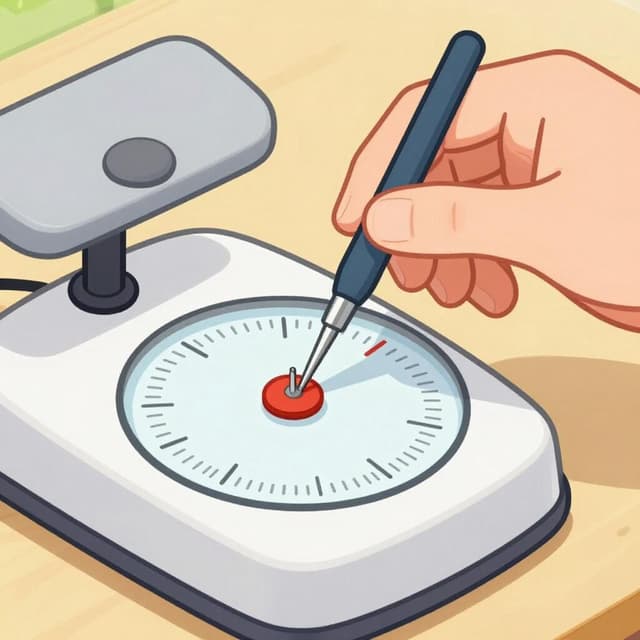
Koniugacja calibrar Tryb Subj. przeszły niedokonany
calibrar — to calibrate
The imperfect subjunctive of calibrar (e.g., calibrara, calibraras) is used for past hypotheticals, wishes, or doubts.
Formy calibrar Tryb Subj. przeszły niedokonany
Kiedy używać Tryb Subj. przeszły niedokonany
Use the imperfect subjunctive to talk about hypothetical situations, wishes, or doubts in the past. It often appears in 'if' clauses (like 'if I were to calibrate...') or after expressions of desire, emotion, or uncertainty related to the past.
Uwagi dotyczące calibrar w czasie Tryb Subj. przeszły niedokonany
'Calibrar' is regular in the imperfect subjunctive. Both the -ra and -se endings are correct, but the -ra form (calibrara, calibraras, etc.) is more common in everyday speech.
Przykładowe zdania
Si yo calibrara el motor, funcionaría mejor.
If I were to calibrate the engine, it would run better.
yo
Me gustaría que tú calibraras la impresora.
I would like you to calibrate the printer.
tú
Era importante que él calibrara los instrumentos.
It was important that he calibrate the instruments.
él/ella/usted
Dudaba que nosotros calibráramos el equipo correctamente.
I doubted that we calibrated the equipment correctly.
nosotros
Ojalá ellos calibraran a tiempo.
I wish they would calibrate on time.
ellos/ellas/ustedes
Częste błędy
Błąd: Using the imperfect indicative ('calibraba') instead of the imperfect subjunctive ('calibrara') after 'si' in a hypothetical.
Poprawnie: For hypothetical conditions, use the imperfect subjunctive: 'Si yo calibrara...'.
Dlaczego: The imperfect subjunctive is required for unreal or hypothetical conditions in the past.
Błąd: Confusing the 'vosotros' form, using 'calibrarais' from the -se ending instead of the more common -ra ending.
Poprawnie: The common 'vosotros' form is 'calibrarais'.
Dlaczego: While 'calibraseis' is also technically correct, 'calibrarais' is more frequently used.
Opanuj hiszpańskie czasowniki w kontekście
Zapamiętywanie tabel to dopiero początek. Przeczytaj ponad 200 ilustrowanych i udźwiękowionych hiszpańskich historii, aby zobaczyć czasowniki takie jak 'calibrar' używane naturalnie — w czasach, których się uczysz.
Powiązane czasy
Czas teraźniejszy
yo: calibro
The present tense of calibrar (calibro, calibras, etc.) describes current actions, habits, or general truths.
Czas przeszły prosty
yo: calibré
Calibrar is regular in the preterite: calibré, calibraste, calibró, calibrámos, calibrásteis, calibráron.
Czas przeszły niedokonany
yo: calibraba
The imperfect of calibrar (calibraba, calibrabas, etc.) describes ongoing or habitual past actions.
Czas przyszły
yo: calibraré
The future tense of calibrar (calibraré, calibrarás, etc.) indicates actions that will happen.
Tryb warunkowy
yo: calibraría
The conditional of calibrar (calibraría, calibrarías, etc.) expresses hypothetical actions ('would calibrate') or polite requests.
Tryb Subj. teraźniejszy
yo: calibre
The present subjunctive of calibrar (calibre, calibres, etc.) is used for wishes, doubts, emotions, and uncertainty.
Tryb rozkazujący (twierdzący)
yo: calibra
Calibrar's imperative forms are mostly regular, with a few exceptions: calibra (tú), calibre (usted), calibremos (nosotros), calibren (ustedes), calibrad (vosotros).
Tryb rozkazujący (przeczący)
yo: no calibres
Negative commands for 'calibrar' use the present subjunctive: no calibras (tú), no calibre (usted), no calibremos (nosotros), no calibren (ustedes), no calibréis (vosotros).