Koniugacja cavar Tryb warunkowy
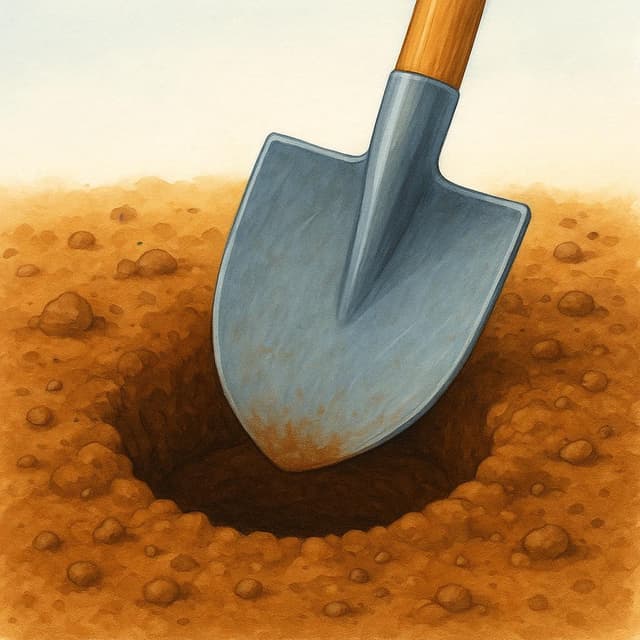
cavar — to dig
Use conditional forms like 'cavaría' (yo) and 'cavarían' (ellos) for hypothetical ('would dig') or polite requests.
Formy cavar Tryb warunkowy
Kiedy używać Tryb warunkowy
This tense is for 'what would happen' scenarios ('Si tuviera tiempo, cavaría un jardín.' - If I had time, I would dig a garden) or for polite requests ('¿Cavarías un hoyo para mí?' - Would you dig a hole for me?). It can also express probability in the past.
Uwagi dotyczące cavar w czasie Tryb warunkowy
Cavar is regular in the conditional tense. The stem is the infinitive 'cavar', and the standard conditional endings are added.
Przykładowe zdania
Yo cavaría un hoyo más grande si tuviera más espacio.
I would dig a bigger hole if I had more space.
yo
¿Tú cavarías esta tierra difícil?
Would you dig this difficult soil?
tú
Ella cavaría un túnel si pudiera.
She would dig a tunnel if she could.
él/ella/usted
Nosotros cavaríamos el jardín entero.
We would dig the entire garden.
nosotros
Ellos cavarían más si supieran dónde.
They would dig more if they knew where.
ellos/ellas/ustedes
Częste błędy
Błąd: Using the future tense instead of the conditional for hypotheticals.
Poprawnie: For 'would dig' or hypothetical situations, use the conditional 'cavaría'. The future 'cavará' means 'will dig'.
Dlaczego: The conditional expresses unreal or hypothetical situations, while the future expresses certainty.
Błąd: Confusing conditional endings with future endings.
Poprawnie: Conditional endings are '-ía, -ías, -ía, -íamos, -íais, -ían', while future endings are '-é, -ás, -á, -emos, -éis, -án'.
Dlaczego: Both tenses add endings to a stem, but the endings themselves and sometimes the stem (for irregular verbs) are different.
Opanuj hiszpańskie czasowniki w kontekście
Zapamiętywanie tabel to dopiero początek. Przeczytaj ponad 200 ilustrowanych i udźwiękowionych hiszpańskich historii, aby zobaczyć czasowniki takie jak 'cavar' używane naturalnie — w czasach, których się uczysz.
Powiązane czasy
Czas teraźniejszy
yo: cavo
Use the present tense like 'cavo' (yo) and 'cavan' (ellos) for current actions, habits, or general truths about digging.
Czas przeszły prosty
yo: cavé
Use preterite forms like 'cavé' (yo) and 'cavaron' (ellos) for completed digging actions in the past.
Czas przeszły niedokonany
yo: cavaba
Use the imperfect like 'cavaba' (yo) and 'cavaban' (ellos) for ongoing or habitual past actions (used to dig, was digging).
Czas przyszły
yo: cavaré
Future forms like 'cavaré' (yo) and 'cavarán' (ellos) indicate actions that will happen.
Tryb Subj. teraźniejszy
yo: cave
Use present subjunctive forms like 'cave' (yo) and 'caven' (ellos) after expressions of doubt, desire, or emotion.
Tryb Subj. przeszły niedokonany
yo: cavara
Use the imperfect subjunctive like 'cavara' or 'cavase' for past hypotheticals, wishes, or polite requests.
Tryb rozkazujący (twierdzący)
yo: cava
Use imperative forms like 'cava' (tú) and 'caven' (ustedes) for direct commands related to digging.
Tryb rozkazujący (przeczący)
yo: no caves
Use negative commands like 'no caves' (tú) and 'no caven' (ustedes) to tell someone not to dig.