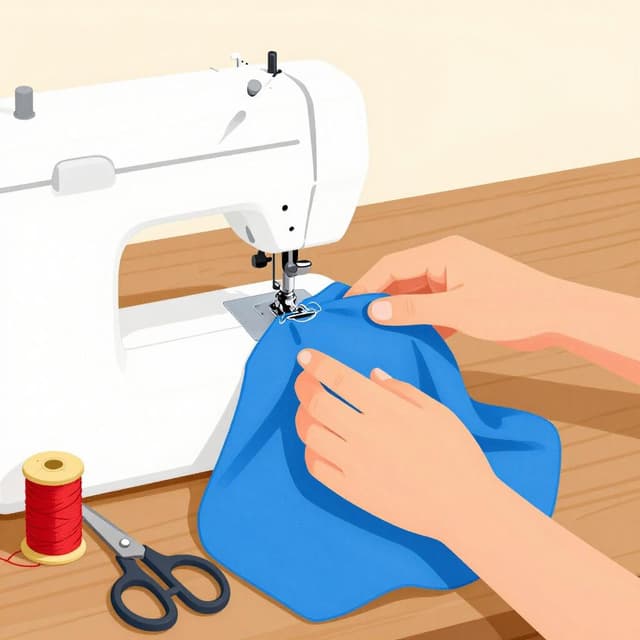
Koniugacja confeccionar Czas przeszły niedokonany
confeccionar — to make
The imperfect of confeccionar (confeccionaba, confeccionabas, etc.) describes ongoing or habitual past actions of making.
Formy confeccionar Czas przeszły niedokonany
Kiedy używać Czas przeszły niedokonany
Use the imperfect tense of confeccionar to describe actions of making that were ongoing or habitual in the past. Think 'used to make' or 'was making'. For example, 'She used to make clothes for her dolls' or 'He was making a sculpture when I arrived.'
Uwagi dotyczące confeccionar w czasie Czas przeszły niedokonany
Confeccionar is regular in the imperfect tense. The conjugations follow the standard pattern for -ar verbs.
Przykładowe zdania
Mi abuela confeccionaba vestidos preciosos.
My grandmother used to make beautiful dresses.
él/ella/usted
Cuando era joven, yo confeccionaba mis propios disfraces.
When I was young, I used to make my own costumes.
yo
¿Tú confeccionabas sombreros en esa época?
Were you making hats back then? / Did you used to make hats back then?
tú
Ellos confeccionaban muebles de madera.
They used to make wooden furniture.
ellos/ellas/ustedes
Mientras nosotros confeccionábamos la pancarta, ellos pintaban.
While we were making the banner, they were painting.
nosotros
Częste błędy
Błąd: Using the preterite 'confeccionó' instead of the imperfect.
Poprawnie: Use 'confeccionaba' to describe a repeated or ongoing action in the past, like 'She used to make...' (Ella confeccionaba...).
Dlaczego: The imperfect describes background or habitual actions, while the preterite describes a single, completed event.
Błąd: Forgetting the accent on 'confeccionábamos' (nosotros).
Poprawnie: The accent is on the 'a': 'confeccionábamos'.
Dlaczego: The accent mark indicates the stressed syllable in the nosotros form of the imperfect.
Opanuj hiszpańskie czasowniki w kontekście
Zapamiętywanie tabel to dopiero początek. Przeczytaj ponad 200 ilustrowanych i udźwiękowionych hiszpańskich historii, aby zobaczyć czasowniki takie jak 'confeccionar' używane naturalnie — w czasach, których się uczysz.
Powiązane czasy
Czas teraźniejszy
yo: confecciono
The present tense of confeccionar (confecciono, confeccionas, etc.) is used for current actions, habits, and general truths.
Czas przeszły prosty
yo: confeccioné
The preterite of confeccionar is regular: confeccioné, confeccionaste, confeccionó, confeccionamos, confeccionasteis, confeccionaron.
Czas przyszły
yo: confeccionaré
The future tense of confeccionar (confeccionaré, confeccionarás, etc.) expresses what someone will make.
Tryb warunkowy
yo: confeccionaría
The conditional of confeccionar (confeccionaría, confeccionarías, etc.) expresses 'would make' for hypotheticals and polite requests.
Tryb Subj. teraźniejszy
yo: confeccione
The present subjunctive of confeccionar (confeccione, confecciones, etc.) follows expressions of doubt, desire, and emotion.
Tryb Subj. przeszły niedokonany
yo: confeccionara
The imperfect subjunctive of confeccionar (confeccionara/confeccionase) is used for past hypotheticals and wishes.
Tryb rozkazujący (twierdzący)
yo: confecciona
Confecciona, confeccione, confeccionemos, confeccionad, confeccionen are the commands for confeccionar.
Tryb rozkazujący (przeczący)
yo: no confecciones
No confecciones, no confeccione, no confeccionemos, no confeccionéis, no confeccionen are the negative commands for confeccionar.