Koniugacja coser Czas przyszły
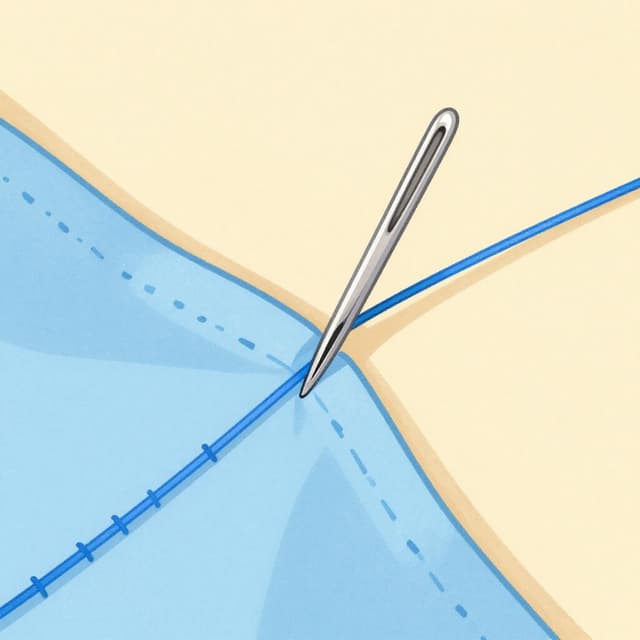
coser — to sew
Future tense of 'coser': coseré, coserás, coserá, etc., for actions that will happen.
Formy coser Czas przyszły
Kiedy używać Czas przyszły
Use the future tense of 'coser' to talk about sewing as something that *will* happen. It can also express probability or conjecture.
Uwagi dotyczące coser w czasie Czas przyszły
'Coser' is regular in the future tense. The future stem is the infinitive 'coser', and you add the standard future endings.
Przykładowe zdania
Mañana coseré la bandera.
Tomorrow I will sew the flag.
yo
¿Tú coserás el vestido para la fiesta?
Will you sew the dress for the party?
tú
Ella coserá los uniformes la próxima semana.
She will sew the uniforms next week.
él/ella/usted
Nosotros coseremos los disfraces si tenemos tiempo.
We will sew the costumes if we have time.
nosotros
Ellos coserán el estandarte.
They will sew the banner.
ellos/ellas/ustedes
Częste błędy
Błąd: Using the present tense or 'ir a + infinitive' when a more formal future is intended.
Poprawnie: Use 'coseré' for a definitive future action, not 'coso' or 'voy a coser'.
Dlaczego: While 'ir a + infinitive' is common, the simple future tense has its own distinct uses and formality.
Błąd: Forgetting the accent on the endings.
Poprawnie: The future endings always have an accent: 'coseré', 'coserás', 'coserá', etc.
Dlaczego: These accents are mandatory and indicate the stressed syllable.
Opanuj hiszpańskie czasowniki w kontekście
Zapamiętywanie tabel to dopiero początek. Przeczytaj ponad 200 ilustrowanych i udźwiękowionych hiszpańskich historii, aby zobaczyć czasowniki takie jak 'coser' używane naturalnie — w czasach, których się uczysz.
Powiązane czasy
Czas teraźniejszy
yo: coso
Present tense of 'coser': coso, coses, cose, cosemos, coséis, cosen, used for current actions, habits, and general truths.
Czas przeszły prosty
yo: cosí
The preterite of 'coser' is regular: cosí, cosiste, cosió, cosimos, cosisteis, cosieron.
Czas przeszły niedokonany
yo: cosía
Imperfect of 'coser': cosía, cosías, cosía, cosíamos, cosíais, cosían, for ongoing or habitual past actions.
Tryb warunkowy
yo: cosería
Conditional of 'coser': cosería, coserías, cosería, etc., for 'would' actions, polite requests, or future-in-the-past.
Tryb Subj. teraźniejszy
yo: cosa
Present subjunctive of 'coser' (cosa, cosas, etc.) used after expressions of doubt, desire, emotion, and uncertainty.
Tryb Subj. przeszły niedokonany
yo: cosiera
Imperfect subjunctive of 'coser' (cosiera/cosiese forms) used for past hypotheticals, wishes, or polite requests.
Tryb rozkazujący (twierdzący)
yo: cose
Imperative 'coser' forms: cose (tú), cosa (usted), cosamos (nosotros), cosed (vosotros), cosan (ustedes).
Tryb rozkazujący (przeczący)
yo: no cosas
Negative imperative 'coser' forms: no cosas (tú), no cosa (usted), no cosamos (nosotros), no cosáis (vosotros), no cosan (ustedes).