Koniugacja desprender Czas teraźniejszy
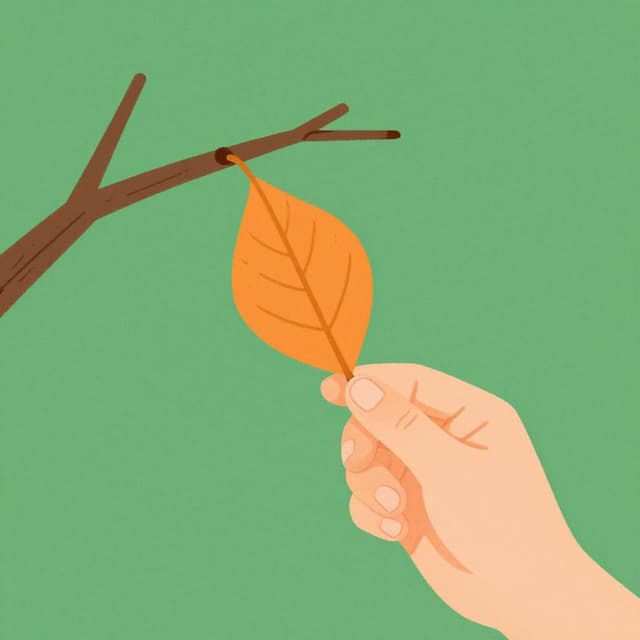
desprender — to detach
The present tense 'desprendo' is for actions happening now, habits, or general truths.
Formy desprender Czas teraźniejszy
Kiedy używać Czas teraźniejszy
Use the present tense for actions happening right now, like 'La pintura se desprende' (The paint is peeling off), or for regular occurrences, 'Este tipo de tela se desprende fácilmente' (This type of fabric detaches easily). It's also used for general truths.
Uwagi dotyczące desprender w czasie Czas teraźniejszy
Desprender is regular in the present indicative. It follows the standard conjugation pattern for -er verbs: desprendo, desprendes, desprende, desprendemos, desprendéis, desprenden.
Przykładowe zdania
Yo desprendo un olor extraño de la cocina.
I detect a strange smell from the kitchen.
yo
¿Tú desprendes calor cuando te enfadas?
Do you give off heat when you get angry?
tú
La madera vieja se desprende con el tiempo.
The old wood detaches over time.
él/ella/usted
Nosotros desprenderemos el material dañado.
We will detach the damaged material. (Note: This is future, but sometimes present can imply future intention)
nosotros
Ellos desprenden energía positiva.
They give off positive energy.
ellos/ellas/ustedes
Częste błędy
Błąd: Using the present tense for an action that just finished.
Poprawnie: Use the preterite: 'Se desprendió la rama' (The branch detached).
Dlaczego: The present tense is for ongoing actions, not completed ones.
Błąd: Confusing 'desprende' (él/ella/usted) with 'desprendes' (tú).
Poprawnie: Use 'desprende' for third person singular and 'desprendes' for tú.
Dlaczego: These are distinct conjugations for different subjects.
Opanuj hiszpańskie czasowniki w kontekście
Zapamiętywanie tabel to dopiero początek. Przeczytaj ponad 200 ilustrowanych i udźwiękowionych hiszpańskich historii, aby zobaczyć czasowniki takie jak 'desprender' używane naturalnie — w czasach, których się uczysz.
Powiązane czasy
Czas przeszły prosty
yo: desprendí
The preterite of desprender is regular: desprendí, desprendiste, desprendió, desprendimos, desprendisteis, desprendieron.
Czas przeszły niedokonany
yo: desprendía
The imperfect 'desprendía' describes ongoing or habitual past actions or background details.
Czas przyszły
yo: desprenderé
The future tense 'desprenderé' indicates actions that will happen.
Tryb warunkowy
yo: desprendería
The conditional 'desprendería' is for hypotheticals ('would'), polite requests, or future-in-the-past.
Tryb Subj. teraźniejszy
yo: desprenda
The present subjunctive 'desprenda' is used for wishes, doubts, emotions, and after impersonal expressions.
Tryb Subj. przeszły niedokonany
yo: desprendiera
The imperfect subjunctive 'desprendiera'/'desprendiese' is used for past hypotheticals, wishes, or doubts.
Tryb rozkazujący (twierdzący)
yo: desprende
Use the tú form 'desprende' for direct commands; 'desprenda' for usted; 'desprendamos' for nosotros; 'desprendan' for ustedes; 'desprended' for vosotros.
Tryb rozkazujący (przeczący)
yo: no desprendas
Negative commands use 'no' + present subjunctive: 'no desprendas' (tú), 'no desprenda' (usted), 'no desprendamos' (nosotros), 'no desprendan' (ustedes), 'no desprendáis' (vosotros).