Koniugacja deteriorar Czas przeszły niedokonany
deteriorar — to deteriorate
The imperfect of deteriorar is regular: 'deterioraba, deteriorabas, deterioraba, deteriorábamos, deteriorabais, deterioraban'.
Formy deteriorar Czas przeszły niedokonany
Kiedy używać Czas przeszły niedokonany
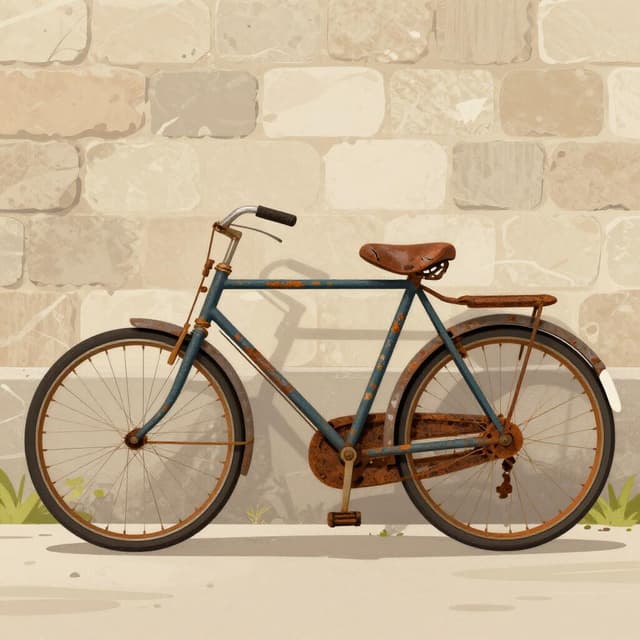
Use the imperfect tense of 'deteriorar' to describe ongoing or habitual deterioration in the past, or to set the scene. For example, 'El viejo edificio se deterioraba lentamente' (The old building was deteriorating slowly) describes a continuous process. Or, 'Cada invierno, las tuberías se deterioraban' (Every winter, the pipes used to deteriorate) describes a repeated action.
Uwagi dotyczące deteriorar w czasie Czas przeszły niedokonany
Deteriorar is regular in the imperfect indicative tense.
Przykładowe zdania
La casa se deterioraba porque nadie la habitaba.
The house was deteriorating because nobody lived in it.
él/ella/usted
Recuerdo que el papel se deterioraba con la humedad.
I remember that the paper used to deteriorate with humidity.
él/ella/usted
Nosotros veíamos cómo se deterioraba la pintura.
We watched as the paint deteriorated.
él/ella/usted
Las cosechas se deterioraban a causa de la sequía.
The crops were deteriorating because of the drought.
ellos/ellas/ustedes
Częste błędy
Błąd: Using the preterite instead of the imperfect.
Poprawnie: Use 'se deterioraba' for ongoing past actions ('The car was deteriorating'), and 'se deterioró' for completed actions ('The car deteriorated yesterday').
Dlaczego: The imperfect describes continuous or habitual past actions, while the preterite describes completed ones.
Błąd: Confusing the 'yo' and 'él/ella/usted' forms.
Poprawnie: Both 'yo' and 'él/ella/usted' use 'deterioraba'. Context usually clarifies who is acting.
Dlaczego: These forms are identical in the imperfect tense.
Opanuj hiszpańskie czasowniki w kontekście
Zapamiętywanie tabel to dopiero początek. Przeczytaj ponad 200 ilustrowanych i udźwiękowionych hiszpańskich historii, aby zobaczyć czasowniki takie jak 'deteriorar' używane naturalnie — w czasach, których się uczysz.
Powiązane czasy
Czas teraźniejszy
yo: deterioro
The present tense of deteriorar is regular: 'deterioro, deterioras, deteriora, deterioramos, deterioráis, deterioran'.
Czas przeszły prosty
yo: deterioré
The preterite of deteriorar is regular: 'deterioré, deterioraste, deterioró, deterioramos, deteriorasteis, deterioraron'.
Czas przyszły
yo: deterioraré
The future tense of deteriorar is regular: 'deterioraré, deteriorarás, deteriorará, deterioraremos, deterioraréis, deteriorarán'.
Tryb warunkowy
yo: deterioraría
The conditional of deteriorar is regular: 'deterioraría, deteriorarías, deterioraría, deterioraríamos, deterioraríais, deteriorarían'.
Tryb Subj. teraźniejszy
yo: deteriore
Use present subjunctive forms like 'deteriore' or 'deterioren' after expressions of doubt, desire, emotion, or uncertainty.
Tryb Subj. przeszły niedokonany
yo: deteriorara
Use imperfect subjunctive forms like 'deteriorara' or 'deteriorase' for past hypotheticals, wishes, or polite requests.
Tryb rozkazujący (twierdzący)
yo: deteriora
Use the imperative 'deteriora' for tú commands, and other forms like 'deterioren' for ustedes/ellos commands.
Tryb rozkazujący (przeczący)
yo: no deteriores
Form negative commands by adding 'no' before the present subjunctive forms like 'no deteriore' or 'no deterioren'.