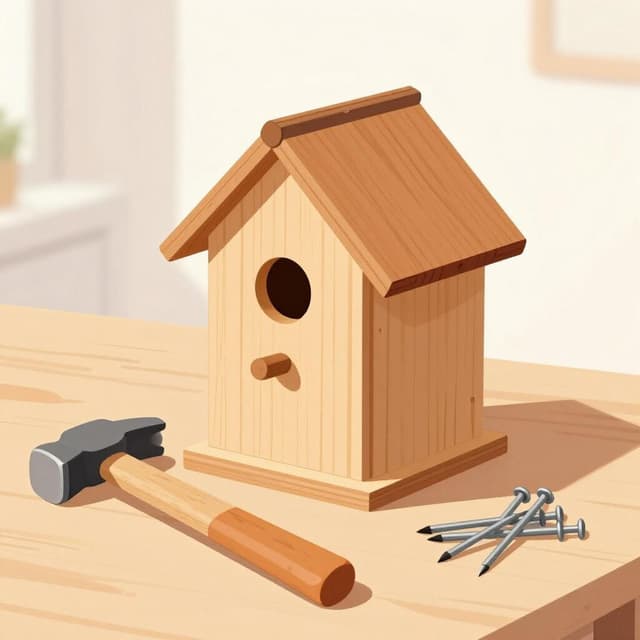
Koniugacja elaborar Tryb warunkowy
elaborar — to make
The conditional of 'elaborar' is regular: elaboraría, elaborarías, elaboraría, elaboraríamos, elaboraríais, elaborarían.
Formy elaborar Tryb warunkowy
Kiedy używać Tryb warunkowy
Use the conditional of 'elaborar' for hypothetical situations ('would make'), polite requests, or to express future actions from a past perspective. For instance, 'Yo elaboraría un plan mejor si tuviera más tiempo' means 'I would make a better plan if I had more time.' '¿Podrías elaborar un presupuesto?' is a polite way to ask 'Could you make a budget?'
Uwagi dotyczące elaborar w czasie Tryb warunkowy
Elaborar is regular in the conditional tense. The conditional stem is the infinitive 'elaborar', and the standard conditional endings (-ía, -ías, -ía, -íamos, -íais, -ían) are added.
Przykładowe zdania
Yo elaboraría el informe, pero no tengo los datos.
I would make the report, but I don't have the data.
yo
¿Tú qué elaborarías en esta situación?
What would you make in this situation?
tú
Él elaboraría una solución si pudiera.
He would make a solution if he could.
él/ella/usted
Nosotros elaboraríamos un nuevo diseño.
We would make a new design.
nosotros
Ellos elaborarían un plan más detallado.
They would make a more detailed plan.
ellos/ellas/ustedes
Częste błędy
Błąd: Using the simple future ('elaboraré') instead of the conditional ('elaboraría') for hypothetical situations.
Poprawnie: Use 'Yo elaboraría' for 'I would make' (hypothetical).
Dlaczego: The conditional expresses what *would* happen, often dependent on another condition, whereas the future expresses what *will* happen.
Błąd: Confusing the conditional ending with the imperfect indicative.
Poprawnie: Ensure the ending is '-ía' for conditional, not '-aba' for imperfect.
Dlaczego: The sounds are similar, but the meanings and spellings are distinct.
Opanuj hiszpańskie czasowniki w kontekście
Zapamiętywanie tabel to dopiero początek. Przeczytaj ponad 200 ilustrowanych i udźwiękowionych hiszpańskich historii, aby zobaczyć czasowniki takie jak 'elaborar' używane naturalnie — w czasach, których się uczysz.
Powiązane czasy
Czas teraźniejszy
yo: elaboro
The present tense of 'elaborar' is regular: elaboro, elaboras, elabora, elaboramos, elaboráis, elaboran.
Czas przeszły prosty
yo: elaboré
The preterite of 'elaborar' is regular: elaboré, elaboraste, elaboró, elaboramos, elaborasteis, elaboraron.
Czas przeszły niedokonany
yo: elaboraba
The imperfect of 'elaborar' is regular: elaboraba, elaborabas, elaboraba, elaborábamos, elaborabais, elaboraban.
Czas przyszły
yo: elaboraré
The future tense of 'elaborar' is regular: elaboraré, elaborarás, elaborará, elaboraremos, elaboraréis, elaborarán.
Tryb Subj. teraźniejszy
yo: elabore
Use 'elabore', 'elaboremos', 'elaboren' for wishes, doubts, emotions, and uncertainty with 'elaborar'.
Tryb Subj. przeszły niedokonany
yo: elaborara
Use 'elaborara' or 'elaborase' for past hypothetical situations, wishes, or doubts related to 'elaborar'.
Tryb rozkazujący (twierdzący)
yo: elabora
Use 'elabora', 'elabore', 'elaboremos', 'elaboren', 'elaborad' for direct commands with 'elaborar'.
Tryb rozkazujący (przeczący)
yo: no elabores
Use 'no elabores', 'no elabore', 'no elaboremos', 'no elaboren', 'no elaboreis' for negative commands with 'elaborar'.