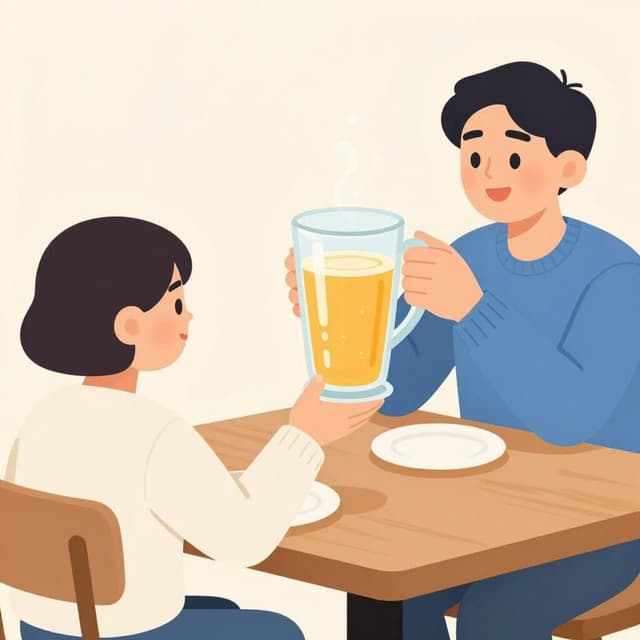
Koniugacja emborrachar Tryb rozkazujący (przeczący)
emborrachar — to make someone drunk
Use 'no + present subjunctive' for negative commands with emborrachar.
Formy emborrachar Tryb rozkazujący (przeczący)
Kiedy używać Tryb rozkazujący (przeczący)
This is how you tell someone NOT to do something. Since 'emborrachar' is often reflexive ('emborracharse' - to get drunk), you'll frequently see negative commands telling someone not to get drunk.
Uwagi dotyczące emborrachar w czasie Tryb rozkazujący (przeczący)
Negative commands in Spanish always use the present subjunctive form preceded by 'no'. So, 'emborrachar' follows the regular present subjunctive pattern.
Przykładowe zdania
No te emborraches antes de la reunión.
Don't get yourself drunk before the meeting.
tú
No emborrachen a los niños con refrescos azucarados.
Don't get the children drunk with sugary sodas.
¡No os emborrachéis con esa bebida!
Don't get yourselves drunk with that drink!
vosotros
No emborrachemos a nadie esta noche.
Let's not get anyone drunk tonight.
nosotros
Częste błędy
Błąd: Using the infinitive instead of the subjunctive.
Poprawnie: It should be 'No emborrachar' (incorrect) vs. 'No emborraches' (correct tú form).
Dlaczego: Negative commands require the subjunctive mood, not the infinitive.
Błąd: Forgetting the 'no'.
Poprawnie: 'Emborráchate' (Get drunk!) vs. 'No te emborraches' (Don't get drunk!).
Dlaczego: The 'no' is essential to turn an affirmative command into a negative one.
Opanuj hiszpańskie czasowniki w kontekście
Zapamiętywanie tabel to dopiero początek. Przeczytaj ponad 200 ilustrowanych i udźwiękowionych hiszpańskich historii, aby zobaczyć czasowniki takie jak 'emborrachar' używane naturalnie — w czasach, których się uczysz.
Powiązane czasy
Czas teraźniejszy
yo: emborracho
Use emborracho, emborrachas, emborracha etc. for habitual or current actions of getting drunk.
Czas przeszły prosty
yo: emborraché
Use emborraché, emborrachaste, emborrachó etc. for completed past actions of getting someone drunk.
Czas przeszły niedokonany
yo: emborrachaba
Use emborrachaba for ongoing or habitual past actions of getting drunk.
Czas przyszły
yo: emborracharé
Use emborracharé, emborracharás, emborrachará etc. for future actions or probability involving getting drunk.
Tryb warunkowy
yo: emborracharía
Use emborracharía for hypothetical situations or polite requests about getting drunk.
Tryb Subj. teraźniejszy
yo: emborrache
Use emborrache for wishes, doubts, or emotions about getting drunk.
Tryb Subj. przeszły niedokonany
yo: emborrachara
Use emborrachara/emborrachase for past hypotheticals or wishes related to getting drunk.
Tryb rozkazujący (twierdzący)
yo: emborracha
Use emborracha (tú) and emborracha (vosotros) for direct commands with emborrachar.