Koniugacja encoger Czas przeszły prosty
encoger — to shrink
The preterite of encoger is regular: encogí, encogiste, encogió, encogimos, encogisteis, encogieron.
Formy encoger Czas przeszły prosty
Kiedy używać Czas przeszły prosty
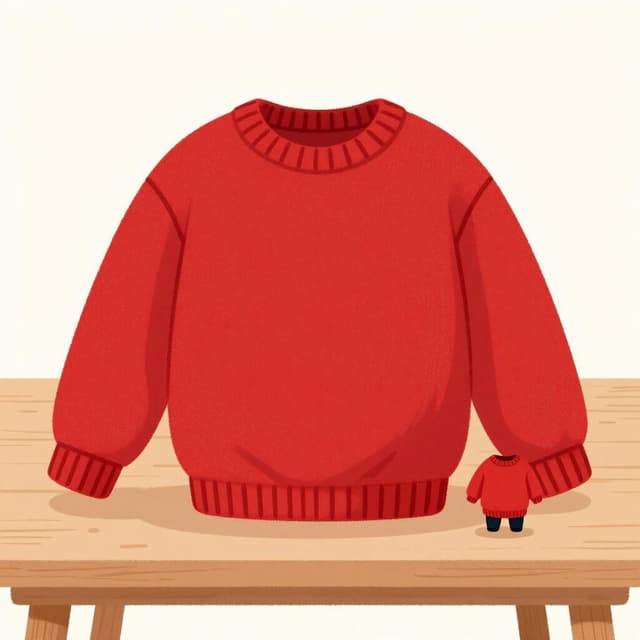
Use the preterite to describe a specific instance where something shrank, like a sweater after one bad laundry cycle.
Uwagi dotyczące encoger w czasie Czas przeszły prosty
Encoger is fully regular in the preterite. There is no 'g-to-j' change here because the endings start with 'i' or 'ie', which naturally keep the 'g' sounding soft.
Przykładowe zdania
Mi suéter favorito se encogió en la secadora.
My favorite sweater shrank in the dryer.
él/ella/usted
Encogí los hombros y no dije nada.
I shrugged my shoulders and said nothing.
yo
Los pantalones se encogieron mucho.
The pants shrank a lot.
ellos/ellas/ustedes
Częste błędy
Błąd: encojió
Poprawnie: encogió
Dlaczego: Learners often try to carry the 'j' from the present tense 'yo' form into the preterite, but it's not needed before 'i'.
Opanuj hiszpańskie czasowniki w kontekście
Zapamiętywanie tabel to dopiero początek. Przeczytaj ponad 200 ilustrowanych i udźwiękowionych hiszpańskich historii, aby zobaczyć czasowniki takie jak 'encoger' używane naturalnie — w czasach, których się uczysz.
Powiązane czasy
Czas teraźniejszy
yo: encojo
Encoger has a spelling change in the 'yo' form (encojo) but is otherwise a regular -er verb.
Czas przeszły niedokonany
yo: encogía
The imperfect of encoger is regular: encogía, encogías, encogía, encogíamos, encogíais, encogían.
Czas przyszły
yo: encogeré
The future of encoger is regular: encogeré, encogerás, encogerá, encogeremos, encogeréis, encogerán.
Tryb warunkowy
yo: encogería
The conditional of encoger is regular: encogería, encogerías, encogería, encogeríamos, encogeríais, encogerían.
Tryb Subj. teraźniejszy
yo: encoja
The present subjunctive uses the 'j' spelling change in all forms: encoja, encojas, encoja, encojamos, encojáis, encojan.
Tryb Subj. przeszły niedokonany
yo: encogiera
The imperfect subjunctive of encoger is regular: encogiera, encogieras, encogiera, encogiéramos, encogierais, encogieran.
Tryb rozkazujący (twierdzący)
yo: encoge
The imperative uses 'encoge' (tú) and 'encoged' (vosotros), but switches to 'j' for formal commands: encoja, encojan.
Tryb rozkazujący (przeczący)
yo: no encojas
The negative imperative always uses the 'j' spelling change: no encojas, no encoja, no encojamos, no encojáis, no encojan.