Koniugacja encubrir Tryb Subj. przeszły niedokonany
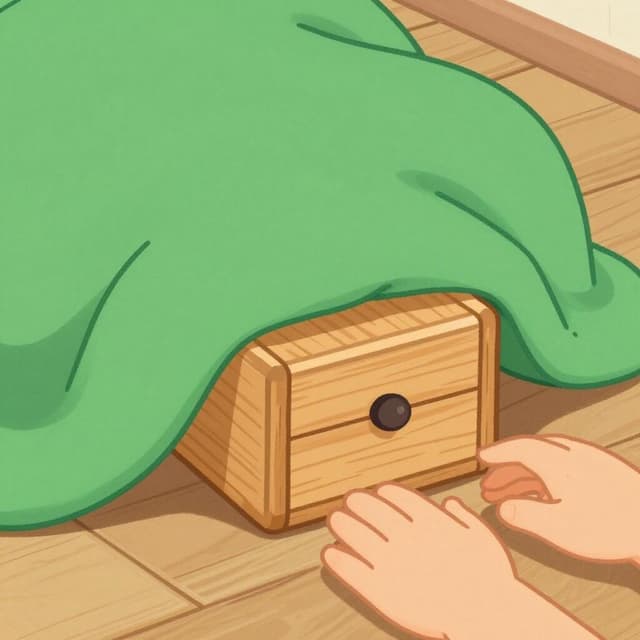
encubrir — to hide
The imperfect subjunctive of encubrir (encubriera, encubrieras, etc.) is used for past hypotheticals, wishes, and doubts.
Formy encubrir Tryb Subj. przeszły niedokonany
Kiedy używać Tryb Subj. przeszły niedokonany
Use the imperfect subjunctive after expressions of doubt, desire, emotion, or necessity in the past, or in hypothetical 'if' clauses referring to the past or present. For 'encubrir', it could be used to talk about wishing someone hadn't hidden something, or if they had hidden it, then something else would have happened.
Uwagi dotyczące encubrir w czasie Tryb Subj. przeszły niedokonany
Encubrir is regular in the imperfect subjunctive, using the -ra or -se endings. Both forms are common, though -ra is often preferred. The stem remains 'encubrier-'.
Przykładowe zdania
Ojalá no encubrieras tantos problemas.
I wish you wouldn't hide so many problems.
tú
Si él encubriera la verdad, las consecuencias serían graves.
If he were to hide the truth, the consequences would be serious.
él/ella/usted
Era importante que todos encubriéramos la información sensible.
It was important that we all hide the sensitive information.
nosotros
Dudaba que ellos encubrieran el fraude.
I doubted that they were hiding the fraud.
ellos/ellas/ustedes
Częste błędy
Błąd: Using the preterite instead of the imperfect subjunctive in 'if' clauses.
Poprawnie: In conditional clauses like 'If I hid...', use 'Si encubriera...' not 'Si encubrí...'.
Dlaczego: The imperfect subjunctive is required for hypothetical or contrary-to-fact conditions.
Błąd: Confusing the -ra and -se forms.
Poprawnie: Both 'encubriera' and 'encubriese' are correct, but consistency matters.
Dlaczego: While both are grammatically valid, learners might incorrectly mix them or use the wrong stem.
Opanuj hiszpańskie czasowniki w kontekście
Zapamiętywanie tabel to dopiero początek. Przeczytaj ponad 200 ilustrowanych i udźwiękowionych hiszpańskich historii, aby zobaczyć czasowniki takie jak 'encubrir' używane naturalnie — w czasach, których się uczysz.
Powiązane czasy
Czas teraźniejszy
yo: encubro
The present tense of encubrir (encubro, encubres, encubre, etc.) describes actions happening now or habitual hiding.
Czas przeszły prosty
yo: encubrí
The preterite of encubrir is regular: encubrí, encubriste, encubrió, encubrimos, encubristeis, encubrieron.
Czas przeszły niedokonany
yo: encubría
The imperfect of encubrir (encubría, encubrías, etc.) describes ongoing or habitual past hiding.
Czas przyszły
yo: encubriré
The future tense of encubrir (encubriré, encubrirás, etc.) indicates actions that will happen or expresses probability.
Tryb warunkowy
yo: encubriría
The conditional of encubrir (encubriría, encubrirías, etc.) expresses 'would' actions, politeness, or future-in-the-past.
Tryb Subj. teraźniejszy
yo: encubra
The present subjunctive of encubrir (encubra, encubras, etc.) follows expressions of doubt, desire, emotion, and uncertainty.
Tryb rozkazujący (twierdzący)
yo: encubre
Encubrir's imperative forms include tú encubre, usted encubra, nosotros encubramos, ustedes encubran, and vosotros encubrid.
Tryb rozkazujący (przeczący)
yo: no encubras
Negative commands for encubrir use the present subjunctive: no encubras, no encubra, no encubramos, no encubran, no encubráis.