Koniugacja enderezar Czas przeszły prosty
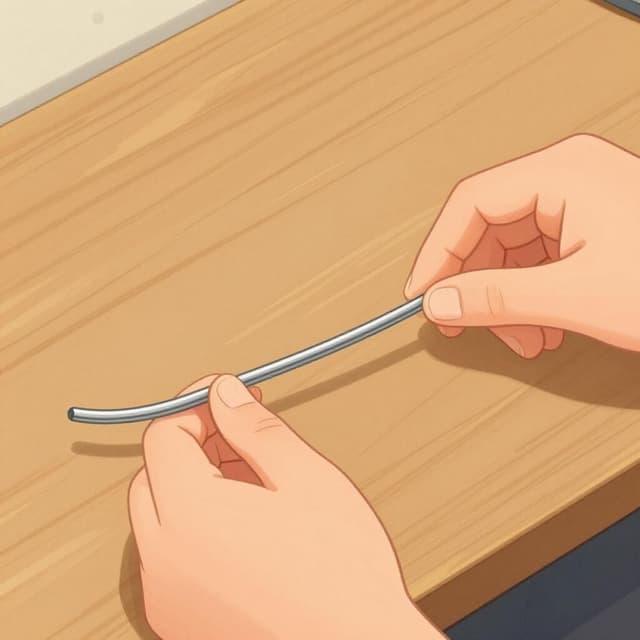
enderezar — to straighten
The preterite of enderezar has a spelling change in the 'yo' form only: enderecé.
Formy enderezar Czas przeszły prosty
Kiedy używać Czas przeszły prosty
Use the preterite to describe a completed action of straightening something at a specific point in time.
Uwagi dotyczące enderezar w czasie Czas przeszły prosty
The only change is in the 'yo' form, where 'z' becomes 'c' (enderecé) to keep the pronunciation consistent. All other forms are regular.
Przykładowe zdania
Enderecé el clavo con un martillo.
I straightened the nail with a hammer.
yo
Ella enderezó la antena de la televisión.
She straightened the TV antenna.
él/ella/usted
Enderezamos las sillas después de la fiesta.
We straightened the chairs after the party.
nosotros
Częste błędy
Błąd: Writing 'enderecé' as 'enderezé'.
Poprawnie: enderecé
Dlaczego: Spanish orthography requires 'z' to change to 'c' before 'e'.
Opanuj hiszpańskie czasowniki w kontekście
Zapamiętywanie tabel to dopiero początek. Przeczytaj ponad 200 ilustrowanych i udźwiękowionych hiszpańskich historii, aby zobaczyć czasowniki takie jak 'enderezar' używane naturalnie — w czasach, których się uczysz.
Powiązane czasy
Czas teraźniejszy
yo: enderezo
The present tense of enderezar is regular: enderezo, enderezas, endereza, enderezamos, enderezáis, enderezan.
Czas przeszły niedokonany
yo: enderezaba
The imperfect of enderezar is regular: enderezaba, enderezabas, enderezaba, enderezábamos, enderezabais, enderezaban.
Czas przyszły
yo: enderezaré
The future tense of enderezar is regular: enderezaré, enderezarás, enderezará, enderezaremos, enderezaréis, enderezarán.
Tryb warunkowy
yo: enderezaría
The conditional of enderezar is regular: enderezaría, enderezarías, enderezaría, enderezaríamos, enderezaríais, enderezarían.
Tryb Subj. teraźniejszy
yo: enderece
The present subjunctive of enderezar features a 'z' to 'c' spelling change: enderece, endereces, enderece, enderecemos, enderecéis, enderecen.
Tryb Subj. przeszły niedokonany
yo: enderezara
The imperfect subjunctive of enderezar is regular: enderezara, enderezaras, enderezara, enderezáramos, enderezarais, enderezaran.
Tryb rozkazujący (twierdzący)
yo: endereza
The imperative for enderezar uses 'endereza' (tú) and 'enderece' (usted).
Tryb rozkazujący (przeczący)
yo: no endereces
The negative imperative of enderezar always uses the 'z' to 'c' spelling change: no endereces, no enderece.