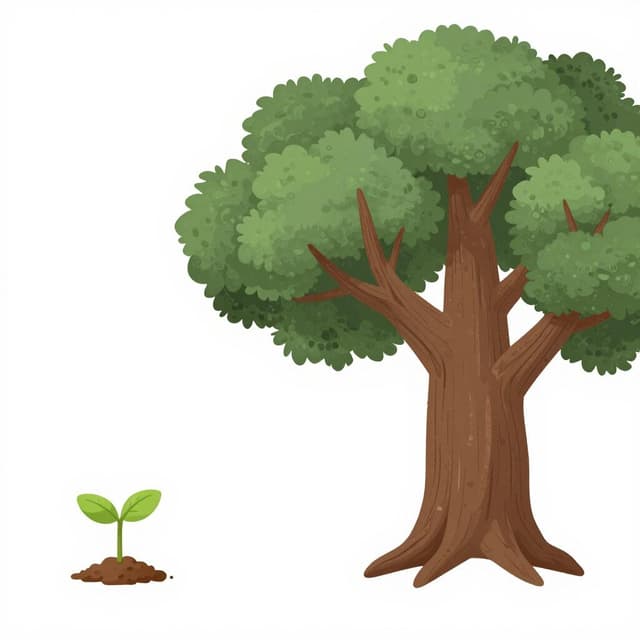
Koniugacja envejecer Tryb Subj. teraźniejszy
envejecer — to age
The present subjunctive uses the 'z' from the 'yo' form: envejezca, envejezcas, envejezca, envejezcamos, envejezcáis, envejezcan.
Formy envejecer Tryb Subj. teraźniejszy
Kiedy używać Tryb Subj. teraźniejszy
Use this when expressing wishes, fears, or doubts about the aging process (e.g., 'I hope I don't age too fast').
Uwagi dotyczące envejecer w czasie Tryb Subj. teraźniejszy
Because the 'yo' form is 'envejezco', the entire subjunctive mood adopts the 'zc' stem to keep the sound consistent before the 'a' endings.
Przykładowe zdania
Espero que no envejezcas demasiado rápido.
I hope you don't age too quickly.
tú
Dudo que el vino envejezca bien en esta botella.
I doubt the wine will age well in this bottle.
él/ella/usted
Es ley de vida que todos envejezcamos.
It's the law of life that we all grow old.
nosotros
Częste błędy
Błąd: envejeca
Poprawnie: envejezca
Dlaczego: If you use 'envejeca', it would be pronounced with a hard 'k' sound. The 'z' is added to keep the 'th' or 's' sound.
Opanuj hiszpańskie czasowniki w kontekście
Zapamiętywanie tabel to dopiero początek. Przeczytaj ponad 200 ilustrowanych i udźwiękowionych hiszpańskich historii, aby zobaczyć czasowniki takie jak 'envejecer' używane naturalnie — w czasach, których się uczysz.
Powiązane czasy
Czas teraźniejszy
yo: envejezco
The present tense of envejecer is irregular only in the 'yo' form: envejezco.
Czas przeszły prosty
yo: envejecí
Envejecer is regular in the preterite: envejecí, envejeciste, envejeció, envejecimos, envejecisteis, envejecieron.
Czas przeszły niedokonany
yo: envejecía
The imperfect of envejecer is regular: envejecía, envejecías, envejecía, envejecíamos, envejecíais, envejecían.
Czas przyszły
yo: envejeceré
The future of envejecer is regular: envejeceré, envejecerás, envejecerá, envejeceremos, envejeceréis, envejecerán.
Tryb warunkowy
yo: envejecería
The conditional of envejecer is regular: envejecería, envejecerías, envejecería, envejeceríamos, envejeceríais, envejecerían.
Tryb Subj. przeszły niedokonany
yo: envejeciera
The imperfect subjunctive is regular based on the third-person preterite: envejeciera, envejecieras, envejeciera, envejeciéramos, envejecierais, envejecieran.
Tryb rozkazujący (twierdzący)
yo: envejece
The imperative uses 'envejece' for tú and 'envejezca' for formal/plural commands.
Tryb rozkazujący (przeczący)
yo: no envejezcas
The negative imperative always uses the 'zc' stem: no envejezcas, no envejezca, no envejezcamos, no envejezcáis, no envejezcan.