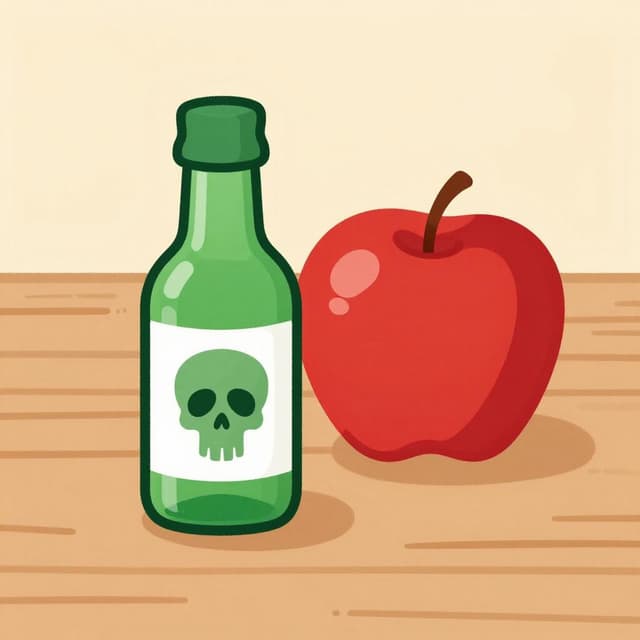
Koniugacja envenenar Tryb rozkazujący (przeczący)
envenenar — to poison
Negative commands for envenenar use 'no' + present subjunctive: no envenenes (tú), no envenene (usted), no envenenemos (nosotros), no envenenen (ustedes), no envenenéis (vosotros).
Formy envenenar Tryb rozkazujący (przeczący)
Kiedy używać Tryb rozkazujący (przeczący)
Use the negative imperative to tell someone NOT to do something. For 'envenenar', this means instructing someone not to poison something.
Uwagi dotyczące envenenar w czasie Tryb rozkazujący (przeczący)
This tense is formed by adding 'no' before the present subjunctive forms of 'envenenar'. The present subjunctive for regular -ar verbs like 'envenenar' is derived from the 'yo' form of the present indicative ('enveneno'), dropping the '-o' and adding the opposite vowel ending (-e for -ar verbs). So, 'enveneno' becomes '-e', giving us 'envenene' for él/ella/usted, 'envenenes' for tú, 'envenenemos' for nosotros, 'envenenéis' for vosotros, and 'envenenen' for ellos/ellas/ustedes.
Przykładowe zdania
No envenenes la comida de tu amigo.
Don't poison your friend's food.
tú
Por favor, no envenene el estanque.
Please, don't poison the pond.
usted
No envenenemos esta oportunidad.
Let's not poison this opportunity.
nosotros
¡No envenenéis las redes sociales con odio!
Don't poison social media with hate!
vosotros
No envenenen el ambiente con sus quejas.
Don't poison the atmosphere with your complaints.
ustedes
Częste błędy
Błąd: Using the infinitive after 'no'.
Poprawnie: Use 'no' + the correct present subjunctive form (e.g., 'no envenenes').
Dlaczego: The negative imperative requires the subjunctive mood, not the infinitive.
Błąd: Forgetting the 'no' in negative commands.
Poprawnie: Always include 'no' before the verb in negative commands.
Dlaczego: The 'no' is essential to make the command negative.
Opanuj hiszpańskie czasowniki w kontekście
Zapamiętywanie tabel to dopiero początek. Przeczytaj ponad 200 ilustrowanych i udźwiękowionych hiszpańskich historii, aby zobaczyć czasowniki takie jak 'envenenar' używane naturalnie — w czasach, których się uczysz.
Powiązane czasy
Czas teraźniejszy
yo: enveneno
The present tense of envenenar (enveneno, envenenas, envenena...) describes habitual actions or things happening now.
Czas przeszły prosty
yo: envenené
The preterite of envenenar is regular: envenené, envenenaste, envenenó, envenenamos, envenenasteis, envenenaron.
Czas przeszły niedokonany
yo: envenenaba
The imperfect of envenenar (envenenaba, envenenabas...) describes ongoing or habitual past actions.
Czas przyszły
yo: envenenaré
The future tense of envenenar (envenenaré, envenenarás...) indicates actions that will happen.
Tryb warunkowy
yo: envenenaría
The conditional of envenenar (envenenaría, envenenarías...) expresses 'would' actions, politeness, or future-in-the-past.
Tryb Subj. teraźniejszy
yo: envenene
The present subjunctive of envenenar (envenene, envenenes, etc.) is used after expressions of doubt, desire, emotion, and uncertainty.
Tryb Subj. przeszły niedokonany
yo: envenenara
The imperfect subjunctive of envenenar (envenenara/envenenase) is used for past hypotheticals, wishes, or doubts.
Tryb rozkazujący (twierdzący)
yo: envenena
The imperative of envenenar uses regular -ar endings: envenena (tú), envenene (usted), envenenemos (nosotros), envenenen (ustedes), envenenad (vosotros).