Koniugacja incendiar Czas przeszły prosty
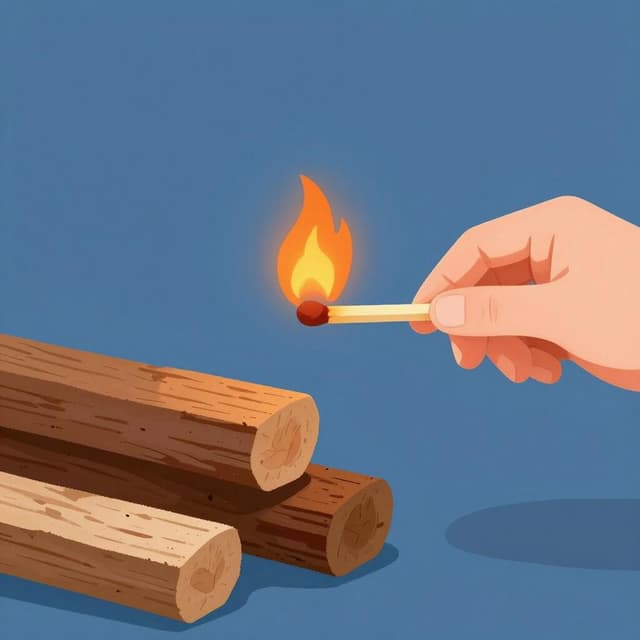
incendiar — to set on fire
The preterite of 'incendiar' is regular: incendié, incendiaste, incendió, incendiamos, incendiasteis, incendiaron.
Formy incendiar Czas przeszły prosty
Kiedy używać Czas przeszły prosty
Use the preterite for actions of setting something on fire that were completed at a specific point in the past, like 'El rayo incendió el árbol' (The lightning struck and set fire to the tree).
Uwagi dotyczące incendiar w czasie Czas przeszły prosty
'Incendiar' is regular in the preterite tense. All forms follow the standard pattern for -ar verbs.
Przykładowe zdania
Incendié la basura en el patio trasero.
I set fire to the trash in the backyard.
yo
¿Incendiaste la vela para la cena?
Did you light the candle for dinner?
tú
El pirómano incendió el edificio anoche.
The arsonist set fire to the building last night.
él/ella/usted
Incendiaron la casa sin piedad.
They set fire to the house mercilessly.
ellos/ellas/ustedes
Częste błędy
Błąd: Using the imperfect instead of the preterite.
Poprawnie: Use 'incendió' for a completed action, not 'incendiaba'.
Dlaczego: The preterite is for completed events, while the imperfect describes ongoing or habitual past actions.
Błąd: Forgetting the accent on 'incendió' (él/ella/usted) and 'incendié' (yo).
Poprawnie: The forms are 'incendió' and 'incendié', with accents.
Dlaczego: The accent marks the stress on the final syllable, distinguishing these forms.
Opanuj hiszpańskie czasowniki w kontekście
Zapamiętywanie tabel to dopiero początek. Przeczytaj ponad 200 ilustrowanych i udźwiękowionych hiszpańskich historii, aby zobaczyć czasowniki takie jak 'incendiar' używane naturalnie — w czasach, których się uczysz.
Powiązane czasy
Czas teraźniejszy
yo: incendio
The present tense ('incendio', 'incendias') describes actions happening now or habitual actions.
Czas przeszły niedokonany
yo: incendiaba
The imperfect ('incendiaba', 'incendiabas') describes ongoing or habitual past actions, like 'incendiaba la chimenea cada noche'.
Czas przyszły
yo: incendiaré
The future tense ('incendiaré', 'incendiarás') indicates actions that will happen.
Tryb warunkowy
yo: incendiaría
The conditional ('incendiaría', 'incendiarías') expresses hypotheticals ('would set fire') or polite requests.
Tryb Subj. teraźniejszy
yo: incendie
The present subjunctive ('incendie', 'incendies', etc.) expresses wishes, doubts, or emotions about the present or future.
Tryb Subj. przeszły niedokonany
yo: incendiara
The imperfect subjunctive ('incendiara' or 'incendiase') talks about past hypotheticals or wishes.
Tryb rozkazujący (twierdzący)
yo: incendia
Commands like 'incendia tú' or 'incendien ustedes' are formed directly from the present subjunctive (except for tú).
Tryb rozkazujący (przeczący)
yo: no incendies
Negative commands like 'no incendies' always use the present subjunctive forms.