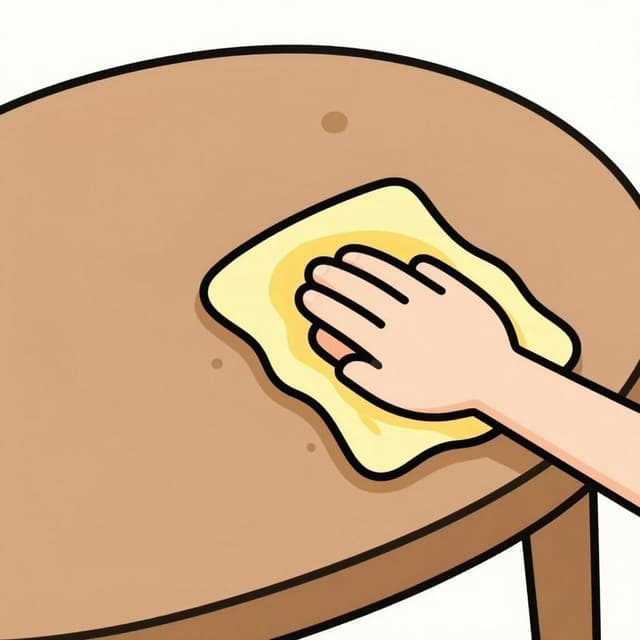
Koniugacja limpiar Czas przeszły niedokonany
limpiar — clean
The imperfect of limpiar uses standard -ar endings: limpiaba, limpiabas, limpiaba, limpiábamos, limpiabais, limpiaban.
Formy limpiar Czas przeszły niedokonany
Kiedy używać Czas przeszły niedokonany
Use the imperfect to describe cleaning routines you used to have in the past or to set the scene while something else happened (e.g., 'I was cleaning when the phone rang').
Uwagi dotyczące limpiar w czasie Czas przeszły niedokonany
Limpiar is fully regular in the imperfect. All -ar verbs follow this pattern without exception.
Przykładowe zdania
Cuando era niño, yo siempre limpiaba mi cuarto.
When I was a kid, I always cleaned my room.
yo
Nosotros limpiábamos la piscina cada verano.
We used to clean the pool every summer.
nosotros
Mientras tú limpiabas, yo cocinaba.
While you were cleaning, I was cooking.
tú
Częste błędy
Błąd: Forgetting the accent on 'limpiábamos'.
Poprawnie: limpiábamos
Dlaczego: The nosotros form in the imperfect indicative for -ar verbs always requires an accent on the first 'a' of the ending.
Opanuj hiszpańskie czasowniki w kontekście
Zapamiętywanie tabel to dopiero początek. Przeczytaj ponad 200 ilustrowanych i udźwiękowionych hiszpańskich historii, aby zobaczyć czasowniki takie jak 'limpiar' używane naturalnie — w czasach, których się uczysz.
Powiązane czasy
Czas teraźniejszy
yo: limpio
Limpiar is a regular -ar verb in the present: limpio, limpias, limpia, limpiamos, limpiáis, limpian.
Czas przeszły prosty
yo: limpié
The preterite of limpiar is regular: limpié, limpiaste, limpió, limpiamos, limpiasteis, limpiaron.
Czas przyszły
yo: limpiaré
The future of limpiar is formed by adding endings to the infinitive: limpiaré, limpiarás, limpiará, limpiaremos, limpiaréis, limpiarán.
Tryb warunkowy
yo: limpiaría
The conditional of limpiar uses the infinitive plus -ía endings: limpiaría, limpiarías, limpiaría, limpiaríamos, limpiaríais, limpiarían.
Tryb Subj. teraźniejszy
yo: limpie
The present subjunctive of limpiar swaps the -a for -e: limpie, limpies, limpie, limpiemos, limpiéis, limpien.
Tryb Subj. przeszły niedokonany
yo: limpiara
The imperfect subjunctive of limpiar uses the 'limpiara' stem: limpiara, limpiaras, limpiara, limpiáramos, limpiarais, limpiaran.
Tryb rozkazujący (twierdzący)
yo: limpia
The affirmative imperative of limpiar gives direct orders: limpia, limpie, limpiemos, limpiad, limpien.
Tryb rozkazujący (przeczący)
yo: no limpies
The negative imperative of limpiar uses the present subjunctive: no limpies, no limpie, no limpiemos, no limpiéis, no limpien.