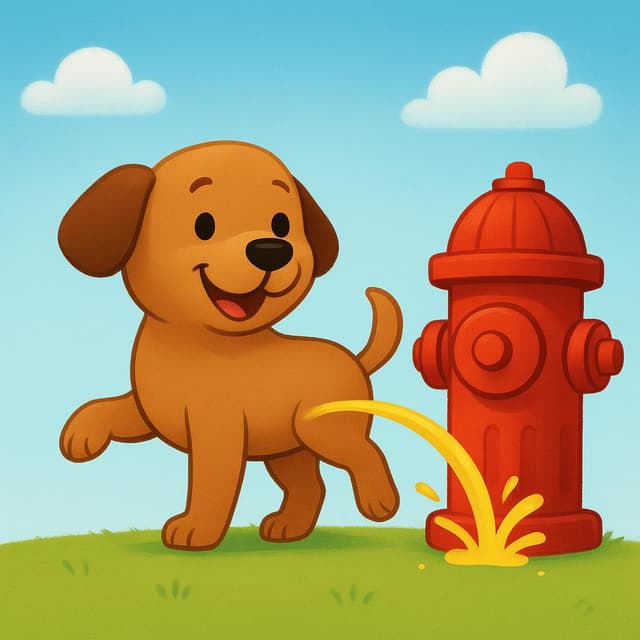
Koniugacja mear Tryb Subj. teraźniejszy
mear — to pee
The present subjunctive of mear is regular: mee, mees, mee, meemos, meéis, meen.
Formy mear Tryb Subj. teraźniejszy
Kiedy używać Tryb Subj. teraźniejszy
Use when expressing desires, doubts, or after certain conjunctions (e.g., 'I hope the dog doesn't pee inside').
Uwagi dotyczące mear w czasie Tryb Subj. teraźniejszy
Mear is regular. The 'a' from the infinitive changes to an 'e' for all endings.
Przykładowe zdania
Espero que el gato no mee en la alfombra.
I hope the cat doesn't pee on the rug.
él/ella/usted
Cuando mees, cierra la puerta.
When you pee, close the door.
tú
No quiero que meen en mi jardín.
I don't want them to pee in my garden.
ellos/ellas/ustedes
Częste błędy
Błąd: Using the indicative 'mea' after 'espero que'.
Poprawnie: mee
Dlaczego: Verbs of wishing/hoping require the subjunctive mood.
Opanuj hiszpańskie czasowniki w kontekście
Zapamiętywanie tabel to dopiero początek. Przeczytaj ponad 200 ilustrowanych i udźwiękowionych hiszpańskich historii, aby zobaczyć czasowniki takie jak 'mear' używane naturalnie — w czasach, których się uczysz.
Powiązane czasy
Czas teraźniejszy
yo: meo
The present of mear is regular: meo, meas, mea, meamos, meáis, mean.
Czas przeszły prosty
yo: meé
The preterite of mear is regular: meé, measte, meó, meamos, measteis, mearon.
Czas przeszły niedokonany
yo: meaba
The imperfect of mear is regular: meaba, meabas, meaba, meábamos, meabais, meaban.
Czas przyszły
yo: mearé
The future of mear is regular: mearé, mearás, meará, mearemos, mearéis, mearán.
Tryb warunkowy
yo: mearía
The conditional of mear is regular: mearía, mearías, mearía, mearíamos, mearíais, mearían.
Tryb Subj. przeszły niedokonany
yo: meara
The imperfect subjunctive of mear is regular: meara, mearas, meara, meáramos, mearais, mearan.
Tryb rozkazujący (twierdzący)
yo: mea
The affirmative imperative of mear: mea (tú), mead (vosotros), mee (usted).
Tryb rozkazujący (przeczący)
yo: no mees
The negative imperative of mear uses the subjunctive: no mees, no meéis, no mee.