Koniugacja merodear Czas teraźniejszy
merodear — to prowl
Use the present 'merodea' (he/she prowls) for ongoing actions or habits.
Formy merodear Czas teraźniejszy
Kiedy używać Czas teraźniejszy
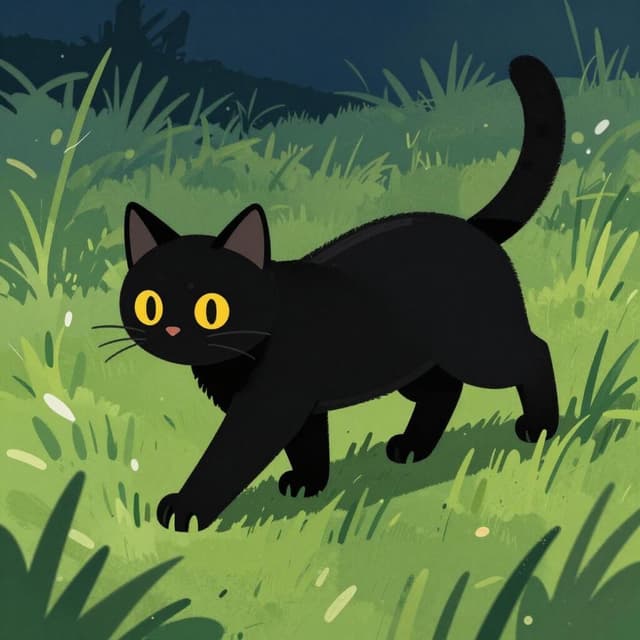
The present tense is for actions happening right now, habitual actions, or general truths. You might use it to describe a cat that often prowls or someone who is currently prowling.
Uwagi dotyczące merodear w czasie Czas teraźniejszy
'Merodear' is regular in the present indicative tense.
Przykładowe zdania
El zorro merodea por el gallinero cada noche.
The fox prowls around the henhouse every night.
él/ella/usted
¿Qué merodeas por mi cocina?
What are you prowling around my kitchen for?
tú
Los gatos merodean sigilosamente buscando ratones.
The cats prowl stealthily looking for mice.
ellos/ellas/ustedes
Częste błędy
Błąd: Using the present for a completed past action.
Poprawnie: If the prowling already happened, use the preterite: 'Merodeó anoche'.
Dlaczego: The present tense is for current or habitual actions, not finished ones.
Błąd: Confusing 'merodea' (he/she) with 'merodeamos' (we).
Poprawnie: Ensure you use the correct ending for the subject: 'él merodea', 'nosotros merodeamos'.
Dlaczego: Incorrect endings lead to confusion about who is performing the action.
Opanuj hiszpańskie czasowniki w kontekście
Zapamiętywanie tabel to dopiero początek. Przeczytaj ponad 200 ilustrowanych i udźwiękowionych hiszpańskich historii, aby zobaczyć czasowniki takie jak 'merodear' używane naturalnie — w czasach, których się uczysz.
Powiązane czasy
Czas przeszły prosty
yo: merodeé
Use the preterite 'merodeó' (he/she/it prowled) for completed past actions of prowling.
Czas przeszły niedokonany
yo: merodeaba
Use imperfect 'merodeaba' (he/she was prowling) for ongoing or habitual past actions.
Czas przyszły
yo: merodearé
Use the future 'merodeará' (he/she will prowl) for actions that will happen.
Tryb warunkowy
yo: merodearía
Use conditional 'merodearía' (he/she would prowl) for hypotheticals or polite requests.
Tryb Subj. teraźniejszy
yo: merodee
Use present subjunctive like 'merodee' after expressions of doubt, desire, or emotion.
Tryb Subj. przeszły niedokonany
yo: merodeara
Use imperfect subjunctive like 'merodeara' or 'merodeara' for past hypotheticals or wishes.
Tryb rozkazujący (twierdzący)
yo: merodea
Use imperative forms like 'merodea' (tú) and 'merodeen' (ustedes) for direct commands.
Tryb rozkazujący (przeczący)
yo: no merodees
Negative commands like 'no merodees' (tú) use the present subjunctive with 'no'.