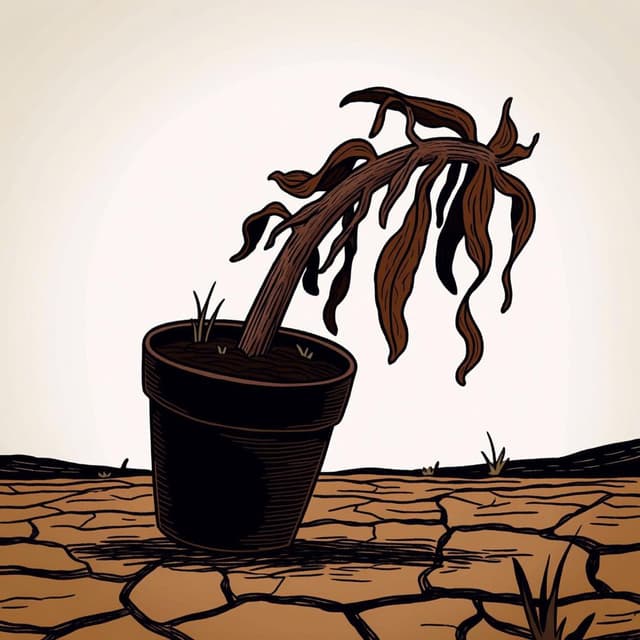
Koniugacja morir Tryb rozkazujący (przeczący)
morir — to die
The negative imperative of morir uses the present subjunctive forms preceded by 'no'.
Formy morir Tryb rozkazujący (przeczący)
Kiedy używać Tryb rozkazujący (przeczący)
Used to tell someone not to 'die' (usually figuratively, like 'don't die of laughter' or 'don't let the fire die').
Uwagi dotyczące morir w czasie Tryb rozkazujący (przeczący)
Follows the present subjunctive stem changes: 'muer-' for most, 'mur-' for nosotros/vosotros.
Przykładowe zdania
¡No te mueras de risa!
Don't die of laughter!
tú
No muramos en el intento.
Let's not die trying.
nosotros
No mueran de sed, beban agua.
Don't die of thirst, drink water.
Częste błędy
Błąd: Saying 'no muere' for a command.
Poprawnie: no mueras
Dlaczego: Negative commands must use the subjunctive, never the indicative.
Opanuj hiszpańskie czasowniki w kontekście
Zapamiętywanie tabel to dopiero początek. Przeczytaj ponad 200 ilustrowanych i udźwiękowionych hiszpańskich historii, aby zobaczyć czasowniki takie jak 'morir' używane naturalnie — w czasach, których się uczysz.
Powiązane czasy
Czas teraźniejszy
yo: muero
Morir is a radical stem-changer (o to ue) in the present tense, except for nosotros and vosotros.
Czas przeszły prosty
yo: morí
Morir is a stem-changer in the preterite, changing o to u in the third-person forms: murió and murieron.
Czas przeszły niedokonany
yo: moría
Morir is regular in the imperfect: moría, morías, moría, moríamos, moríais, morían.
Czas przyszły
yo: moriré
Morir is completely regular in the future tense: moriré, morirás, morirá, etc.
Tryb warunkowy
yo: moriría
The conditional of morir is regular: moriría, morirías, moriría, moriríamos, moriríais, morirían.
Tryb Subj. teraźniejszy
yo: muera
Morir stem-changes to 'muer-' (boot forms) and 'mur-' (nosotros/vosotros) in the present subjunctive.
Tryb Subj. przeszły niedokonany
yo: muriera
The imperfect subjunctive of morir uses the 'murie-' stem derived from the preterite third-person plural.
Tryb rozkazujący (twierdzący)
yo: muere
The imperative of morir is rarely used literally, except in poetic or dramatic contexts like 'muere!'.