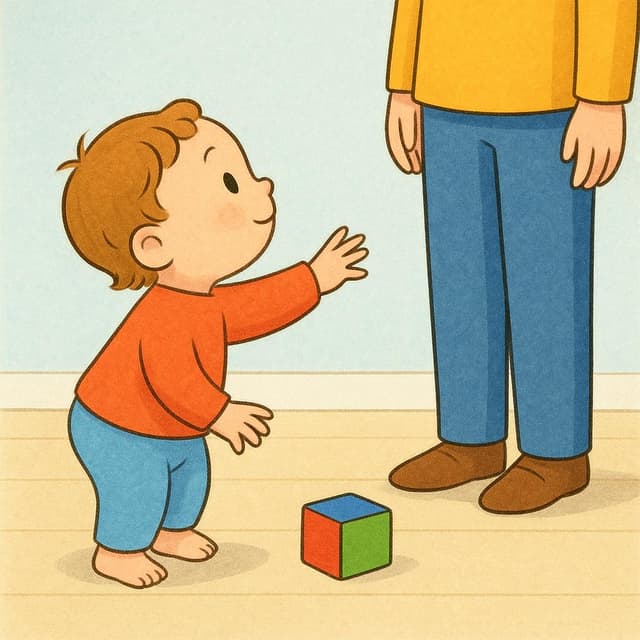
Koniugacja pedir Czas przyszły
pedir — to ask for
Pedir is regular in the future; simply add the endings to the infinitive: pediré, pedirás, etc.
Formy pedir Czas przyszły
Kiedy używać Czas przyszły
Use this to state what you will request or order later, or to make a prediction about someone's future request.
Uwagi dotyczące pedir w czasie Czas przyszły
Pedir is completely regular in the future tense. Use the full infinitive 'pedir' as your base.
Przykładowe zdania
Te pediré un favor mañana.
I will ask you a favor tomorrow.
yo
Mañana pediremos comida china.
Tomorrow we will order Chinese food.
nosotros
Él pedirá un aumento el próximo mes.
He will ask for a raise next month.
él/ella/usted
Częste błędy
Błąd: Applying a stem change (pidiré).
Poprawnie: The future uses the infinitive: pediré.
Dlaczego: Stem changes (e:i) usually don't apply to the future indicative tense.
Opanuj hiszpańskie czasowniki w kontekście
Zapamiętywanie tabel to dopiero początek. Przeczytaj ponad 200 ilustrowanych i udźwiękowionych hiszpańskich historii, aby zobaczyć czasowniki takie jak 'pedir' używane naturalnie — w czasach, których się uczysz.
Powiązane czasy
Czas teraźniejszy
yo: pido
Pedir features an 'e to i' stem change in all forms except nosotros and vosotros.
Czas przeszły prosty
yo: pedí
Pedir has a third-person stem change (e to i) in the preterite: pidió and pidieron.
Czas przeszły niedokonany
yo: pedía
Pedir is regular in the imperfect: pedía, pedías, pedía, pedíamos, pedíais, pedían.
Tryb warunkowy
yo: pediría
The conditional of pedir is regular: pediría, pedirías, pediría, pediríamos, pediríais, pedirían.
Tryb Subj. teraźniejszy
yo: pida
Pedir changes the stem to 'pid-' for all forms in the present subjunctive.
Tryb Subj. przeszły niedokonany
yo: pidiera
The imperfect subjunctive of pedir uses the stem 'pidie-': pidiera, pidieras, pidiera...
Tryb rozkazujący (twierdzący)
yo: pide
Use 'pide' for informal commands and 'pida' for formal ones.
Tryb rozkazujący (przeczący)
yo: no pidas
Negative commands for pedir use the present subjunctive forms with 'no'.