Koniugacja pelar Czas przeszły niedokonany
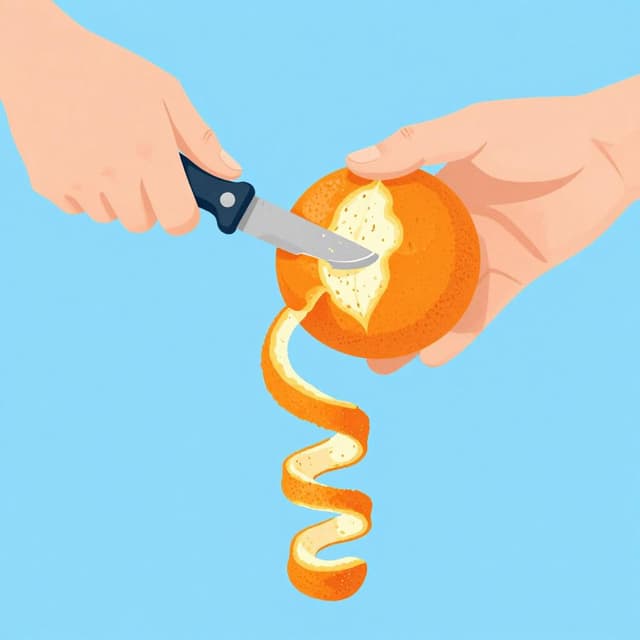
pelar — to peel
The imperfect of pelar uses the standard -aba endings: pelaba, pelabas, pelaba, pelábamos, pelabais, pelaban.
Formy pelar Czas przeszły niedokonany
Kiedy używać Czas przeszły niedokonany
Use the imperfect to describe a habitual past action (like peeling potatoes every Sunday) or an ongoing action that was interrupted.
Uwagi dotyczące pelar w czasie Czas przeszły niedokonany
Pelar is regular in the imperfect. The only accent is on the 'á' in the 'nosotros' form: pelábamos.
Przykładowe zdania
Cuando era niño, siempre pelaba las uvas.
When I was a child, I always used to peel the grapes.
yo
Mi abuela pelaba las patatas mientras yo ponía la mesa.
My grandmother was peeling the potatoes while I was setting the table.
él/ella/usted
Ustedes pelaban la fruta para el desayuno todos los días.
You all used to peel the fruit for breakfast every day.
ellos/ellas/ustedes
Częste błędy
Błąd: Forgetting the accent on the nosotros form.
Poprawnie: pelábamos
Dlaczego: All -ar verbs in the imperfect require an accent on the first 'a' of the 'nosotros' ending.
Opanuj hiszpańskie czasowniki w kontekście
Zapamiętywanie tabel to dopiero początek. Przeczytaj ponad 200 ilustrowanych i udźwiękowionych hiszpańskich historii, aby zobaczyć czasowniki takie jak 'pelar' używane naturalnie — w czasach, których się uczysz.
Powiązane czasy
Czas teraźniejszy
yo: pelo
The present tense of pelar follows the standard -ar pattern: pelo, pelas, pela, pelamos, peláis, pelan.
Czas przeszły prosty
yo: pelé
The preterite of pelar is regular: pelé, pelaste, peló, pelamos, pelasteis, pelaron.
Czas przyszły
yo: pelaré
The future of pelar is formed by adding endings to the infinitive: pelaré, pelarás, pelará, pelaremos, pelaréis, pelarán.
Tryb warunkowy
yo: pelaría
The conditional of pelar is regular: pelaría, pelarías, pelaría, pelaríamos, pelaríais, pelarían.
Tryb Subj. teraźniejszy
yo: pele
The present subjunctive of pelar uses -e endings: pele, peles, pele, pelemos, peléis, pelen.
Tryb Subj. przeszły niedokonany
yo: pelara
The imperfect subjunctive of pelar is regular: pelara, pelaras, pelara, peláramos, pelarais, pelaran.
Tryb rozkazujący (twierdzący)
yo: pela
The imperative of pelar gives commands: pela (tú), pelad (vosotros), pele (usted), pelen (ustedes).
Tryb rozkazujący (przeczący)
yo: no peles
The negative imperative of pelar uses the present subjunctive: no peles, no pele, no pelemos, no peléis, no pelen.