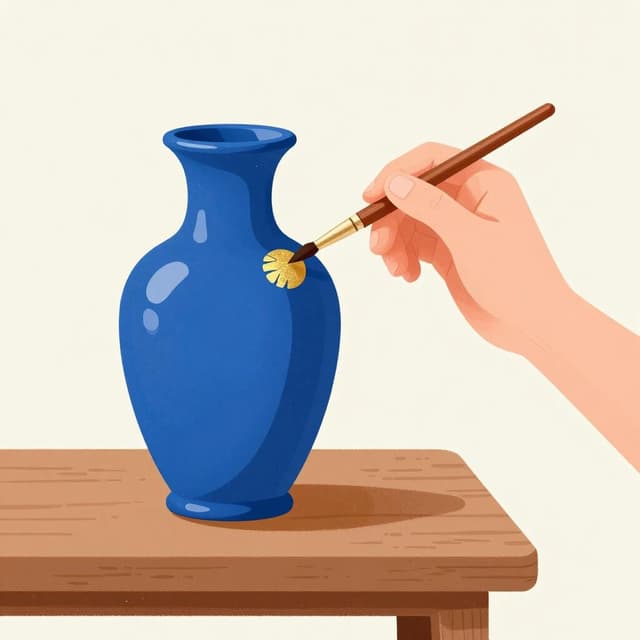
Koniugacja perfeccionar Tryb Subj. przeszły niedokonany
perfeccionar — to perfect
Use 'perfeccionara' or 'perfeccionase' for past hypotheticals, wishes, or polite requests.
Formy perfeccionar Tryb Subj. przeszły niedokonany
Kiedy używać Tryb Subj. przeszły niedokonany
This tense is used for hypothetical situations in the past, or to express wishes, doubts, or polite requests, often following 'si' (if) or phrases like 'ojalá' (I wish). For example, 'Si yo perfeccionara mi español, viajaría más.' (If I perfected my Spanish, I would travel more.)
Uwagi dotyczące perfeccionar w czasie Tryb Subj. przeszły niedokonany
Perfeccionar is regular in the imperfect subjunctive. You can use either the -ra form (perfeccionara) or the -se form (perfeccionase), with the -ra form being more common in many regions.
Przykładowe zdania
Ojalá perfeccionara el arte de la cocina.
I wish I perfected the art of cooking.
yo
Si tú perfeccionaras tu técnica, ganarías el concurso.
If you perfected your technique, you would win the contest.
tú
Me gustaría que usted perfeccionara su presentación.
I would like you to perfect your presentation.
Ellos actuarían mejor si perfeccionaran el guion.
They would act better if they perfected the script.
ellos/ellas/ustedes
Częste błędy
Błąd: Using the preterite or imperfect indicative instead of the imperfect subjunctive.
Poprawnie: For hypotheticals like 'If I perfected...', use 'Si perfeccionara...' not 'Si perfeccioné...' or 'Si perfeccionaba...'.
Dlaczego: The imperfect subjunctive is the mood and tense required for unreal or hypothetical conditions in the past.
Błąd: Confusing the -ra and -se forms.
Poprawnie: Both 'perfeccionara' and 'perfeccionase' are correct imperfect subjunctive forms, but 'perfeccionara' is generally more common.
Dlaczego: Learners might be unsure which form to use or if they are interchangeable.
Opanuj hiszpańskie czasowniki w kontekście
Zapamiętywanie tabel to dopiero początek. Przeczytaj ponad 200 ilustrowanych i udźwiękowionych hiszpańskich historii, aby zobaczyć czasowniki takie jak 'perfeccionar' używane naturalnie — w czasach, których się uczysz.
Powiązane czasy
Czas teraźniejszy
yo: perfecciono
Use 'perfecciono', 'perfeccionas', 'perfecciona', 'perfeccionamos', 'perfeccionáis', 'perfeccionan' for current or habitual actions.
Czas przeszły prosty
yo: perfeccioné
Use 'perfeccioné', 'perfeccionaste', 'perfeccionó', 'perfeccionamos', 'perfeccionasteis', 'perfeccionaron' for completed past actions.
Czas przeszły niedokonany
yo: perfeccionaba
Use 'perfeccionaba', 'perfeccionabas', 'perfeccionaba', 'perfeccionábamos', 'perfeccionabais', 'perfeccionaban' for ongoing or habitual past actions.
Czas przyszły
yo: perfeccionaré
Use 'perfeccionaré', 'perfeccionarás', 'perfeccionará', 'perfeccionaremos', 'perfeccionaréis', 'perfeccionarán' for future actions or probability.
Tryb warunkowy
yo: perfeccionaría
Use 'perfeccionaría', 'perfeccionarías', 'perfeccionaría', 'perfeccionaríamos', 'perfeccionaríais', 'perfeccionarían' for hypotheticals, polite requests, or future-in-the-past.
Tryb Subj. teraźniejszy
yo: perfeccione
Use 'perfeccione', 'perfecciones', 'perfeccionemos', 'perfeccionen', 'perfeccionéis' after expressions of doubt, desire, or emotion.
Tryb rozkazujący (twierdzący)
yo: perfecciona
Use 'perfecciona', 'perfeccione', 'perfeccionemos', 'perfeccionen', 'perfeccionad' for direct commands.
Tryb rozkazujący (przeczący)
yo: no perfecciones
Use 'no perfecciones', 'no perfeccione', 'no perfeccionemos', 'no perfeccionen', 'no perfeccionéis' for negative commands.