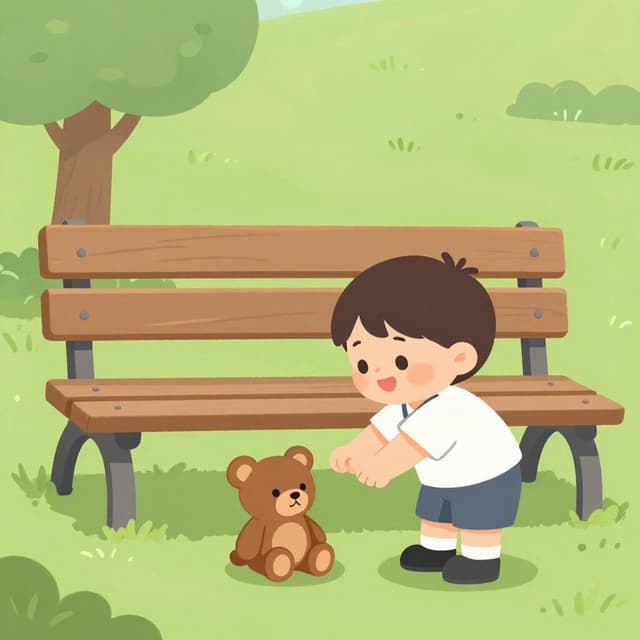
Koniugacja recobrar Tryb Subj. przeszły niedokonany
recobrar — to recover
Use the imperfect subjunctive ('recobrara', 'recobraras', etc.) for past hypotheticals, wishes, or doubts.
Formy recobrar Tryb Subj. przeszły niedokonany
Kiedy używać Tryb Subj. przeszły niedokonany
The imperfect subjunctive is your go-to for talking about hypothetical situations, wishes, regrets, or doubts that were happening or relevant in the past. Think of 'if I recovered...' or 'I wish I had recovered...'. It's often used in 'if' clauses (like 'si recobraras...') or after expressions of desire or emotion in the past.
Uwagi dotyczące recobrar w czasie Tryb Subj. przeszły niedokonany
'Recobrar' is a regular -ar verb, so its imperfect subjunctive forms are derived regularly from the third-person plural preterite ('recobraron'). The stem remains 'recobr-' and you add the standard endings: -ara, -aras, -ara, -áramos, -arais, -aran (or the -se forms).
Przykładowe zdania
Si recobraras tu antigua energía, podrías viajar más.
If you recovered your old energy, you could travel more.
tú
Ojalá él recobrara la salud pronto.
I wish he would recover his health soon.
él/ella/usted
Nos gustaría que recobráramos la fe en el proyecto.
We would like us to recover faith in the project.
nosotros
Dudaba que ellos recobraran el ánimo después de la noticia.
I doubted they would recover their spirits after the news.
ellos/ellas/ustedes
Era necesario que recobrárais la concentración para el examen.
It was necessary for you all to recover your concentration for the exam.
vosotros
Częste błędy
Błąd: Using the imperfect indicative instead of the imperfect subjunctive in 'if' clauses.
Poprawnie: For hypothetical past situations, use the imperfect subjunctive, e.g., 'Si recobraras...' not 'Si recobraba...'.
Dlaczego: The imperfect subjunctive is required for unreal or hypothetical conditions in the past.
Błąd: Confusing the -ra and -se endings.
Poprawnie: Both 'recobrara' and 'recobrase' (and their variations) are correct imperfect subjunctive forms. The -ra form is generally more common in spoken Spanish.
Dlaczego: Spanish has two sets of endings for the imperfect subjunctive, and learners might only know one or use them incorrectly.
Opanuj hiszpańskie czasowniki w kontekście
Zapamiętywanie tabel to dopiero początek. Przeczytaj ponad 200 ilustrowanych i udźwiękowionych hiszpańskich historii, aby zobaczyć czasowniki takie jak 'recobrar' używane naturalnie — w czasach, których się uczysz.
Powiązane czasy
Czas teraźniejszy
yo: recobro
The present tense of 'recobrar' is regular: recobro, recobras, recobra, recobramos, recobráis, recobran.
Czas przeszły prosty
yo: recobré
The preterite of 'recobrar' is regular: recobré, recobraste, recobró, recobramos, recobrasteis, recobraron.
Czas przeszły niedokonany
yo: recobraba
The imperfect of 'recobrar' is regular: recobraba, recobrabas, recobraba, recobrábamos, recobrabais, recobraban.
Czas przyszły
yo: recobraré
The future of 'recobrar' is regular: recobraré, recobrarás, recobrará, recobraremos, recobraréis, recobrarán.
Tryb warunkowy
yo: recobraría
The conditional of 'recobrar' is regular: recobraría, recobrarías, recobraría, recobraríamos, recobraríais, recobrarían.
Tryb Subj. teraźniejszy
yo: recobre
Use the present subjunctive ('recobre', 'recobres', etc.) after expressions of desire, doubt, emotion, or uncertainty.
Tryb rozkazujący (twierdzący)
yo: recobra
Use 'recobra', 'recobre', 'recobremos', 'recobrad', 'recobren' for direct commands with 'recobrar'.
Tryb rozkazujący (przeczący)
yo: no recobres
Use 'no recobres', 'no recobre', 'no recobremos', 'no recobréis', 'no recobren' for negative commands with 'recobrar'.