Koniugacja reservar Tryb Subj. przeszły niedokonany
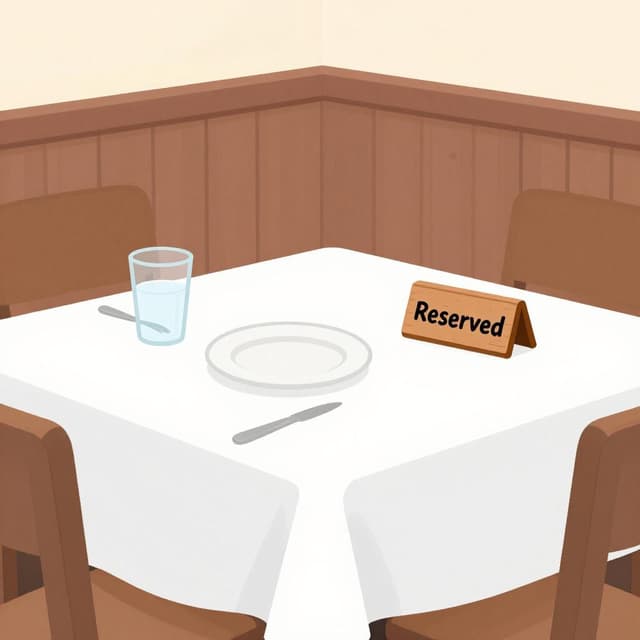
reservar — to book
Use imperfect subjunctive forms like 'reservara' or 'reservase' for past hypothetical or desired actions with reservar.
Formy reservar Tryb Subj. przeszły niedokonany
Kiedy używać Tryb Subj. przeszły niedokonany
This tense is for 'what if' scenarios in the past, or expressing wishes and doubts that were relevant in the past. For 'reservar', think 'If only I *had booked* that flight...' or 'I wished you *would book* it differently.'
Uwagi dotyczące reservar w czasie Tryb Subj. przeszły niedokonany
'Reservar' is regular in the imperfect subjunctive. You can use either the '-ra' form (e.g., 'reservara') or the '-se' form (e.g., 'reservase'); they are interchangeable.
Przykładowe zdania
Si hubiera sabido, habría reservado un mejor hotel.
If I had known, I would have booked a better hotel.
yo
Ojalá tú reservaras los boletos a tiempo.
I wish you would book the tickets on time.
tú
Ellos actuaron como si ya hubieran reservado el salón.
They acted as if they had already booked the hall.
ellos/ellas/ustedes
Me gustaría que usted reservara una mesa para dos.
I would like you to book a table for two.
Częste błędy
Błąd: Confusing imperfect subjunctive with imperfect indicative.
Poprawnie: Use imperfect subjunctive ('reservara') for hypothetical or wishful past thoughts.
Dlaczego: The imperfect subjunctive introduces uncertainty or desire, while the imperfect indicative describes ongoing or habitual past actions.
Błąd: Using the '-ra' form when the '-se' form is needed (or vice-versa).
Poprawnie: Both 'reservara' and 'reservase' are correct for 'I booked' in the imperfect subjunctive.
Dlaczego: The choice between '-ra' and '-se' is stylistic; they mean the same thing.
Opanuj hiszpańskie czasowniki w kontekście
Zapamiętywanie tabel to dopiero początek. Przeczytaj ponad 200 ilustrowanych i udźwiękowionych hiszpańskich historii, aby zobaczyć czasowniki takie jak 'reservar' używane naturalnie — w czasach, których się uczysz.
Powiązane czasy
Czas teraźniejszy
yo: reservo
The present tense of reservar is regular: reservo, reservas, reserva, reservamos, reserváis, reservan.
Czas przeszły prosty
yo: reservé
The preterite of reservar is regular: reservé, reservaste, reservó, reservamos, reservasteis, reservaron.
Czas przeszły niedokonany
yo: reservaba
The imperfect of reservar is regular: reservaba, reservabas, reservaba, reservábamos, reservabais, reservaban.
Czas przyszły
yo: reservaré
The future tense of reservar is regular: reservaré, reservarás, reservará, reservaremos, reservaréis, reservarán.
Tryb warunkowy
yo: reservaría
The conditional of reservar is regular: reservaría, reservarías, reservaría, reservaríamos, reservaríais, reservarían.
Tryb Subj. teraźniejszy
yo: reserve
Use present subjunctive forms like 'reserve' and 'reserven' after expressions of doubt, desire, or emotion with reservar.
Tryb rozkazujący (twierdzący)
yo: reserva
Use imperative forms like 'reserva' (tú) and 'reserve' (usted) for direct commands with reservar.
Tryb rozkazujący (przeczący)
yo: no reserves
Use 'no reserves' (tú) and 'no reserve' (usted) to give negative commands with reservar.