Koniugacja retratar Tryb Subj. przeszły niedokonany
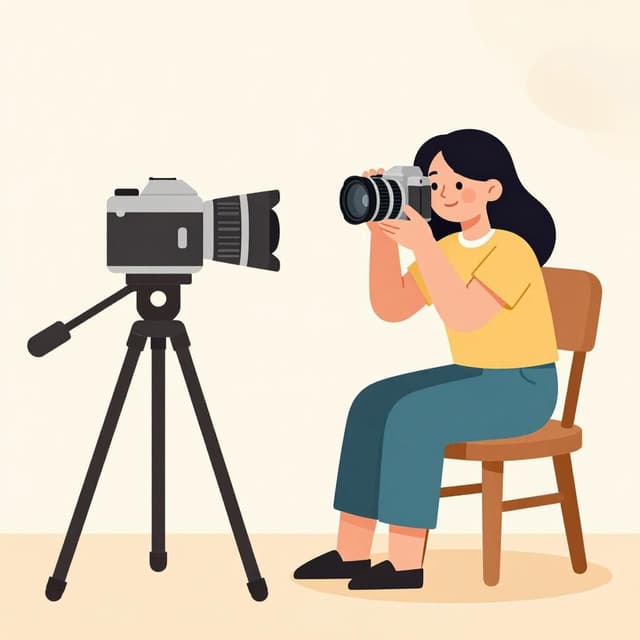
retratar — to take a portrait
The imperfect subjunctive 'retratara' (yo/él/ella/usted) and 'retrataras' (tú) are used for past hypotheticals or wishes.
Formy retratar Tryb Subj. przeszły niedokonany
Kiedy używać Tryb Subj. przeszły niedokonany
Use the imperfect subjunctive after phrases expressing doubt, desire, emotion, or in 'if' clauses referring to unreal or unlikely situations in the past. It often pairs with the conditional tense.
Uwagi dotyczące retratar w czasie Tryb Subj. przeszły niedokonany
Retratar is regular in the imperfect subjunctive. Both the -ra and -se forms exist, but the -ra form (retratara, retrataras, etc.) is generally more common.
Przykładowe zdania
Si yo retratara bien, sería artista.
If I captured well, I would be an artist.
yo
Me gustaría que tú retrataras la boda.
I would like you to capture the wedding.
tú
El fotógrafo pensaba que ella se retratara mejor con luz natural.
The photographer thought she would photograph better in natural light.
Ojalá nosotros retratáramos más momentos felices.
I wish we captured more happy moments.
nosotros
Częste błędy
Błąd: Using the preterite instead of the imperfect subjunctive in 'if' clauses.
Poprawnie: Use 'Si yo retratara...' not 'Si yo retraté...'.
Dlaczego: The imperfect subjunctive is required for hypothetical or contrary-to-fact conditions in the past.
Błąd: Confusing the -ra and -se forms.
Poprawnie: While both are correct, stick to one form for consistency, e.g., 'retratara' for yo.
Dlaczego: Learners might mix 'retratara' and 'retratase', causing confusion.
Opanuj hiszpańskie czasowniki w kontekście
Zapamiętywanie tabel to dopiero początek. Przeczytaj ponad 200 ilustrowanych i udźwiękowionych hiszpańskich historii, aby zobaczyć czasowniki takie jak 'retratar' używane naturalnie — w czasach, których się uczysz.
Powiązane czasy
Czas teraźniejszy
yo: retrato
Regular present tense: retrato, retratas, retrata, retratamos, retratáis, retratan.
Czas przeszły prosty
yo: retraté
Retratar is regular in the preterite: retraté, retrataste, retrató, retratamos, retratasteis, retrataron.
Czas przeszły niedokonany
yo: retrataba
Regular imperfect: retrataba, retratabas, retrataba, retratábamos, retratabais, retrataban.
Czas przyszły
yo: retrataré
Regular future: retrataré, retratarás, retratará, retrataremos, retrataréis, retratarán.
Tryb warunkowy
yo: retrataría
Regular conditional: retrataría, retratarías, retrataría, retrataríamos, retrataríais, retratarían.
Tryb Subj. teraźniejszy
yo: retrate
Present subjunctive 'retrate' (yo/él/ella/usted) and 'retrates' (tú) express wishes, doubts, or emotions.
Tryb rozkazujący (twierdzący)
yo: retrata
Imperative 'retrata' (tú) and 'retrate' (usted) are irregular, while others follow the regular -ar pattern.
Tryb rozkazujący (przeczący)
yo: no retrates
Negative commands use the present subjunctive: 'no retrates' (tú), 'no retrate' (usted).