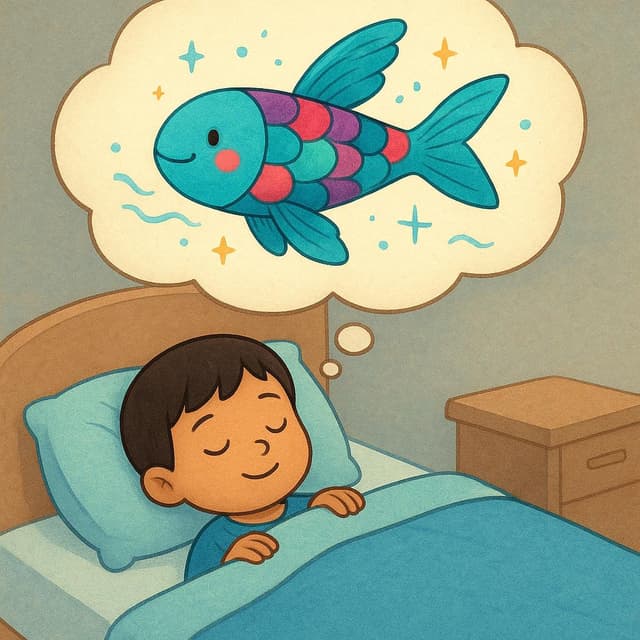
Koniugacja soñar Tryb Subj. przeszły niedokonany
soñar — to dream
The imperfect subjunctive of soñar is regular: soñara, soñaras, soñara, soñáramos, soñarais, soñaran.
Formy soñar Tryb Subj. przeszły niedokonany
Kiedy używać Tryb Subj. przeszły niedokonany
Use this for hypothetical situations or after past-tense verbs of emotion/influence (e.g., 'I wanted you to dream').
Uwagi dotyczące soñar w czasie Tryb Subj. przeszły niedokonany
This tense is formed from the preterite 'ellos' form (soñaron), so it does not have a stem change.
Przykładowe zdania
Si yo soñara con eso, me asustaría.
If I were to dream about that, I would be scared.
yo
Querían que soñáramos con el éxito.
They wanted us to dream of success.
nosotros
Częste błędy
Błąd: sueñara
Poprawnie: soñara
Dlaczego: Because this tense is derived from the preterite, it never uses the 'ue' stem change.
Opanuj hiszpańskie czasowniki w kontekście
Zapamiętywanie tabel to dopiero początek. Przeczytaj ponad 200 ilustrowanych i udźwiękowionych hiszpańskich historii, aby zobaczyć czasowniki takie jak 'soñar' używane naturalnie — w czasach, których się uczysz.
Powiązane czasy
Czas teraźniejszy
yo: sueño
Soñar is a stem-changing verb where the 'o' becomes 'ue' in all forms except nosotros and vosotros.
Czas przeszły prosty
yo: soñé
The preterite of soñar is regular: soñé, soñaste, soñó, soñamos, soñasteis, soñaron.
Czas przeszły niedokonany
yo: soñaba
The imperfect of soñar is regular: soñaba, soñabas, soñaba, soñábamos, soñabais, soñaban.
Czas przyszły
yo: soñaré
The future of soñar is regular: soñaré, soñarás, soñará, soñaremos, soñaréis, soñarán.
Tryb warunkowy
yo: soñaría
The conditional of soñar is regular: soñaría, soñarías, soñaría, soñaríamos, soñaríais, soñarían.
Tryb Subj. teraźniejszy
yo: sueñe
In the present subjunctive, soñar keeps its 'o to ue' stem change in the same pattern as the present indicative.
Tryb rozkazujący (twierdzący)
yo: sueña
The imperative uses 'sueña' for tú and 'soñad' for vosotros.
Tryb rozkazujący (przeczący)
yo: no sueñes
The negative imperative uses the present subjunctive forms: no sueñes, no sueñe, no soñemos, no soñéis, no sueñen.