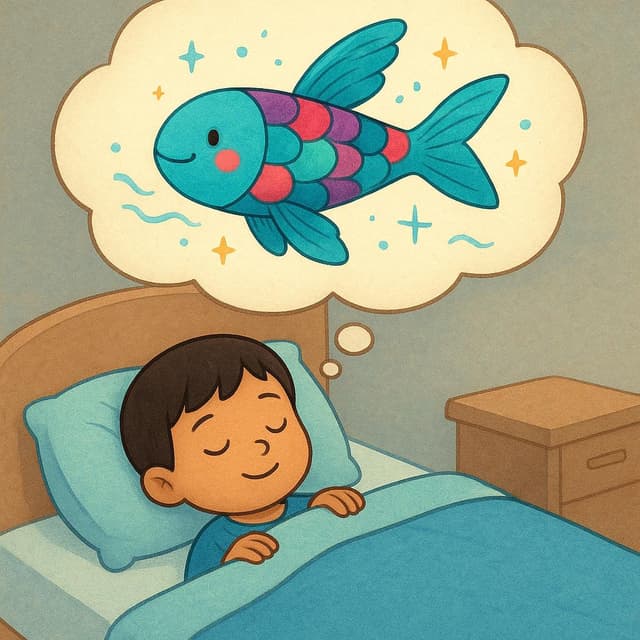
Koniugacja soñar Tryb Subj. teraźniejszy
soñar — to dream
In the present subjunctive, soñar keeps its 'o to ue' stem change in the same pattern as the present indicative.
Formy soñar Tryb Subj. teraźniejszy
Kiedy używać Tryb Subj. teraźniejszy
Use this after expressions of wish or emotion, like 'Espero que sueñes con los angelitos' (I hope you dream with the angels).
Uwagi dotyczące soñar w czasie Tryb Subj. teraźniejszy
The stem change 'o to ue' occurs in all forms except nosotros and vosotros, just like the present indicative.
Przykładowe zdania
Espero que sueñes conmigo.
I hope you dream of me.
tú
Es bueno que soñemos en grande.
It's good that we dream big.
nosotros
No creo que ellos sueñen con eso.
I don't think they dream about that.
ellos/ellas/ustedes
Częste błędy
Błąd: que yo soñe
Poprawnie: que yo sueñe
Dlaczego: The 'yo' form in the subjunctive must include the 'ue' stem change.
Opanuj hiszpańskie czasowniki w kontekście
Zapamiętywanie tabel to dopiero początek. Przeczytaj ponad 200 ilustrowanych i udźwiękowionych hiszpańskich historii, aby zobaczyć czasowniki takie jak 'soñar' używane naturalnie — w czasach, których się uczysz.
Powiązane czasy
Czas teraźniejszy
yo: sueño
Soñar is a stem-changing verb where the 'o' becomes 'ue' in all forms except nosotros and vosotros.
Czas przeszły prosty
yo: soñé
The preterite of soñar is regular: soñé, soñaste, soñó, soñamos, soñasteis, soñaron.
Czas przeszły niedokonany
yo: soñaba
The imperfect of soñar is regular: soñaba, soñabas, soñaba, soñábamos, soñabais, soñaban.
Czas przyszły
yo: soñaré
The future of soñar is regular: soñaré, soñarás, soñará, soñaremos, soñaréis, soñarán.
Tryb warunkowy
yo: soñaría
The conditional of soñar is regular: soñaría, soñarías, soñaría, soñaríamos, soñaríais, soñarían.
Tryb Subj. przeszły niedokonany
yo: soñara
The imperfect subjunctive of soñar is regular: soñara, soñaras, soñara, soñáramos, soñarais, soñaran.
Tryb rozkazujący (twierdzący)
yo: sueña
The imperative uses 'sueña' for tú and 'soñad' for vosotros.
Tryb rozkazujący (przeczący)
yo: no sueñes
The negative imperative uses the present subjunctive forms: no sueñes, no sueñe, no soñemos, no soñéis, no sueñen.