déjale
“déjale” means “Let him/her” in Spanish. It has 2 different meanings depending on context:


Let him/her, Allow him/her
Also: Leave him/her alone
📝 In Action
No quiere comer ahora, déjale.
A1He doesn't want to eat right now, let him.
Déjale que lo haga a su manera, aprenderá.
A2Let him do it his way, he will learn.
Si está ocupado, déjale un mensaje.
B1If he is busy, leave him a message.
Put it down (for him/her)
Also: Leave it for him/her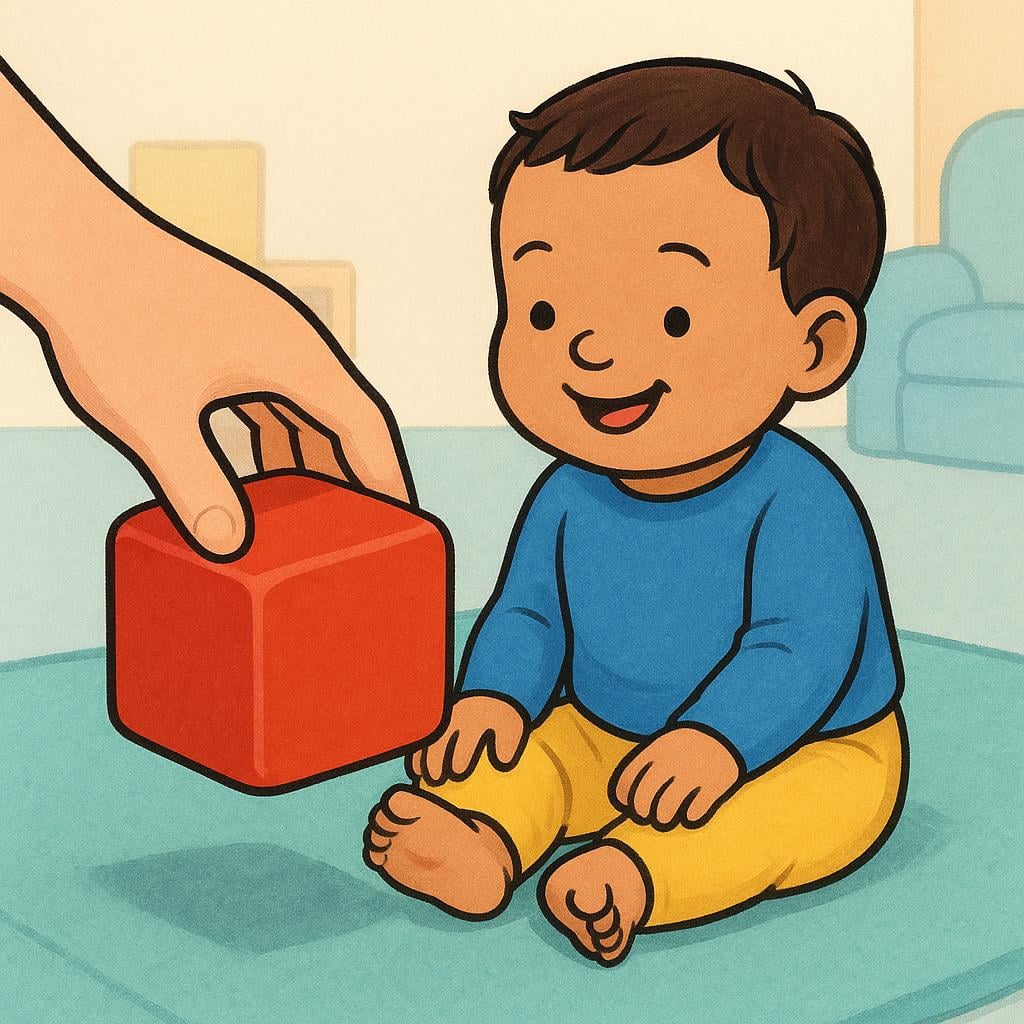
📝 In Action
El libro es para Juan. Déjale la mochila encima de la mesa.
A2The book is for Juan. Leave the backpack on the table for him.
¡No toques eso! Déjale la herramienta al señor.
B1Don't touch that! Leave the tool for the man (Give it to him).
🔄 Conjugations
subjunctive
imperfect
present
indicative
preterite
imperfect
present
✏️ Quick Practice
Quick Quiz: déjale
Question 1 of 2
Which sentence correctly uses 'déjale' to mean 'allow him/her'?
📚 More Resources
👥 Word Family▼
🎵 Rhymes▼
📚 Etymology▼
The verb 'dejar' comes from the Latin verb *laxare*, which meant 'to loosen' or 'to relax.' The idea of loosening a grip evolved into 'letting go' or 'allowing.' The pronoun 'le' comes from the Latin *illi*, meaning 'to him/her'.
First recorded: 10th century (as *dexar*)
Cognates (Related words)
💡 Master Spanish
Take your Spanish to the next level. Read 200+ illustrated and narrated Spanish stories tailored to your level with the Inklingo app!
Frequently Asked Questions
Why does 'déjale' have an accent mark?
The accent mark is needed because when we attach a pronoun (or two) to the end of a verb command, the natural stress of the word shifts. The accent ensures the stress stays on the original first syllable ('dé-') of the command 'deja'.
Can I use 'déjalo' instead of 'déjale'?
'Déjalo' means 'Leave/Let IT' (the object). 'Déjale' means 'Leave/Let HIM/HER' (the person). You use 'déjalo' if you are talking about an object that receives the action, and 'déjale' if you are talking about a person who is the indirect recipient.