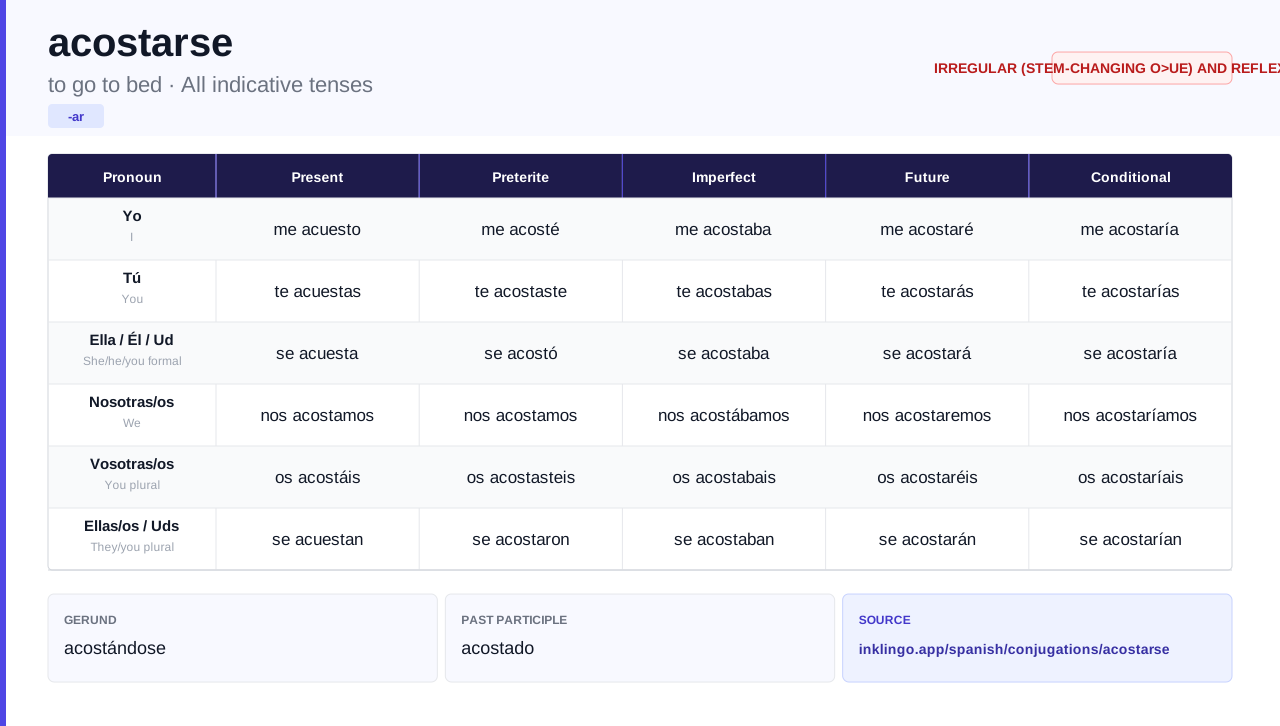
acostarseKonjugation
acostarse bedeutet ins Bett gehen.
Vollständige Konjugationstabellen
Alle Zeiten und Modi als Nachschlagewerk
Indicative
Present
Acostarse ist ein Stammvokalwechsel- (o > ue) und reflexives Verb: me acuesto, te acuestas, se acuesta.
Imperfect
Die Vergangenheitsform (Pretérito Imperfecto) von acostarse ist regelmäßig: me acostaba, te acostabas, se acostaba.
Preterite
Die Vergangenheitsform (Pretérito Indefinido) von acostarse hat regelmäßige Endungen, erfordert aber Reflexivpronomen: me acosté, te acostaste, se acostó.
Future
Die Zukunftsform (Futuro Simple) von acostarse ist regelmäßig: me acostaré, te acostarás, se acostará.
Conditional
Die Konditionalform (Condicional Simple) von acostarse ist regelmäßig: me acostaría, te acostarías, se acostaría.
Subjunctive
Present Subjunctive
Der Konjunktiv Präsens (Presente de Subjuntivo) von acostarse weist die O>UE-Stammvokaländerung auf: me acueste, te acuestes, se acueste.
Imperfect Subjunctive
Der Konjunktiv Imperfecto (Imperfecto de Subjuntivo) basiert auf dem Stamm des Pretérito Indefinido: me acostara, te acostaras, se acostara.
Imperative
Imperative
Das Imperativ von acostarse hängt das Pronomen am Ende an: acuéstate, acuéstese, acostémonos.
Negative Imperative
Der negative Imperativ verwendet den Konjunktiv Präsens: no te acuestes, no se acueste.
Konjugationen üben
Teste dein Wissen mit interaktiven Übungen
Bring acostarse von Tabellen ins echte Spanisch
Konjugationstabellen sind nur der Anfang. Lies über 200 illustrierte und vertonte spanische Geschichten und sieh 'acostarse' in echten Sätzen in Aktion — und entwickle das Sprachgefühl, das Muttersprachler haben.
Häufig gestellte Fragen
Was bedeutet acostarse auf Spanisch?
acostarse bedeutet „ins Bett gehen“.
Ist acostarse ein regelmäßiges oder unregelmäßiges Verb?
acostarse ist ein irregular (stem-changing O>UE) and reflexive -ar-Verb im Spanischen.
Wie konjugiert man acostarse im Präsens?
Das Präsens von acostarse ist: yo me acuesto, tú te acuestas, él/ella/usted se acuesta, nosotros nos acostamos, vosotros os acostáis, ellos/ellas/ustedes se acuestan.
Wie konjugiert man acostarse im Präteritum (Vergangenheit)?
Das Präteritum von acostarse ist: yo me acosté, tú te acostaste, él/ella/usted se acostó, nosotros nos acostamos, vosotros os acostasteis, ellos/ellas/ustedes se acostaron.
acostarse Konjugations-Spickzettel