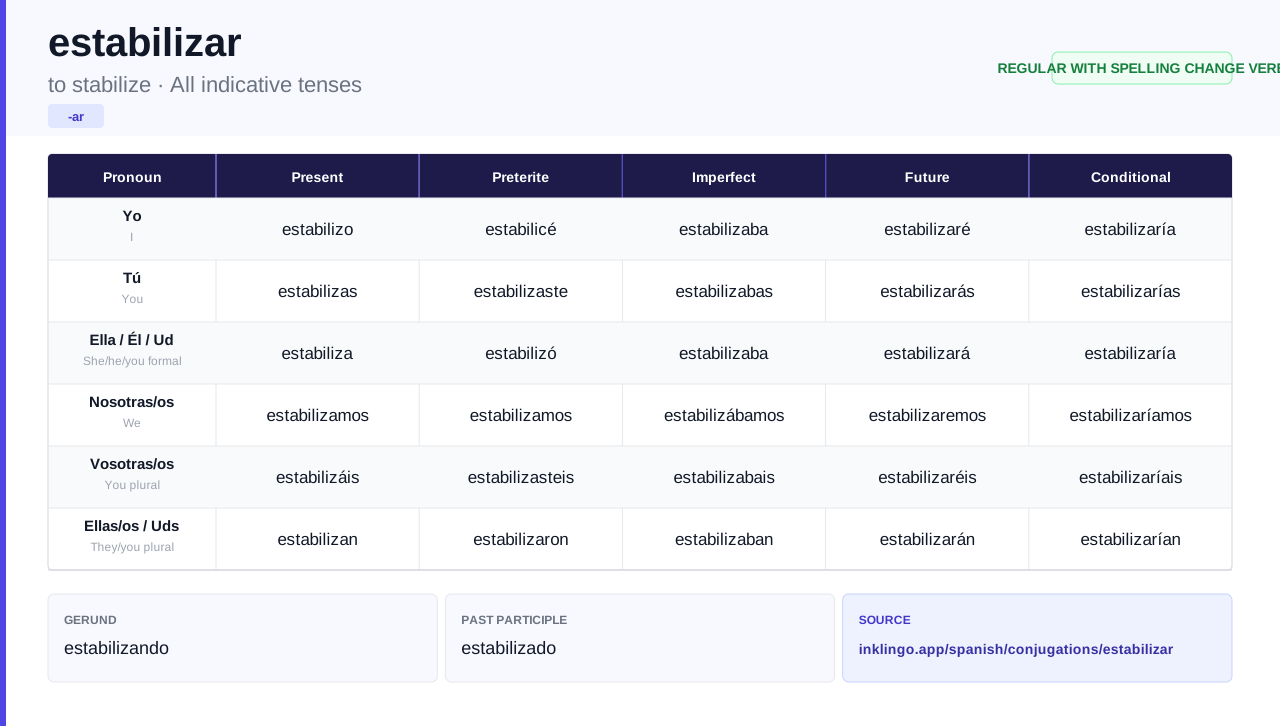
estabilizarKonjugation
estabilizar means stabilisieren.
Vollständige Konjugationstabellen
Alle Zeiten und Modi als Nachschlagewerk
Subjunctive
Imperfect Subjunctive
Der spanische Konjunktiv Imperfekt von 'estabilizar' wird mit den Endungen -ra oder -se gebildet: 'estabilizara', 'estabilizaras', 'estabilizara', 'estabilizáramos', 'estabilizarais', 'estabilizaran'.
Present Subjunctive
Der spanische Konjunktiv Präsens von 'estabilizar' erfordert eine Änderung der Schreibweise von 'z' zu 'c': 'estabilice', 'estabilices', 'estabilice', 'estabilicemos', 'estabilicéis', 'estabilicen'.
Imperative
Negative Imperative
Der negative Imperativ von 'estabilizar' verwendet immer die Formen des Konjunktiv Präsens: 'no estabilices', 'no estabilice' usw.
Imperative
Das Imperativ von 'estabilizar' verwendet 'estabiliza' (tú) und 'estabilice' (usted).
Indicative
Conditional
Das Konditional von 'estabilizar' ist regelmäßig: Endungen -ía werden an den Infinitiv angehängt ('estabilizaría', 'estabilizarías' usw.).
Preterite
Das Preteritum von 'estabilizar' ist regelmäßig, außer in der 'yo'-Form ('estabilicé'), die eine Schreibweiseänderung von 'z' zu 'c' erfährt.
Imperfect
Das Imperfekt von 'estabilizar' ist regelmäßig: 'estabilizaba', 'estabilizabas', 'estabilizaba', 'estabilizábamos', 'estabilizabais', 'estabilizaban'.
Present
Der Präsens Indikativ von 'estabilizar' ist regelmäßig: 'estabilizo', 'estabilizas', 'estabiliza', 'estabilizamos', 'estabilizáis', 'estabilizan'.
Future
Das Futur von 'estabilizar' ist regelmäßig: Endungen werden an den Infinitiv angehängt ('estabilizaré', 'estabilizarás' usw.).
Konjugationen üben
Teste dein Wissen mit interaktiven Übungen
Bring estabilizar von Tabellen ins echte Spanisch
Konjugationstabellen sind nur der Anfang. Lies über 200 illustrierte und vertonte spanische Geschichten und sieh 'estabilizar' in echten Sätzen in Aktion — und entwickle das Sprachgefühl, das Muttersprachler haben.
Häufig gestellte Fragen
Was bedeutet estabilizar auf Spanisch?
estabilizar bedeutet „stabilisieren“.
Ist estabilizar ein regelmäßiges oder unregelmäßiges Verb?
estabilizar ist ein regular with spelling change -ar-Verb im Spanischen.
Wie konjugiert man estabilizar im Präsens?
Das Präsens von estabilizar ist: yo estabilizo, tú estabilizas, él/ella/usted estabiliza, nosotros estabilizamos, vosotros estabilizáis, ellos/ellas/ustedes estabilizan.
Wie konjugiert man estabilizar im Präteritum (Vergangenheit)?
Das Präteritum von estabilizar ist: yo estabilicé, tú estabilizaste, él/ella/usted estabilizó, nosotros estabilizamos, vosotros estabilizasteis, ellos/ellas/ustedes estabilizaron.
estabilizar Konjugations-Spickzettel