transcurrirKonjugation
transcurrir bedeutet vergehen.
Vollständige Konjugationstabellen
Alle Zeiten und Modi als Nachschlagewerk
Subjunctive
Imperfect Subjunctive
Der Imperfecto de Subjuntivo ('transcurriera' oder 'transcurriera') wird für vergangene Hypothesen, Wünsche oder Unsicherheiten verwendet.
Present Subjunctive
Der Präsens Konjunktiv ('transcurra') drückt Wünsche, Zweifel, Emotionen und Unsicherheit über die Gegenwart oder Zukunft aus.
Imperative
Negative Imperative
Negative Befehle verwenden 'no' + Präsens Konjunktiv: 'no transcurras' (tú), 'no transcurra' (usted), etc.
Imperative
Verwenden Sie 'transcurre' (tú), 'transcurra' (usted), 'transcurramos' (nosotros), 'transcurran' (ustedes), 'transcurrid' (vosotros) für direkte Befehle.
Indicative
Conditional
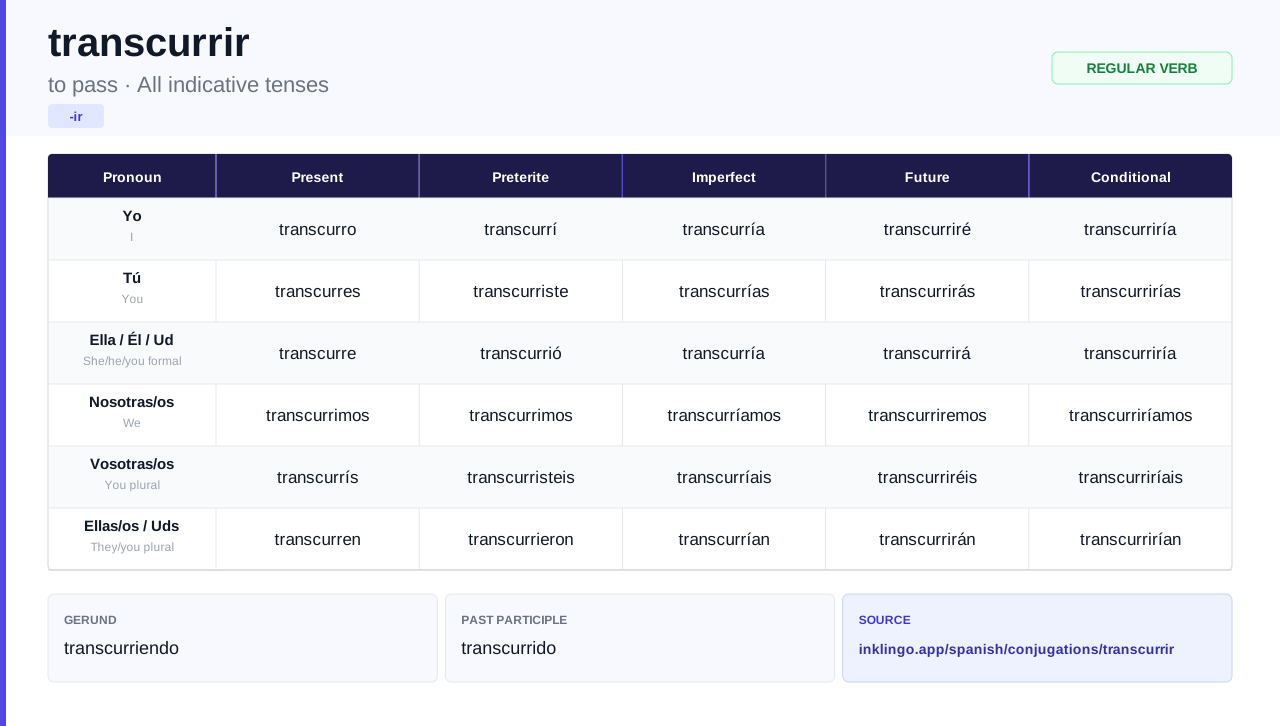
Das Konditional 'transcurriría' ist für Hypothesen ('würde'), höfliche Bitten oder Zukunft in der Vergangenheit.
Preterite
Das Pretérito von transcurrir ist regelmäßig: transcurrí, transcurriste, transcurrió, transcurrimos, transcurristeis, transcurrieron.
Imperfect
Das Imperfecto 'transcurría' beschreibt andauernde, gewohnheitsmäßige oder Hintergrundaktionen in der Vergangenheit.
Present
Das Präsens 'transcurre' beschreibt andauernde Handlungen, Gewohnheiten oder allgemeine Wahrheiten über das Vergehen der Zeit.
Future
Das Futur 'transcurrirá' zeigt zukünftige Handlungen oder Wahrscheinlichkeiten über das Vergehen der Zeit an.
Konjugationen üben
Teste dein Wissen mit interaktiven Übungen
Bring transcurrir von Tabellen ins echte Spanisch
Konjugationstabellen sind nur der Anfang. Lies über 200 illustrierte und vertonte spanische Geschichten und sieh 'transcurrir' in echten Sätzen in Aktion — und entwickle das Sprachgefühl, das Muttersprachler haben.
Häufig gestellte Fragen
Was bedeutet transcurrir auf Spanisch?
transcurrir bedeutet „vergehen“.
Ist transcurrir ein regelmäßiges oder unregelmäßiges Verb?
transcurrir ist ein regular -ir-Verb im Spanischen.
Wie konjugiert man transcurrir im Präsens?
Das Präsens von transcurrir ist: yo transcurro, tú transcurres, él/ella/usted transcurre, nosotros transcurrimos, vosotros transcurrís, ellos/ellas/ustedes transcurren.
Wie konjugiert man transcurrir im Präteritum (Vergangenheit)?
Das Präteritum von transcurrir ist: yo transcurrí, tú transcurriste, él/ella/usted transcurrió, nosotros transcurrimos, vosotros transcurristeis, ellos/ellas/ustedes transcurrieron.
transcurrir Konjugations-Spickzettel