hacerseConiugazione
hacerse significa diventare.
Tabelle di coniugazione complete
Riferimento per tutti i tempi e i modi
Indicative
Present
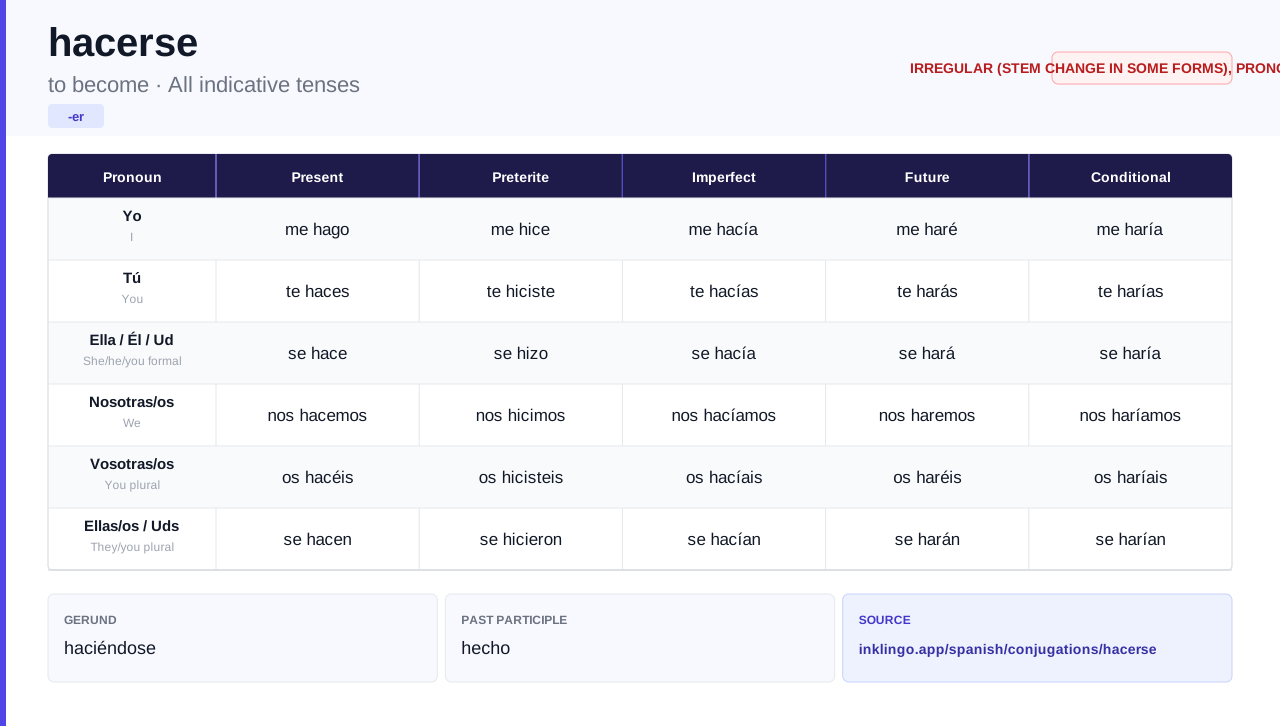
Il presente di hacerse è per lo più regolare, eccetto per la forma 'yo' (me hago).
Future
Il futuro di hacerse usa la radice irregolare 'har-' (me haré, te harás).
Imperfect
L'imperfetto di hacerse è completamente regolare: me hacía, te hacías, se hacía.
Conditional
Il condizionale di hacerse usa la radice irregolare 'har-' (me haría, te harías).
Preterite
Il preterito di hacerse è irregolare, con un cambio di radice in 'hic-' (me hice, te hiciste, se hizo).
Imperative
Negative Imperative
L'imperativo negativo di hacerse usa sempre le forme del congiuntivo presente precedute da 'no'.
Imperative
L'imperativo di hacerse usa 'hazte' per i comandi informali e 'hágase' per quelli formali.
Subjunctive
Present Subjunctive
Il congiuntivo presente di hacerse usa la radice 'hag-' (me haga, te hagas).
Imperfect Subjunctive
L'imperfetto congiuntivo di hacerse usa la radice irregolare 'hicier-' (me hiciera, te hicieras).
Esercita le coniugazioni
Metti alla prova le tue conoscenze con esercizi interattivi
Porta hacerse dalle tabelle allo spagnolo reale
Le tabelle di coniugazione sono solo l'inizio. Leggi oltre 200 storie spagnole illustrate e narrate per vedere 'hacerse' in azione in frasi reali — e sviluppare l'istinto che hanno i madrelingua.
Domande Frequenti
Cosa significa hacerse in spagnolo?
hacerse significa "diventare".
hacerse è un verbo regolare o irregolare?
hacerse è un verbo irregular (stem change in some forms), pronominal -er in spagnolo.
Come si coniuga hacerse al presente?
Il presente di hacerse è: yo me hago, tú te haces, él/ella/usted se hace, nosotros nos hacemos, vosotros os hacéis, ellos/ellas/ustedes se hacen.
Come si coniuga hacerse al preterito (passato remoto)?
Il preterito di hacerse è: yo me hice, tú te hiciste, él/ella/usted se hizo, nosotros nos hicimos, vosotros os hicisteis, ellos/ellas/ustedes se hicieron.
hacerse foglio di riferimento per la coniugazione