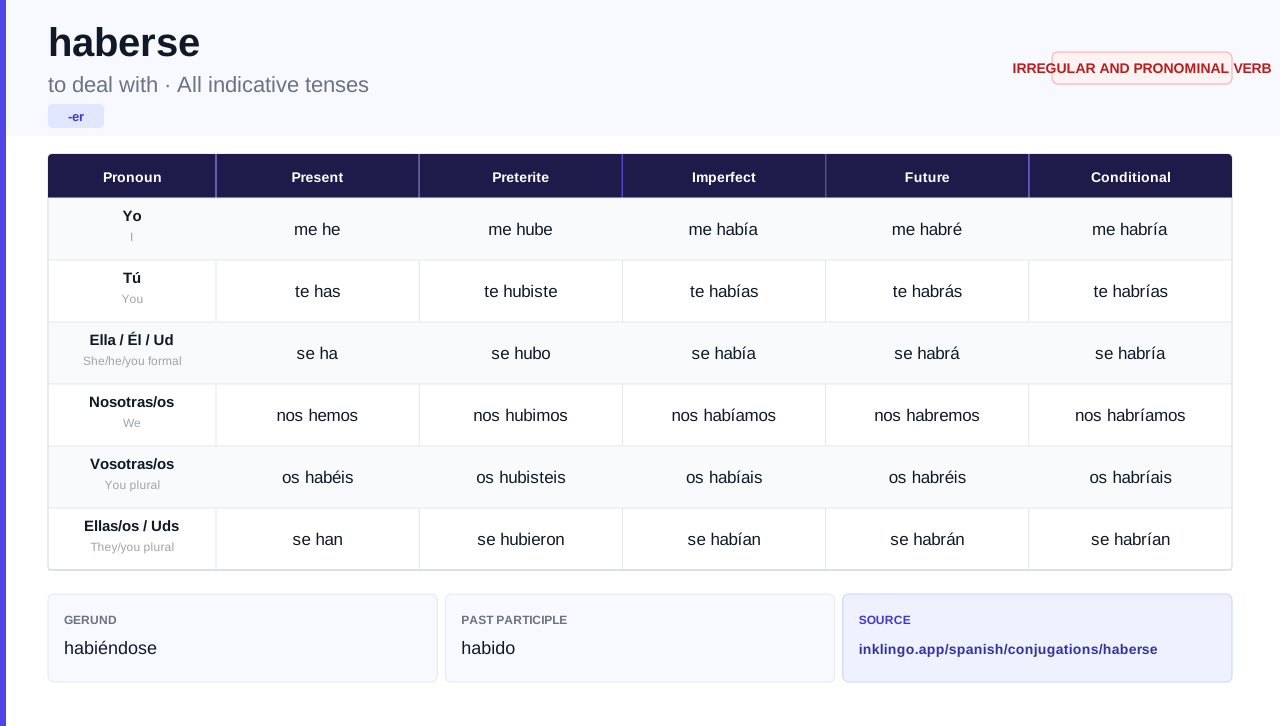
완전한 활용표
모든 시제와 법 참조
Indicative
Present
Haberse의 현재 시제는 짧은 형태를 사용합니다: me he, te has, se ha, nos hemos.
Future
Haberse의 미래 시제는 불규칙적인 'habr-' 어간을 사용합니다: me habré, te habrás, se habrá.
Imperfect
Haberse의 불완료 과거는 어미에서 규칙적입니다: me había, te habías, se había.
Conditional
조건법은 불규칙적인 'habr-' 어간을 사용합니다: me habría, te habrías, se habría.
Preterite
Haberse의 과거 시제는 불규칙적인 'hub-' 어간을 사용합니다: me hube, te hubiste, se hubo.
Imperative
Negative Imperative
부정 명령법은 'no' + 현재 접속법을 사용합니다: no te hayas, no se haya.
Imperative
Haberse의 명령법은 매우 드물고 격식이 높습니다: héte, háyase, hayámonos.
Subjunctive
Present Subjunctive
현재 접속법은 'hay-' 어간을 사용합니다: me haya, te hayas, se haya.
Imperfect Subjunctive
과거 접속법은 'hubier-' 어간을 사용합니다: me hubiera, te hubieras, se hubiera.
활용 연습
대화형 연습으로 지식 테스트
haberse를 표에서 실제 스페인어로
활용표는 시작일 뿐입니다. 200개 이상의 삽화 및 음성 지원 스페인어 이야기를 읽고 실제 문장에서 'haberse'가 사용되는 것을 보고 원어민처럼 본능을 기르세요.
자주 묻는 질문
haberse는 스페인어로 무슨 뜻인가요?
haberse는 "맞서다"을(를) 의미합니다.
haberse는 규칙 동사인가요, 불규칙 동사인가요?
haberse는 스페인어에서 irregular and pronominal -er 동사입니다.
haberse를 현재 시제로 어떻게 변화시키나요?
haberse의 현재 시제는 다음과 같습니다: yo me he, tú te has, él/ella/usted se ha, nosotros nos hemos, vosotros os habéis, ellos/ellas/ustedes se han.
haberse를 단순 과거(과거 시제)로 어떻게 변화시키나요?
haberse의 단순 과거는 다음과 같습니다: yo me hube, tú te hubiste, él/ella/usted se hubo, nosotros nos hubimos, vosotros os hubisteis, ellos/ellas/ustedes se hubieron.