cantarVervoeging
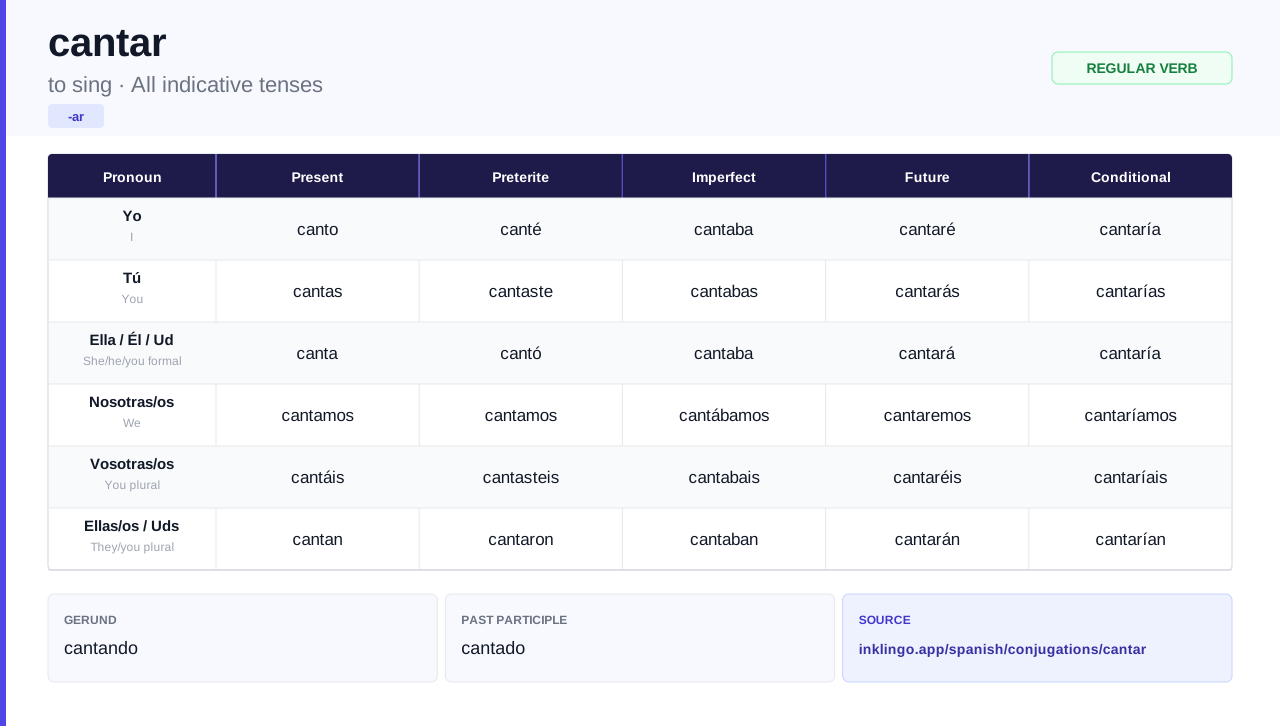
cantar betekent zingen.
Volledige vervoegingstabellen
Naslagwerk voor alle tijden en modi
Indicative
Present
Cantar is regelmatig in de tegenwoordige tijd: canto, cantas, canta, cantamos, cantáis, cantan.
Future
De toekomende tijd van cantar gebruikt het hele werkwoord als stam: cantaré, cantarás, cantará, cantaremos, cantaréis, cantarán.
Imperfect
De onvoltooid verleden tijd van cantar volgt het regelmatige -aba patroon: cantaba, cantabas, cantaba, cantábamos, cantabais, cantaban.
Conditional
De voorwaardelijke wijs van cantar is regelmatig: cantaría, cantarías, cantaría, cantaríamos, cantaríais, cantarían.
Preterite
De onvoltooid verleden tijd van cantar is regelmatig: canté, cantaste, cantó, cantamos, cantasteis, cantaron.
Imperative
Negative Imperative
Het negatieve gebiedende wijs van cantar gebruikt de aanvoegende wijs tegenwoordige tijd: no cantes, no cante, no cantemos, no cantéis, no canten.
Imperative
Het gebiedende wijs van cantar geeft commando's: canta (tú), cantad (vosotros), cante (usted).
Subjunctive
Present Subjunctive
De aanvoegende wijs tegenwoordige tijd van cantar gebruikt -e uitgangen: cante, cantes, cante, cantemos, cantéis, canten.
Imperfect Subjunctive
De aanvoegende wijs verleden tijd van cantar is gebaseerd op de 'ellos' onvoltooid verleden tijd: cantara, cantaras, cantara, cantáramos, cantarais, cantaran.
Vervoegingen oefenen
Test je kennis met interactieve oefeningen
Breng cantar van tabellen naar echt Spaans
Vervoegingstabellen zijn een begin. Lees 200+ geïllustreerde en ingesproken Spaanse verhalen en zie 'cantar' in actie in echte zinnen — en bouw het taalgevoel op dat moedertaalsprekers hebben.
Veelgestelde Vragen
Wat betekent cantar in het Spaans?
cantar betekent "zingen".
Is cantar een regelmatig of onregelmatig werkwoord?
cantar is een regular -ar werkwoord in het Spaans.
Hoe vervoeg je cantar in de tegenwoordige tijd?
De tegenwoordige tijd van cantar is: yo canto, tú cantas, él/ella/usted canta, nosotros cantamos, vosotros cantáis, ellos/ellas/ustedes cantan.
Hoe vervoeg je cantar in de verleden tijd (preteritum)?
De verleden tijd van cantar is: yo canté, tú cantaste, él/ella/usted cantó, nosotros cantamos, vosotros cantasteis, ellos/ellas/ustedes cantaron.
cantar vervoegingsspiekbrief