Koniugacja accionar Tryb rozkazujący (przeczący)
accionar — to activate
Use 'no acciones' (tú) and 'no accionen' (ustedes) for negative commands.
Formy accionar Tryb rozkazujący (przeczący)
Kiedy używać Tryb rozkazujący (przeczący)
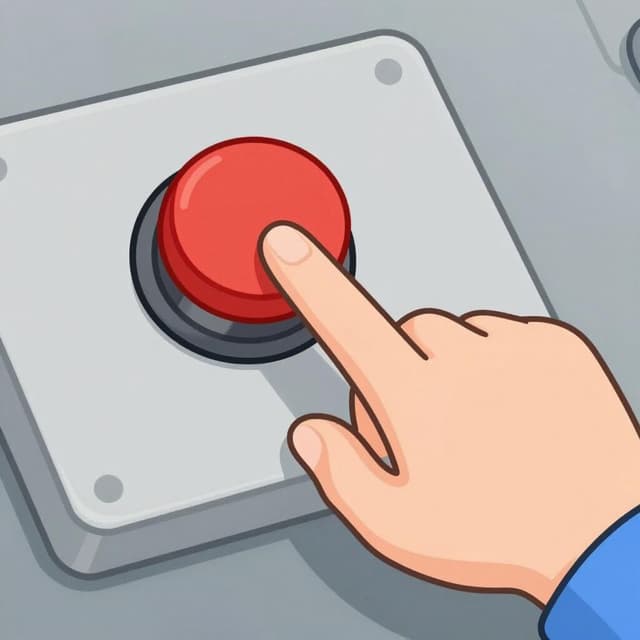
You use the negative imperative when you want to tell someone *not* to do something. It's formed using 'no' plus the present subjunctive. So, instead of telling someone to activate something, you're forbidding it: '¡No acciones el interruptor todavía!' (Don't activate the switch yet!).
Uwagi dotyczące accionar w czasie Tryb rozkazujący (przeczący)
Accionar is regular in the negative imperative, following the standard pattern of using the present subjunctive forms with 'no'.
Przykładowe zdania
No acciones la alarma sin motivo.
Do not activate the alarm without reason.
tú
No accionen las luces hasta que yo diga.
Do not activate the lights until I say so.
ustedes
No accionemos el sistema sin verificarlo primero.
Let's not activate the system without checking it first.
nosotros
No accionéis el freno de mano en esta pendiente.
Do not activate the handbrake on this slope.
vosotros
Częste błędy
Błąd: Using the infinitive instead of the subjunctive.
Poprawnie: Use the present subjunctive: 'No accionar' is wrong; it should be 'No acciones'.
Dlaczego: Negative commands in Spanish require the present subjunctive, not the infinitive.
Błąd: Forgetting 'no'.
Poprawnie: Always include 'no' before the verb: 'No accionen'.
Dlaczego: The 'no' is essential to make the command negative.
Opanuj hiszpańskie czasowniki w kontekście
Zapamiętywanie tabel to dopiero początek. Przeczytaj ponad 200 ilustrowanych i udźwiękowionych hiszpańskich historii, aby zobaczyć czasowniki takie jak 'accionar' używane naturalnie — w czasach, których się uczysz.
Powiązane czasy
Czas teraźniejszy
yo: acciono
Use 'acciono' (yo) and 'acciona' (él/ella/Ud.) for actions happening now or habitually.
Czas przeszły prosty
yo: accioné
Use 'accioné' (yo) and 'accionó' (él/ella/Ud.) for completed past actions of activating.
Czas przeszły niedokonany
yo: accionaba
Use 'accionaba' (yo/él/ella/Ud.) for ongoing or habitual past actions of activating.
Czas przyszły
yo: accionaré
Use 'accionaré' (yo) and 'accionará' (él/ella/Ud.) for actions that will happen.
Tryb warunkowy
yo: accionaría
Use 'accionaría' (yo/él/ella/Ud.) for 'would' actions, polite requests, or future-in-the-past.
Tryb Subj. teraźniejszy
yo: accione
Use 'accione' (yo/él/ella/Ud.) and 'accionen' (ellos/ellas/Uds.) after wishes, doubts, or emotions.
Tryb Subj. przeszły niedokonany
yo: accionara
Use 'accionara' or 'accionase' for past hypotheticals or wishes.
Tryb rozkazujący (twierdzący)
yo: acciona
Use 'acciona' (tú) and 'accionen' (ustedes) for direct commands.