Koniugacja accionar Czas teraźniejszy
accionar — to activate
Use 'acciono' (yo) and 'acciona' (él/ella/Ud.) for actions happening now or habitually.
Formy accionar Czas teraźniejszy
Kiedy używać Czas teraźniejszy
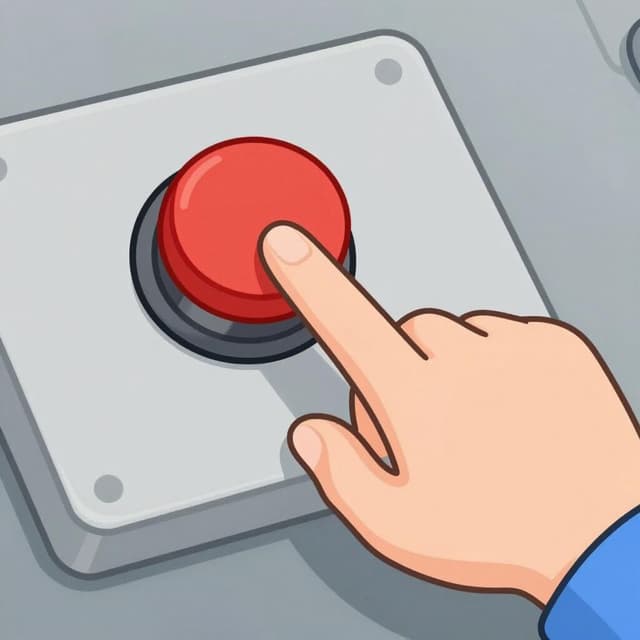
The present tense is for actions happening right now ('Yo acciono el interruptor' - I am activating the switch) or for habitual actions ('Mi padre acciona la cafetera cada mañana' - My father activates the coffee maker every morning). It's the most common tense.
Uwagi dotyczące accionar w czasie Czas teraźniejszy
Accionar is regular in the present tense. All conjugations follow the standard pattern for -ar verbs.
Przykładowe zdania
Yo acciono el interruptor para encender la luz.
I activate the switch to turn on the light.
yo
¿Tú accionas la máquina a menudo?
Do you activate the machine often?
tú
El técnico acciona los controles con precisión.
The technician activates the controls with precision.
él/ella/usted
Nosotros accionamos el sistema de riego diariamente.
We activate the irrigation system daily.
nosotros
Częste błędy
Błąd: Using 'accionar' instead of conjugated forms.
Poprawnie: Always conjugate: 'Yo acciono', not 'Yo accionar'.
Dlaczego: The infinitive form 'accionar' is used in specific constructions (e.g., after modal verbs), but not for simple present tense statements.
Błąd: Confusing present and preterite for recent actions.
Poprawnie: For an action just completed, use preterite: 'Accioné la alarma' (I activated the alarm). Present is for ongoing/habitual: 'Acciono la alarma cada día' (I activate the alarm every day).
Dlaczego: Spanish distinguishes between completed past actions (preterite) and ongoing/habitual present actions.
Opanuj hiszpańskie czasowniki w kontekście
Zapamiętywanie tabel to dopiero początek. Przeczytaj ponad 200 ilustrowanych i udźwiękowionych hiszpańskich historii, aby zobaczyć czasowniki takie jak 'accionar' używane naturalnie — w czasach, których się uczysz.
Powiązane czasy
Czas przeszły prosty
yo: accioné
Use 'accioné' (yo) and 'accionó' (él/ella/Ud.) for completed past actions of activating.
Czas przeszły niedokonany
yo: accionaba
Use 'accionaba' (yo/él/ella/Ud.) for ongoing or habitual past actions of activating.
Czas przyszły
yo: accionaré
Use 'accionaré' (yo) and 'accionará' (él/ella/Ud.) for actions that will happen.
Tryb warunkowy
yo: accionaría
Use 'accionaría' (yo/él/ella/Ud.) for 'would' actions, polite requests, or future-in-the-past.
Tryb Subj. teraźniejszy
yo: accione
Use 'accione' (yo/él/ella/Ud.) and 'accionen' (ellos/ellas/Uds.) after wishes, doubts, or emotions.
Tryb Subj. przeszły niedokonany
yo: accionara
Use 'accionara' or 'accionase' for past hypotheticals or wishes.
Tryb rozkazujący (twierdzący)
yo: acciona
Use 'acciona' (tú) and 'accionen' (ustedes) for direct commands.
Tryb rozkazujący (przeczący)
yo: no acciones
Use 'no acciones' (tú) and 'no accionen' (ustedes) for negative commands.