Koniugacja adornar Czas teraźniejszy
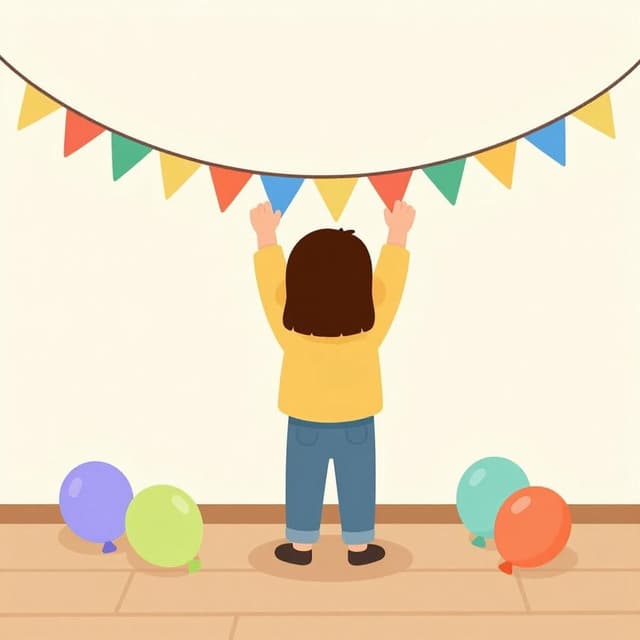
adornar — to decorate
The present tense 'adorno' is for decorating happening now or habitually.
Formy adornar Czas teraźniejszy
Kiedy używać Czas teraźniejszy
Use the present tense of 'adornar' for actions happening right now ('Estoy adornando la casa' - I am decorating the house) or for habitual actions ('Ella adorna el balcón cada primavera' - She decorates the balcony every spring). It also covers general truths.
Uwagi dotyczące adornar w czasie Czas teraźniejszy
Adornar is a regular -ar verb in the present tense.
Przykładowe zdania
Yo adorno mi escritorio con plantas.
I decorate my desk with plants.
yo
¿Adornas tú la casa para Halloween?
Do you decorate the house for Halloween?
tú
Mi madre adorna el árbol de Navidad cada año.
My mother decorates the Christmas tree every year.
él/ella/usted
Ellos adornan la iglesia para la boda.
They decorate the church for the wedding.
ellos/ellas/ustedes
Częste błędy
Błąd: Using the simple present for an action in progress.
Poprawnie: For actions happening right now, use the present progressive: 'Estoy adornando' instead of 'Adorno'.
Dlaczego: While the simple present can sometimes mean 'happening now', the present progressive ('estar' + gerund) specifically emphasizes an ongoing action.
Opanuj hiszpańskie czasowniki w kontekście
Zapamiętywanie tabel to dopiero początek. Przeczytaj ponad 200 ilustrowanych i udźwiękowionych hiszpańskich historii, aby zobaczyć czasowniki takie jak 'adornar' używane naturalnie — w czasach, których się uczysz.
Powiązane czasy
Czas przeszły prosty
yo: adorné
Regular preterite forms like 'adorné' and 'adornaron' are used for completed past actions of decorating.
Czas przeszły niedokonany
yo: adornaba
The imperfect 'adornaba' describes ongoing or habitual past decorating.
Czas przyszły
yo: adornaré
The future tense 'adornaré' indicates decorating that will happen.
Tryb warunkowy
yo: adornaría
The conditional 'adornaría' is for hypothetical decorating or polite requests.
Tryb Subj. teraźniejszy
yo: adorne
The present subjunctive 'adorne' is used for wishes, doubts, and after certain expressions.
Tryb Subj. przeszły niedokonany
yo: adornara
The imperfect subjunctive 'adornara'/'adornase' is for hypothetical past situations or polite requests.
Tryb rozkazujący (twierdzący)
yo: adorna
Use 'adorna' (tú) and 'adornen' (ustedes) for direct commands to decorate.
Tryb rozkazujący (przeczący)
yo: no adornes
Use 'no adornes' (tú) and 'no adornen' (ustedes) for negative commands not to decorate.