Koniugacja bañar Czas przeszły niedokonany
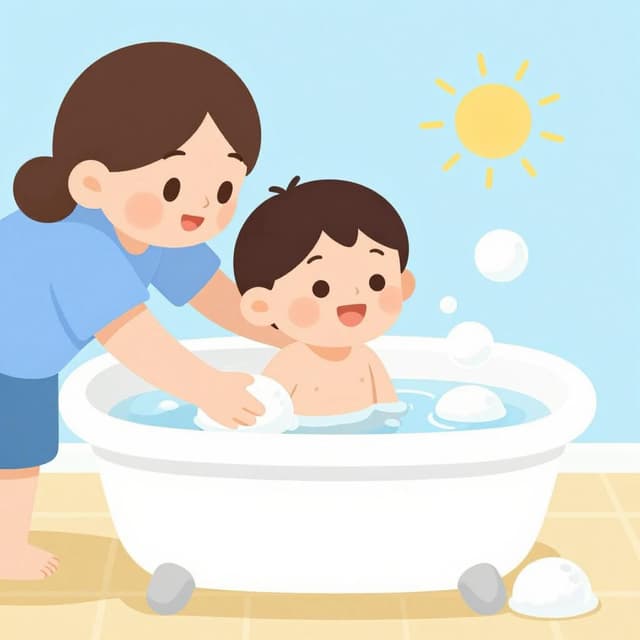
bañar — to bathe
Use 'bañaba', 'bañabas', 'bañaba', 'bañábamos', 'bañabais', 'bañaban' for ongoing or habitual past actions like bathing every day.
Formy bañar Czas przeszły niedokonany
Kiedy używać Czas przeszły niedokonany
The imperfect is for describing past situations, habitual actions, or ongoing actions without a clear end point. Think about routines: 'I used to bathe every night' or describing a scene: 'While he was bathing, the phone rang.'
Uwagi dotyczące bañar w czasie Czas przeszły niedokonany
Bañar is regular in the imperfect indicative tense. The forms are created by taking the stem 'bañ-' and adding the standard imperfect endings (-aba, -abas, -aba, -ábamos, -abais, -aban).
Przykładowe zdania
Cuando era niño, me bañaba en el río todos los veranos.
When I was a child, I bathed in the river every summer.
yo
¿Tú te bañabas en la piscina cuando vivías aquí?
Did you bathe in the pool when you lived here?
tú
Ella se bañaba tranquilamente mientras afuera llovía.
She was bathing peacefully while it rained outside.
él/ella/usted
Nosotros nos bañábamos a las ocho de la noche.
We used to bathe at eight in the evening.
nosotros
Ellos se bañaban mucho en el mar durante las vacaciones.
They bathed a lot in the sea during the holidays.
ellos/ellas/ustedes
Częste błędy
Błąd: Using the preterite for habitual past actions.
Poprawnie: Use 'Me bañaba cada día' (I bathed every day - habitual), not 'Me bañé cada día'.
Dlaczego: The imperfect describes repeated or ongoing past actions, while the preterite describes single, completed events.
Błąd: Forgetting the reflexive pronoun 'se' when the subject bathes itself.
Poprawnie: It should be 'Ella se bañaba', not 'Ella bañaba'.
Dlaczego: Similar to the present tense, the imperfect often requires the reflexive pronoun when the subject is bathing themselves.
Opanuj hiszpańskie czasowniki w kontekście
Zapamiętywanie tabel to dopiero początek. Przeczytaj ponad 200 ilustrowanych i udźwiękowionych hiszpańskich historii, aby zobaczyć czasowniki takie jak 'bañar' używane naturalnie — w czasach, których się uczysz.
Powiązane czasy
Czas teraźniejszy
yo: baño
Use 'baño', 'bañas', 'baña', 'bañamos', 'bañáis', 'bañan' for current or habitual actions like bathing daily.
Czas przeszły prosty
yo: bañé
Use 'bañé', 'bañaste', 'bañó', 'bañamos', 'bañasteis', 'bañaron' for completed actions like bathing at a specific time.
Czas przyszły
yo: bañaré
Use 'bañaré', 'bañarás', 'bañará', 'bañaremos', 'bañaréis', 'bañarán' for actions that will happen in the future.
Tryb warunkowy
yo: bañaría
Use 'bañaría', 'bañarías', 'bañaría', 'bañaríamos', 'bañaríais', 'bañarían' for hypothetical situations or polite requests.
Tryb Subj. teraźniejszy
yo: bañe
Use 'bañe' (yo/él/ella/Ud.), 'bañes' (tú), 'bañemos' (nosotros), 'bañéis' (vosotros), 'bañen' (ellos/ellas/Uds.) after verbs of wish, doubt, emotion, or uncertainty.
Tryb Subj. przeszły niedokonany
yo: bañara
Use 'bañara' or 'bañase' for past hypothetical situations or wishes.
Tryb rozkazujący (twierdzący)
yo: baña
Use 'baña' (tú), 'bañe' (usted), 'bañemos' (nosotros), 'bañen' (ustedes), 'bañad' (vosotros) for direct commands.
Tryb rozkazujący (przeczący)
yo: no bañes
Use 'no bañes' (tú), 'no bañe' (usted), 'no bañemos' (nosotros), 'no bañen' (ustedes), 'no bañéis' (vosotros) for negative commands.