Koniugacja bombardear Tryb Subj. przeszły niedokonany
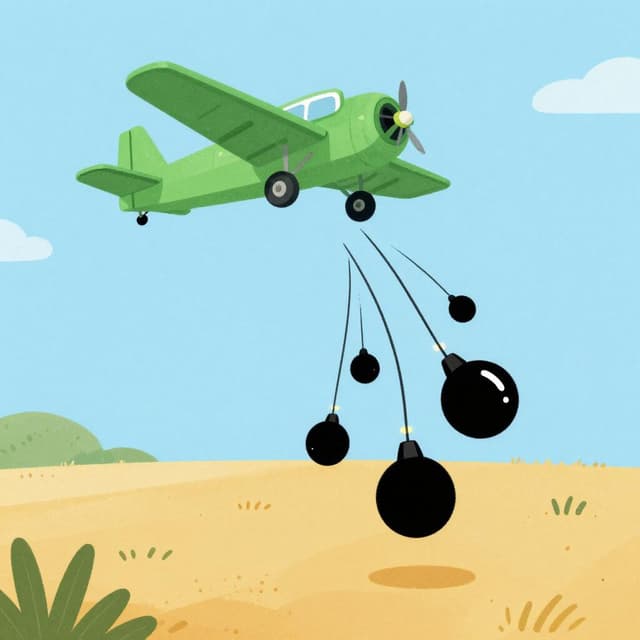
bombardear — to bomb
Use imperfect subjunctive like 'bombeara' or 'bombearase' for past hypotheticals or wishes.
Formy bombardear Tryb Subj. przeszły niedokonany
Kiedy używać Tryb Subj. przeszły niedokonany
This tense is great for talking about hypothetical situations in the past, things you wished had happened, or in 'if' clauses referring to the past. For example, 'Si hubiera sabido, no te hubiera bombardeado' (If I had known, I wouldn't have bombed you).
Uwagi dotyczące bombardear w czasie Tryb Subj. przeszły niedokonany
Bombardear is regular in the imperfect subjunctive. You can use either the -ra or -se endings (e.g., bombardeara or bombearase), and they are interchangeable.
Przykładowe zdania
Ojalá no bombardearan la ciudad.
I wish they wouldn't bomb the city.
ellos/ellas/ustedes
Si yo pudiera, no bombardearía.
If I could, I would not bomb.
yo
Me gustaría que no nos bombardearais.
I would like you all not to bomb us.
vosotros
Era importante que él bombardeara el objetivo correcto.
It was important that he bomb the correct target.
él/ella/usted
Częste błędy
Błąd: Using the imperfect indicative instead of the imperfect subjunctive.
Poprawnie: For hypothetical or wishful statements about the past, use forms like 'bombeara' or 'bombearase'.
Dlaczego: The indicative describes facts, while the subjunctive expresses doubt, desire, or unreality.
Błąd: Confusing the -ra and -se forms.
Poprawnie: Both 'bombeara' and 'bombearase' are correct and interchangeable for each person.
Dlaczego: Learners sometimes think only one set of endings is correct, or mix them up.
Opanuj hiszpańskie czasowniki w kontekście
Zapamiętywanie tabel to dopiero początek. Przeczytaj ponad 200 ilustrowanych i udźwiękowionych hiszpańskich historii, aby zobaczyć czasowniki takie jak 'bombardear' używane naturalnie — w czasach, których się uczysz.
Powiązane czasy
Czas teraźniejszy
yo: bombardeo
Use present like 'bombardeo' for actions happening now or habitual actions.
Czas przeszły prosty
yo: bombardeé
Use preterite like 'bombardeé' for completed actions, e.g., 'bombardeamos la fortaleza'.
Czas przeszły niedokonany
yo: bombardeaba
Use imperfect like 'bombardeaba' for ongoing or habitual past actions.
Czas przyszły
yo: bombardearé
Use future like 'bombardearé' for actions that will happen or to express probability.
Tryb warunkowy
yo: bombardearía
Use conditional like 'bombardearía' for hypotheticals ('would bomb') or polite requests.
Tryb Subj. teraźniejszy
yo: bombardee
Use present subjunctive like 'bombardee' after expressions of doubt, desire, or emotion.
Tryb rozkazujący (twierdzący)
yo: bombardea
Use imperative forms like 'bombardea' (tú) for direct commands, remembering 'bombardead' for vosotros.
Tryb rozkazujący (przeczący)
yo: no bombardees
Form negative commands using 'no' plus the present subjunctive, like 'no bombees' (tú).