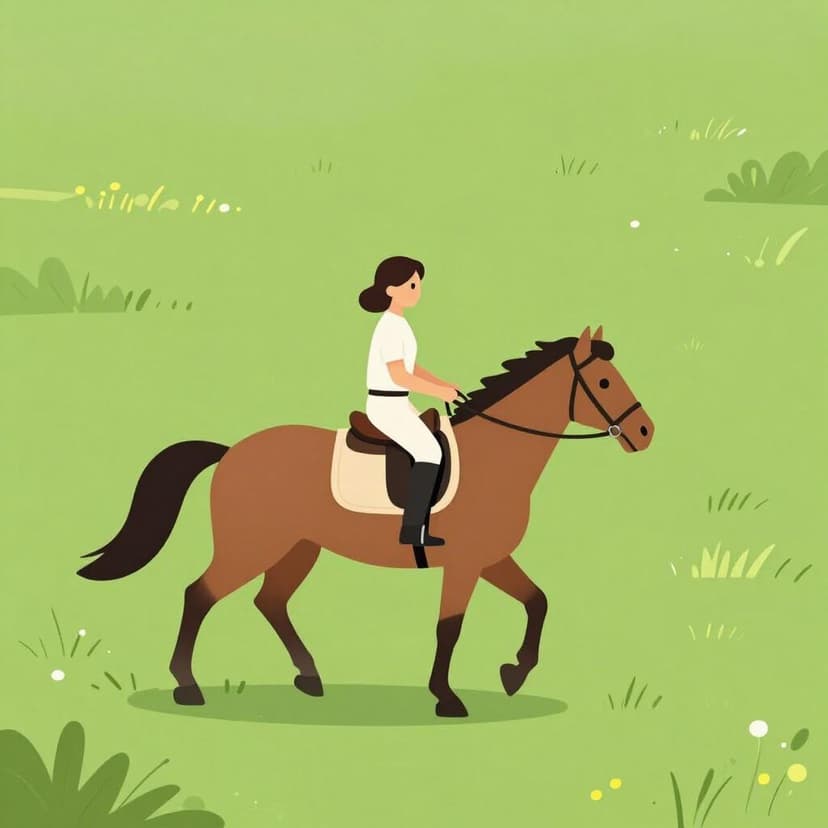
cabalgar
jechać konno
Kompletne tabele koniugacji i interaktywne ćwiczenia. To jest spelling-change -ar czasownik.
Hiszpański czasownik “cabalgar” oznacza “jechać konno”.
Czas teraźniejszy:
yocabalgo
túcabalgas
él/ella/ustedcabalga
nosotroscabalgamos
vosotroscabalgáis
ellos/ellas/ustedescabalgan
Kompletne tabele koniugacji
Odniesienie do wszystkich czasów i trybów
🔄 Koniugacje
subjunctive
imperfect
ellos/ellas/ustedescabalgaran
yocabalgara
túcabalgaras
vosotroscabalgarais
nosotroscabalgáramos
él/ella/ustedcabalgara
present
ellos/ellas/ustedescabalguen
yocabalgue
túcabalgues
vosotroscabalguéis
nosotroscabalguemos
él/ella/ustedcabalgue
imperative
negative
túno cabalgues
vosotrosno cabalguéis
ustedesno cabalguen
nosotrosno cabalguemos
ustedno cabalgue
affirmative
túcabalga
vosotroscabalgad
ustedescabalguen
nosotroscabalguemos
ustedcabalgue
indicative
conditional
ellos/ellas/ustedescabalgarían
yocabalgaría
túcabalgarías
vosotroscabalgaríais
nosotroscabalgaríamos
él/ella/ustedcabalgaría
preterite
ellos/ellas/ustedescabalgaron
yocabalgué
túcabalgaste
vosotroscabalgasteis
nosotroscabalgamos
él/ella/ustedcabalgó
imperfect
ellos/ellas/ustedescabalgaban
yocabalgaba
túcabalgabas
vosotroscabalgabais
nosotroscabalgábamos
él/ella/ustedcabalgaba
present
ellos/ellas/ustedescabalgan
yocabalgo
túcabalgas
vosotroscabalgáis
nosotroscabalgamos
él/ella/ustedcabalga
future
ellos/ellas/ustedescabalgarán
yocabalgaré
túcabalgarás
vosotroscabalgaréis
nosotroscabalgaremos
él/ella/ustedcabalgará
Ćwicz koniugacje
Sprawdź swoją wiedzę za pomocą interaktywnych ćwiczeń
Ładowanie ćwiczeń...
Przenieś cabalgar z tabel do prawdziwego hiszpańskiego
Tabele koniugacji to dopiero początek. Przeczytaj ponad 200 ilustrowanych i udźwiękowionych hiszpańskich historii, aby zobaczyć 'cabalgar' w akcji w prawdziwych zdaniach — i zbuduj instynkt, jaki mają rodzimi użytkownicy języka.