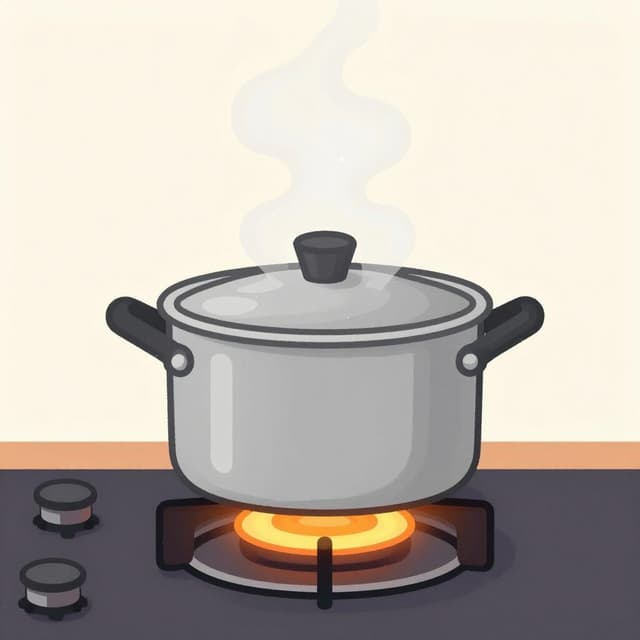
Koniugacja calentar Czas teraźniejszy
calentar — to heat up
Calentar has a stem change (e to ie) in all forms except nosotros and vosotros: caliento, calientas, calienta, calientan.
Formy calentar Czas teraźniejszy
Kiedy używać Czas teraźniejszy
Use the present tense to talk about things you are heating up right now, like food in the microwave, or general habits like warming up before exercise.
Uwagi dotyczące calentar w czasie Czas teraźniejszy
This is a 'boot verb' (stem-changing). The 'e' in the root changes to 'ie' when stressed. We don't change the stem for nosotros (calentamos) or vosotros (calentáis).
Przykładowe zdania
Yo caliento la sopa en el microondas.
I heat up the soup in the microwave.
yo
Ellos siempre calientan antes de jugar al fútbol.
They always warm up before playing soccer.
ellos/ellas/ustedes
Nosotros calentamos la cena a las ocho.
We heat up dinner at eight.
nosotros
Częste błędy
Błąd: Nosotros calientamos.
Poprawnie: Nosotros calentamos.
Dlaczego: Stem changes (e to ie) never happen in the nosotros or vosotros forms in the present indicative.
Opanuj hiszpańskie czasowniki w kontekście
Zapamiętywanie tabel to dopiero początek. Przeczytaj ponad 200 ilustrowanych i udźwiękowionych hiszpańskich historii, aby zobaczyć czasowniki takie jak 'calentar' używane naturalnie — w czasach, których się uczysz.
Powiązane czasy
Czas przeszły prosty
yo: calenté
Calentar is completely regular in the preterite: calenté, calentaste, calentó, calentamos, calentasteis, calentaron.
Czas przeszły niedokonany
yo: calentaba
Calentar is regular in the imperfect, using the standard -aba endings: calentaba, calentabas, calentaba...
Czas przyszły
yo: calentaré
The future of calentar is regular: add the endings -é, -ás, -á, -emos, -éis, -án to the full infinitive.
Tryb warunkowy
yo: calentaría
The conditional of calentar is regular: calentar +ía, -ías, -ía, -íamos, -íais, -ían.
Tryb Subj. teraźniejszy
yo: caliente
The present subjunctive follows the 'ie' stem change: caliente, calientes, caliente, calentemos, calentéis, calienten.
Tryb Subj. przeszły niedokonany
yo: calentara
The imperfect subjunctive is regular based on the preterite: calentara, calentaras, calentara, calentáramos...
Tryb rozkazujący (twierdzący)
yo: calienta
The commands use the 'ie' stem change except for vosotros: calienta (tú), caliente (usted), calentad (vosotros).
Tryb rozkazujący (przeczący)
yo: no calientes
Negative commands use the present subjunctive forms: no calientes, no caliente, no calentemos...