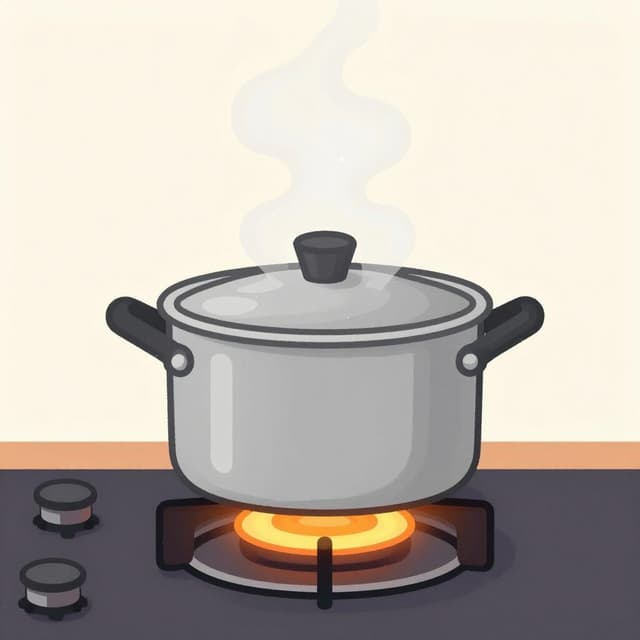
Koniugacja calentar Tryb Subj. teraźniejszy
calentar — to heat up
The present subjunctive follows the 'ie' stem change: caliente, calientes, caliente, calentemos, calentéis, calienten.
Formy calentar Tryb Subj. teraźniejszy
Kiedy używać Tryb Subj. teraźniejszy
Use it after expressions of desire, doubt, or necessity, like 'I want you to heat up the coffee' (Quiero que calientes...)
Uwagi dotyczące calentar w czasie Tryb Subj. teraźniejszy
The stem change (e to ie) happens in the same 'boot' pattern as the present indicative. Nosotros and vosotros stay as 'e'.
Przykładowe zdania
Espero que calientes la comida bien.
I hope you heat the food well.
tú
Es mejor que calentemos antes del partido.
It's better that we warm up before the game.
nosotros
Częste błędy
Błąd: Que ellos calentien.
Poprawnie: Que ellos calienten.
Dlaczego: The stem change is 'ie', and the ending for -ar verbs in subjunctive is 'en'. Don't double up or misplace the 'i'.
Opanuj hiszpańskie czasowniki w kontekście
Zapamiętywanie tabel to dopiero początek. Przeczytaj ponad 200 ilustrowanych i udźwiękowionych hiszpańskich historii, aby zobaczyć czasowniki takie jak 'calentar' używane naturalnie — w czasach, których się uczysz.
Powiązane czasy
Czas teraźniejszy
yo: caliento
Calentar has a stem change (e to ie) in all forms except nosotros and vosotros: caliento, calientas, calienta, calientan.
Czas przeszły prosty
yo: calenté
Calentar is completely regular in the preterite: calenté, calentaste, calentó, calentamos, calentasteis, calentaron.
Czas przeszły niedokonany
yo: calentaba
Calentar is regular in the imperfect, using the standard -aba endings: calentaba, calentabas, calentaba...
Czas przyszły
yo: calentaré
The future of calentar is regular: add the endings -é, -ás, -á, -emos, -éis, -án to the full infinitive.
Tryb warunkowy
yo: calentaría
The conditional of calentar is regular: calentar +ía, -ías, -ía, -íamos, -íais, -ían.
Tryb Subj. przeszły niedokonany
yo: calentara
The imperfect subjunctive is regular based on the preterite: calentara, calentaras, calentara, calentáramos...
Tryb rozkazujący (twierdzący)
yo: calienta
The commands use the 'ie' stem change except for vosotros: calienta (tú), caliente (usted), calentad (vosotros).
Tryb rozkazujący (przeczący)
yo: no calientes
Negative commands use the present subjunctive forms: no calientes, no caliente, no calentemos...