Koniugacja colapsar Tryb warunkowy
colapsar — to collapse
The conditional forms like 'colapsaría' (yo) express hypothetical situations ('would'), polite requests, or future-in-the-past.
Formy colapsar Tryb warunkowy
Kiedy używać Tryb warunkowy
Use the conditional for hypothetical situations ('I would collapse if...'), polite requests, or to talk about something that would happen in the future from a past perspective. For 'colapsar,' you could say 'Me colapsaría de cansancio si hiciera ese trabajo.' (I would collapse from exhaustion if I did that job.)
Uwagi dotyczące colapsar w czasie Tryb warunkowy
Colapsar is regular in the conditional tense. The stem is the infinitive ('colapsar-') and you add the standard conditional endings.
Przykładowe zdania
Si no comiera, me colapsaría.
If I didn't eat, I would collapse.
yo
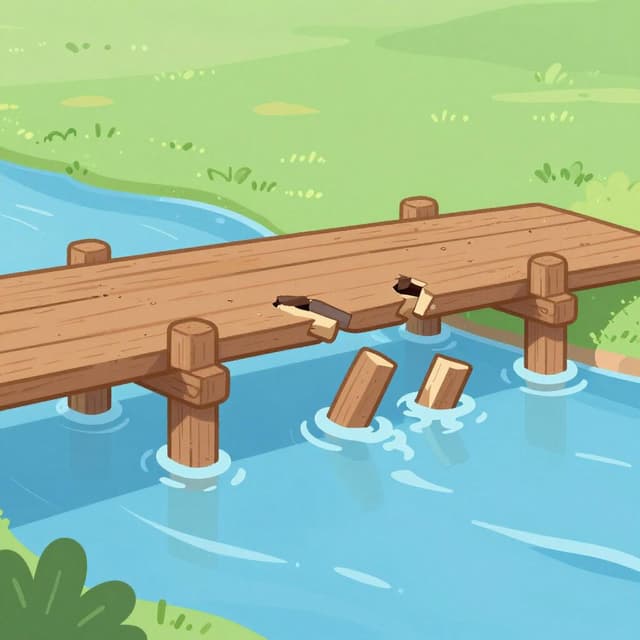
El puente colapsaría con ese peso adicional.
The bridge would collapse with that additional weight.
él/ella/usted
No colapsaríamos la red si tuviéramos más ancho de banda.
We wouldn't collapse the network if we had more bandwidth.
nosotros
¿Colapsarían ustedes si les dijera la verdad?
Would you all collapse if I told you the truth?
Częste błędy
Błąd: Confusing the conditional ('colapsaría') with the future ('colapsará').
Poprawnie: Use the conditional for hypotheticals ('would collapse') and the future for predictions ('will collapse').
Dlaczego: The conditional expresses an outcome dependent on a condition, while the future expresses a more certain prediction.
Opanuj hiszpańskie czasowniki w kontekście
Zapamiętywanie tabel to dopiero początek. Przeczytaj ponad 200 ilustrowanych i udźwiękowionych hiszpańskich historii, aby zobaczyć czasowniki takie jak 'colapsar' używane naturalnie — w czasach, których się uczysz.
Powiązane czasy
Czas teraźniejszy
yo: colapso
The present tense forms like 'colapso' (yo) and 'colapsan' (ellos/ellas/ustedes) describe current actions or general truths.
Czas przeszły prosty
yo: colapsé
The preterite of 'colapsar' is regular: 'colapsé', 'colapsaste', 'colapsó', 'colapsamos', 'colapsasteis', 'colapsaron'.
Czas przeszły niedokonany
yo: colapsaba
The imperfect forms like 'colapsaba' (yo) describe ongoing or habitual past actions or set the scene.
Czas przyszły
yo: colapsaré
The future tense forms like 'colapsaré' (yo) and 'colapsarán' (ellos/ellas/ustedes) predict or express probability about future events.
Tryb Subj. teraźniejszy
yo: colapse
The present subjunctive forms like 'colapse' (él/ella/usted) are used for wishes, doubts, emotions, and recommendations.
Tryb Subj. przeszły niedokonany
yo: colapsara
The imperfect subjunctive forms like 'colapsara' (él/ella/usted) express hypothetical or unlikely past situations or wishes.
Tryb rozkazujący (twierdzący)
yo: colapsa
Use the imperative forms like 'colapsa' (tú) and 'colapsen' (ustedes) for direct commands.
Tryb rozkazujący (przeczący)
yo: no colapses
Negative commands for 'colapsar' use the present subjunctive with 'no', like 'no colapses' (tú) or 'no colapsen' (ustedes).