Koniugacja colapsar Czas przeszły prosty
colapsar — to collapse
The preterite of 'colapsar' is regular: 'colapsé', 'colapsaste', 'colapsó', 'colapsamos', 'colapsasteis', 'colapsaron'.
Formy colapsar Czas przeszły prosty
Kiedy używać Czas przeszły prosty
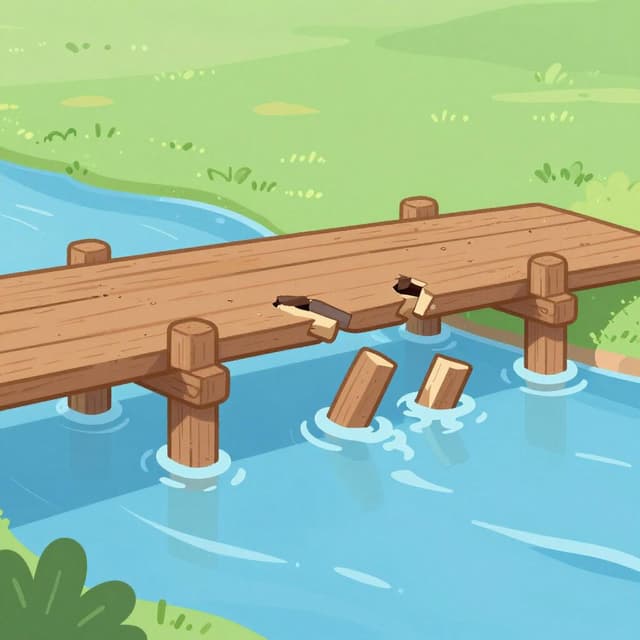
Use the preterite for completed actions in the past. For 'colapsar,' this means an event of collapsing that started and finished at a specific point in time, like a building collapsing during an earthquake.
Uwagi dotyczące colapsar w czasie Czas przeszły prosty
Colapsar is completely regular in the preterite tense. All forms follow the standard -ar conjugation pattern.
Przykładowe zdania
El viejo puente colapsó ayer por la tarde.
The old bridge collapsed yesterday afternoon.
él/ella/usted
Colapsamos el sistema sin querer.
We collapsed the system by accident.
nosotros
Colapsé de cansancio después del maratón.
I collapsed from exhaustion after the marathon.
yo
¿Colapsasteis el sitio web con tantas visitas?
Did you all collapse the website with so many visits?
vosotros
Częste błędy
Błąd: Using the imperfect tense ('colapsaba') instead of the preterite ('colapsó') for a single, completed event.
Poprawnie: For a specific, finished collapse, use the preterite: 'El techo colapsó' (The roof collapsed).
Dlaczego: The preterite marks a definite past event, while the imperfect describes ongoing or habitual past actions.
Opanuj hiszpańskie czasowniki w kontekście
Zapamiętywanie tabel to dopiero początek. Przeczytaj ponad 200 ilustrowanych i udźwiękowionych hiszpańskich historii, aby zobaczyć czasowniki takie jak 'colapsar' używane naturalnie — w czasach, których się uczysz.
Powiązane czasy
Czas teraźniejszy
yo: colapso
The present tense forms like 'colapso' (yo) and 'colapsan' (ellos/ellas/ustedes) describe current actions or general truths.
Czas przeszły niedokonany
yo: colapsaba
The imperfect forms like 'colapsaba' (yo) describe ongoing or habitual past actions or set the scene.
Czas przyszły
yo: colapsaré
The future tense forms like 'colapsaré' (yo) and 'colapsarán' (ellos/ellas/ustedes) predict or express probability about future events.
Tryb warunkowy
yo: colapsaría
The conditional forms like 'colapsaría' (yo) express hypothetical situations ('would'), polite requests, or future-in-the-past.
Tryb Subj. teraźniejszy
yo: colapse
The present subjunctive forms like 'colapse' (él/ella/usted) are used for wishes, doubts, emotions, and recommendations.
Tryb Subj. przeszły niedokonany
yo: colapsara
The imperfect subjunctive forms like 'colapsara' (él/ella/usted) express hypothetical or unlikely past situations or wishes.
Tryb rozkazujący (twierdzący)
yo: colapsa
Use the imperative forms like 'colapsa' (tú) and 'colapsen' (ustedes) for direct commands.
Tryb rozkazujący (przeczący)
yo: no colapses
Negative commands for 'colapsar' use the present subjunctive with 'no', like 'no colapses' (tú) or 'no colapsen' (ustedes).