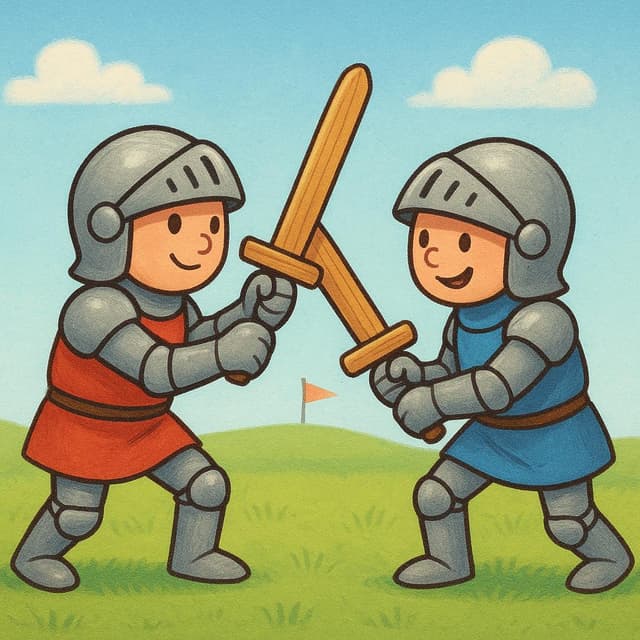
Koniugacja combatir Tryb Subj. przeszły niedokonany
combatir — to fight
Past subjunctive for 'combatir' (to fight): combatiera, combatieras, combatiéramos, combatieran.
Formy combatir Tryb Subj. przeszły niedokonany
Kiedy używać Tryb Subj. przeszły niedokonany
The imperfect subjunctive is used for hypothetical situations in the past, wishes, or doubts that were expressed in the past. For 'combatir', think of scenarios like 'If I had fought harder...' or 'I wish they would fight...'.
Uwagi dotyczące combatir w czasie Tryb Subj. przeszły niedokonany
Combatir is regular in the imperfect subjunctive. Both the -ra and -se forms exist, but the -ra form (combatiera, combatieras, etc.) is more common and generally preferred.
Przykładowe zdania
Si yo hubiera combatido más, habría ganado.
If I had fought more, I would have won.
yo
Ojalá él combatiera por sus ideales.
I wish he would fight for his ideals.
él/ella/usted
Me pidió que combatiera mi timidez.
She asked me to fight my shyness.
yo
Era importante que vosotros combatierais juntos.
It was important that you all fought together.
vosotros
Częste błędy
Błąd: Using the imperfect indicative instead of the imperfect subjunctive, e.g., 'Si yo combatía más...'.
Poprawnie: For hypothetical or subjunctive clauses in the past, use the imperfect subjunctive: 'Si yo combatiera más...'.
Dlaczego: The imperfect subjunctive is required for unreal conditions or expressions of desire/doubt in the past.
Błąd: Confusing the -ra and -se forms, or using the wrong one.
Poprawnie: While both exist, the -ra form (combatiera) is more common and generally safer to use. For example, use 'combatieran', not 'combaticen'.
Dlaczego: Both sets of endings are technically correct, but learners often mix them up or use less common forms.
Opanuj hiszpańskie czasowniki w kontekście
Zapamiętywanie tabel to dopiero początek. Przeczytaj ponad 200 ilustrowanych i udźwiękowionych hiszpańskich historii, aby zobaczyć czasowniki takie jak 'combatir' używane naturalnie — w czasach, których się uczysz.
Powiązane czasy
Czas teraźniejszy
yo: combato
Present actions for 'combatir': combato, combates, combate, combatimos, combatís, combaten.
Czas przeszły prosty
yo: combatí
Completed past actions for 'combatir': combatí, combatiste, combatió, combatimos, combatisteis, combatieron.
Czas przeszły niedokonany
yo: combatía
Past ongoing/habitual actions for 'combatir': combatía, combatíamos, combatían.
Czas przyszły
yo: combatiré
Future actions for 'combatir': combatiré, combatirás, combatirá, combatiremos, combatiréis, combatirán.
Tryb warunkowy
yo: combatiría
Hypothetical/polite actions for 'combatir': combatiría, combatirías, combatiría, combatiríamos, combatiríais, combatirían.
Tryb Subj. teraźniejszy
yo: combata
Present subjunctive for 'combatir' (to fight): combata, combatamos, combatan.
Tryb rozkazujący (twierdzący)
yo: combate
Commands for 'combatir' (to fight): combata, combate, combatamos, combatid, combatan.
Tryb rozkazujący (przeczący)
yo: no combatas
Negative commands for 'combatir': no combatas, no combata, no combatamos, no combatáis, no combatan.