Koniugacja combatir Czas przeszły prosty
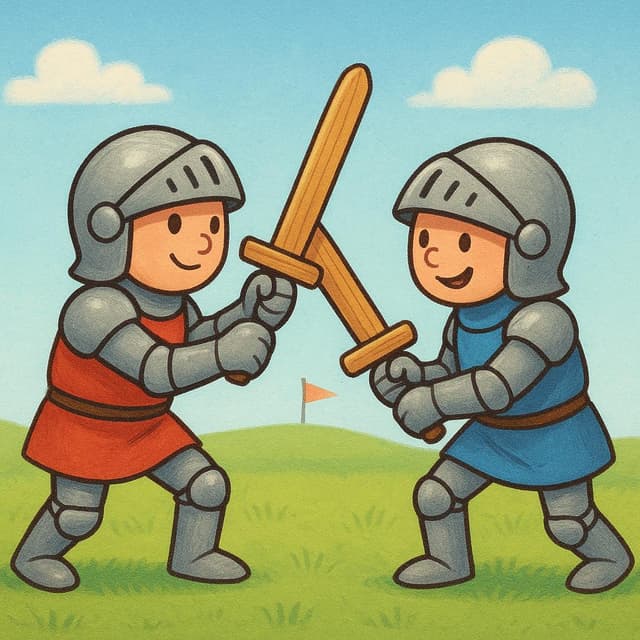
combatir — to fight
Completed past actions for 'combatir': combatí, combatiste, combatió, combatimos, combatisteis, combatieron.
Formy combatir Czas przeszły prosty
Kiedy używać Czas przeszły prosty
Use the preterite to describe completed actions in the past with a definite beginning and end. For 'combatir', it's about fighting a specific battle, finishing a fight, or tackling a problem once.
Uwagi dotyczące combatir w czasie Czas przeszły prosty
Combatir is regular in the preterite tense. All -ir verbs follow the same pattern for preterite endings (-í, -iste, -ió, -imos, -isteis, -ieron).
Przykładowe zdania
Ayer combatí contra un resfriado.
Yesterday I fought off a cold.
yo
¿Tú combatiste en esa guerra?
Did you fight in that war?
tú
El equipo combatió hasta el último minuto.
The team fought until the last minute.
él/ella/usted
Ellos combatieron la crisis económica con éxito.
They successfully fought the economic crisis.
ellos/ellas/ustedes
Częste błędy
Błąd: Using the imperfect instead of the preterite for a single, completed fight.
Poprawnie: For a specific instance of fighting that concluded, use the preterite: 'Combatí ayer'. Use the imperfect ('combatía') for ongoing or habitual fighting in the past.
Dlaczego: The core difference between preterite and imperfect is completion vs. duration/habit.
Błąd: Forgetting the accent on 'i' in the yo form, writing 'combati' instead of 'combatí'.
Poprawnie: The yo form requires an accent on the final 'i' to indicate the correct stress: combatí.
Dlaczego: The accent marks the stressed syllable and differentiates it from other forms.
Opanuj hiszpańskie czasowniki w kontekście
Zapamiętywanie tabel to dopiero początek. Przeczytaj ponad 200 ilustrowanych i udźwiękowionych hiszpańskich historii, aby zobaczyć czasowniki takie jak 'combatir' używane naturalnie — w czasach, których się uczysz.
Powiązane czasy
Czas teraźniejszy
yo: combato
Present actions for 'combatir': combato, combates, combate, combatimos, combatís, combaten.
Czas przeszły niedokonany
yo: combatía
Past ongoing/habitual actions for 'combatir': combatía, combatíamos, combatían.
Czas przyszły
yo: combatiré
Future actions for 'combatir': combatiré, combatirás, combatirá, combatiremos, combatiréis, combatirán.
Tryb warunkowy
yo: combatiría
Hypothetical/polite actions for 'combatir': combatiría, combatirías, combatiría, combatiríamos, combatiríais, combatirían.
Tryb Subj. teraźniejszy
yo: combata
Present subjunctive for 'combatir' (to fight): combata, combatamos, combatan.
Tryb Subj. przeszły niedokonany
yo: combatiera
Past subjunctive for 'combatir' (to fight): combatiera, combatieras, combatiéramos, combatieran.
Tryb rozkazujący (twierdzący)
yo: combate
Commands for 'combatir' (to fight): combata, combate, combatamos, combatid, combatan.
Tryb rozkazujący (przeczący)
yo: no combatas
Negative commands for 'combatir': no combatas, no combata, no combatamos, no combatáis, no combatan.