Koniugacja cosechar Tryb Subj. przeszły niedokonany
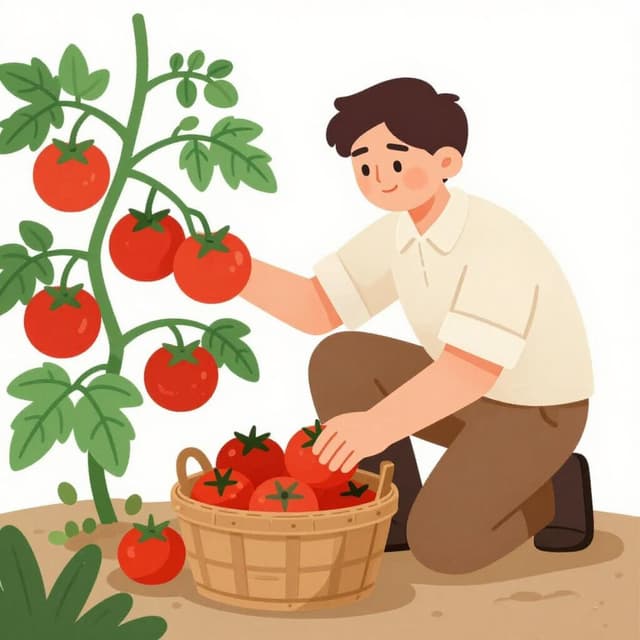
cosechar — to harvest
Use imperfect subjunctive for past hypotheticals or wishes, like 'si cosechara' (if I were to harvest).
Formy cosechar Tryb Subj. przeszły niedokonany
Kiedy używać Tryb Subj. przeszły niedokonany
This is used for hypothetical situations in the past, polite requests, or when expressing wishes and doubts about past events. For example, 'Me gustaría que tú cosecharas más rápido' (I would like you to harvest faster) or 'Si cosechara ahora, tendría más tiempo mañana' (If I were harvesting now, I would have more time tomorrow).
Uwagi dotyczące cosechar w czasie Tryb Subj. przeszły niedokonany
Cosechar is regular in the imperfect subjunctive. Both '-ra' and '-se' endings are possible, but '-ra' is more common. For example, 'cosechara' or 'cosechase'.
Przykładowe zdania
Ojalá yo cosechara todo en un día.
I wish I could harvest everything in one day.
yo
Si tú cosecharas con más cuidado, no habría tanto desperdicio.
If you harvested more carefully, there wouldn't be so much waste.
tú
Él actuaría como si cosechara oro.
He would act as if he were harvesting gold.
él/ella/usted
Nos pidieron que cosecháramos antes del anochecer.
They asked us to harvest before nightfall.
nosotros
Ellos no creían que cosecharan tanto en tan poco tiempo.
They didn't believe they would harvest so much in such a short time.
ellos/ellas/ustedes
Częste błędy
Błąd: Using the preterite instead of imperfect subjunctive.
Poprawnie: Use 'cosechara' or 'cosechase', not 'cosechó'.
Dlaczego: The imperfect subjunctive is needed for hypothetical or past wishes, not completed past actions.
Błąd: Confusing the '-ra' and '-se' forms.
Poprawnie: While both are technically correct, '-ra' is generally more common.
Dlaczego: Learners might be unsure which form to use or how to conjugate them.
Opanuj hiszpańskie czasowniki w kontekście
Zapamiętywanie tabel to dopiero początek. Przeczytaj ponad 200 ilustrowanych i udźwiękowionych hiszpańskich historii, aby zobaczyć czasowniki takie jak 'cosechar' używane naturalnie — w czasach, których się uczysz.
Powiązane czasy
Czas teraźniejszy
yo: cosecho
Use the present tense for habitual harvests or things happening now, like 'cosecho' (I harvest) or 'cosechan' (they harvest).
Czas przeszły prosty
yo: coseché
Use preterite for completed harvests, like 'coseché' (I harvested) or 'cosecharon' (they harvested).
Czas przeszły niedokonany
yo: cosechaba
Use imperfect for ongoing or habitual past harvests, like 'yo cosechaba' (I used to harvest) or 'ellos cosechaban' (they used to harvest).
Czas przyszły
yo: cosecharé
Use the future tense for harvests that will happen, like 'cosecharé' (I will harvest) or 'cosecharán' (they will harvest).
Tryb warunkowy
yo: cosecharía
Use conditional for hypothetical harvests ('I would harvest') or polite requests, like 'cosecharía' or 'cosecharían'.
Tryb Subj. teraźniejszy
yo: coseche
Use present subjunctive after expressions of doubt, desire, or emotion, like 'Espero que coseches bien' (I hope you harvest well).
Tryb rozkazujący (twierdzący)
yo: cosecha
Use the imperative to give direct commands like 'cosecha' (harvest!) or 'cosechad' (harvest!).
Tryb rozkazujący (przeczący)
yo: no coseches
Use negative commands like 'no coseches' (don't harvest) based on the present subjunctive.