Koniugacja cosechar Czas przeszły prosty
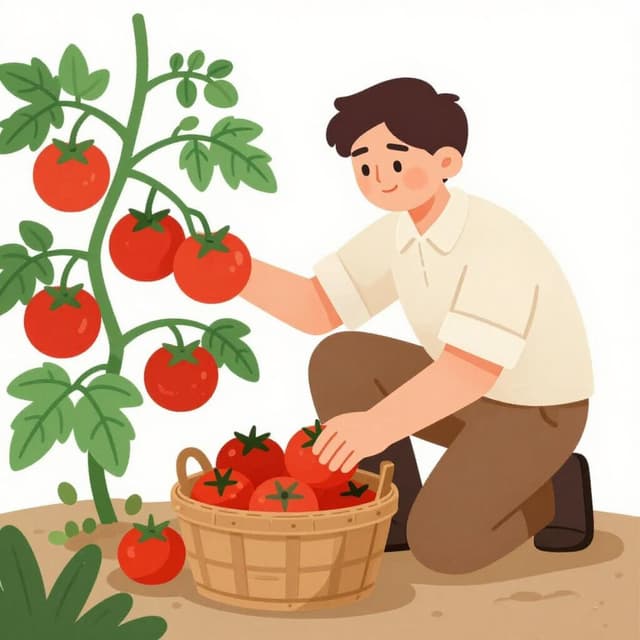
cosechar — to harvest
Use preterite for completed harvests, like 'coseché' (I harvested) or 'cosecharon' (they harvested).
Formy cosechar Czas przeszły prosty
Kiedy używać Czas przeszły prosty
The preterite is for completed actions in the past. If you harvested a specific field on a specific day, you'd use the preterite: 'Ayer, cosechamos el trigo' (Yesterday, we harvested the wheat). It focuses on the action as a whole, finished event.
Uwagi dotyczące cosechar w czasie Czas przeszły prosty
Cosechar is regular in the preterite. The endings are standard for -ar verbs: -é, -aste, -ó, -amos, -asteis, -aron.
Przykładowe zdania
Yo coseché las uvas la semana pasada.
I harvested the grapes last week.
yo
¿Tú cosechaste todo el maíz?
Did you harvest all the corn?
tú
Él cosechó las patatas en otoño.
He harvested the potatoes in autumn.
él/ella/usted
Nosotros cosechamos las manzanas ayer.
We harvested the apples yesterday.
nosotros
Ellos cosecharon el trigo antes de la lluvia.
They harvested the wheat before the rain.
ellos/ellas/ustedes
Częste błędy
Błąd: Using the imperfect instead of the preterite for a single, completed harvest.
Poprawnie: Use 'coseché' for a specific past harvest, not 'cosechaba'.
Dlaczego: The preterite marks a finished action, while the imperfect describes ongoing or habitual past actions.
Błąd: Forgetting the accent on 'yo' and 'él/ella/usted' forms.
Poprawnie: It should be 'coseché' and 'cosechó', not 'coseche'.
Dlaczego: The accent mark indicates the stressed syllable and distinguishes these forms.
Opanuj hiszpańskie czasowniki w kontekście
Zapamiętywanie tabel to dopiero początek. Przeczytaj ponad 200 ilustrowanych i udźwiękowionych hiszpańskich historii, aby zobaczyć czasowniki takie jak 'cosechar' używane naturalnie — w czasach, których się uczysz.
Powiązane czasy
Czas teraźniejszy
yo: cosecho
Use the present tense for habitual harvests or things happening now, like 'cosecho' (I harvest) or 'cosechan' (they harvest).
Czas przeszły niedokonany
yo: cosechaba
Use imperfect for ongoing or habitual past harvests, like 'yo cosechaba' (I used to harvest) or 'ellos cosechaban' (they used to harvest).
Czas przyszły
yo: cosecharé
Use the future tense for harvests that will happen, like 'cosecharé' (I will harvest) or 'cosecharán' (they will harvest).
Tryb warunkowy
yo: cosecharía
Use conditional for hypothetical harvests ('I would harvest') or polite requests, like 'cosecharía' or 'cosecharían'.
Tryb Subj. teraźniejszy
yo: coseche
Use present subjunctive after expressions of doubt, desire, or emotion, like 'Espero que coseches bien' (I hope you harvest well).
Tryb Subj. przeszły niedokonany
yo: cosechara
Use imperfect subjunctive for past hypotheticals or wishes, like 'si cosechara' (if I were to harvest).
Tryb rozkazujący (twierdzący)
yo: cosecha
Use the imperative to give direct commands like 'cosecha' (harvest!) or 'cosechad' (harvest!).
Tryb rozkazujący (przeczący)
yo: no coseches
Use negative commands like 'no coseches' (don't harvest) based on the present subjunctive.