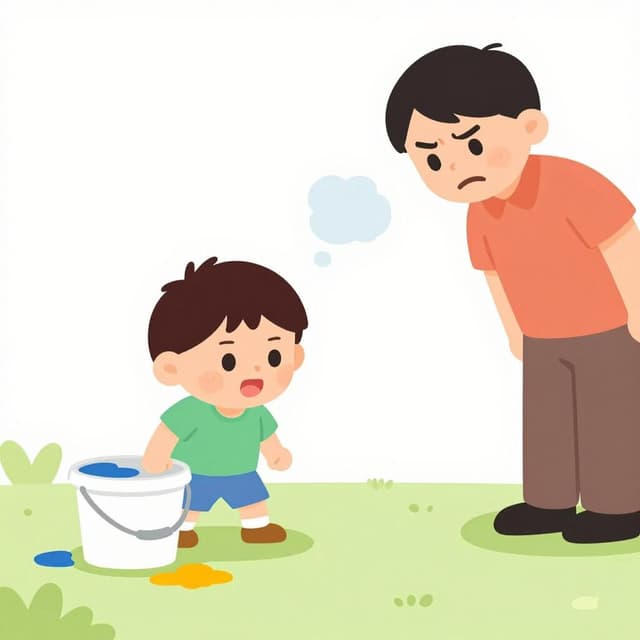
Koniugacja enfadar Tryb Subj. teraźniejszy
enfadar — to anger
The present subjunctive of enfadar (enfade, enfades, enfade, etc.) is used after expressions of doubt, emotion, or desire.
Formy enfadar Tryb Subj. teraźniejszy
Kiedy używać Tryb Subj. teraźniejszy
Use the present subjunctive when expressing wishes, emotions (like fear or happiness), doubts, or uncertainty. It's also common after impersonal expressions ('es importante que...'). For 'enfadar', you might say you hope someone *doesn't get* angry, or that it's important they *don't get* angry.
Uwagi dotyczące enfadar w czasie Tryb Subj. teraźniejszy
Enfadar is regular in the present subjunctive. The forms are derived from the 'yo' form of the present indicative ('enfado').
Przykładowe zdania
Espero que no te enfades por la broma.
I hope you don't get angry about the joke.
tú
Me alegro de que no se enfaden con nosotros.
I'm glad they aren't getting angry with us.
ellos/ellas/ustedes
Es importante que no enfade al jefe.
It's important that he doesn't anger the boss.
él/ella/usted
Częste błędy
Błąd: Using the present indicative instead of the subjunctive after trigger phrases.
Poprawnie: Use 'Espero que no se enfade', not 'Espero que no se enfada'.
Dlaczego: Phrases expressing hope, doubt, or emotion require the subjunctive mood.
Błąd: Forgetting the reflexive pronoun 'se' or 'te' with 'enfadarse'.
Poprawnie: Use 'Espero que no te enfades', not 'Espero que no enfades'.
Dlaczego: 'Enfadarse' is a reflexive verb meaning 'to get angry', so it needs the appropriate reflexive pronoun.
Opanuj hiszpańskie czasowniki w kontekście
Zapamiętywanie tabel to dopiero początek. Przeczytaj ponad 200 ilustrowanych i udźwiękowionych hiszpańskich historii, aby zobaczyć czasowniki takie jak 'enfadar' używane naturalnie — w czasach, których się uczysz.
Powiązane czasy
Czas teraźniejszy
yo: enfado
The present tense of enfadar (enfado, enfadas, enfada, etc.) describes current states or habitual actions of getting angry.
Czas przeszły prosty
yo: enfadé
The preterite of enfadar is regular: enfadé, enfadaste, enfadó, enfadamos, enfadasteis, enfadaron, used for completed past actions.
Czas przeszły niedokonany
yo: enfadaba
The imperfect of enfadar (enfadaba, enfadabas, enfadaba, etc.) describes ongoing or habitual past anger.
Czas przyszły
yo: enfadaré
The future tense of enfadar (enfadaré, enfadarás, enfadará, etc.) predicts or assumes someone will get angry.
Tryb warunkowy
yo: enfadaría
The conditional of enfadar (enfadaría, enfadarías, enfadaría, etc.) expresses hypothetical anger or polite suggestions.
Tryb Subj. przeszły niedokonany
yo: enfadara
The imperfect subjunctive of enfadar, like 'enfadara' or 'enfadase', is used for past hypotheticals or wishes.
Tryb rozkazujący (twierdzący)
yo: enfada
Use the imperative of enfadar for direct commands like 'enfada' (you singular, informal) or 'enfaden' (you plural).
Tryb rozkazujący (przeczący)
yo: enfades
Negative commands for enfadar use the present subjunctive: 'no enfades' (you singular, informal), 'no enfaden' (you plural).